Why Do Ants Keep Coming Back Even After You Spray Them?
THE BEAT
The ants you see may be only part of the problem.
You spray the ants along the counter or baseboard. They disappear, and a few days later another trail shows up.
Why?
The ants traveling through your home are often workers searching for food, water, or other resources. Eliminating the ants you see may temporarily stop the activity without addressing the colony responsible for sending them out.
From The Beat • Bug Cops Pest Control
The Ants You See Are Usually Workers
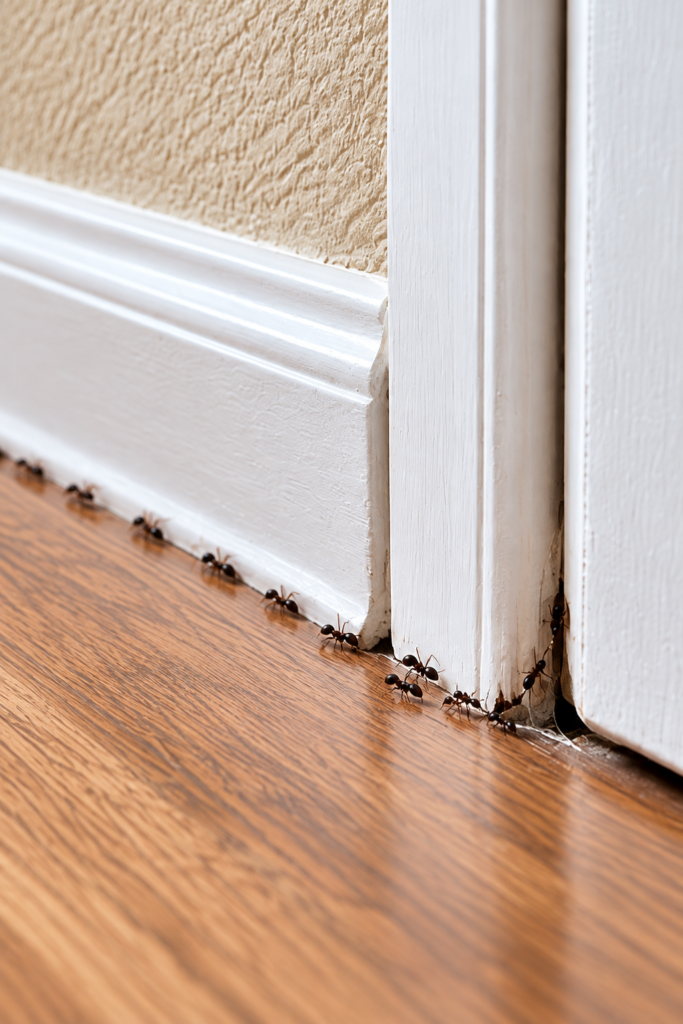
Most ants traveling through your kitchen, bathroom, garage, or along a baseboard are workers searching for food, water, or other resources.
Killing those individual ants may temporarily stop the visible activity, but it doesn’t necessarily affect the colony responsible for sending them out.
Depending on the ant species, the colony may be outdoors, beneath soil or landscaping, inside a structural void, around moisture-damaged materials, or in another protected location.
That’s why proper identification matters.
Following the Trail Can Tell Us Something
An active ant trail isn’t just a nuisance. It can provide useful information about where the activity may be coming from.
Notice where the ants appear and where they disappear. Are they following a baseboard? Entering around a door, window, plumbing line, or another small opening? What are they traveling toward?
Those observations can help narrow down possible entry points, food sources, moisture conditions, and nesting areas.

Precinct Note: Before spraying an active ant trail, take a closer look at where it’s coming from and where it’s going. Disturbing the trail may temporarily scatter the ants and remove information that could help determine the source of the activity.
Different Ants Require Different Approaches
Not every ant found around a North Florida home behaves the same way.
Tiny household ants may establish trails around kitchens and moisture sources. Ghost ants can appear around countertops, sinks, and other areas where food or water is available. Carpenter ants may nest in protected voids or soft, deteriorated wood. Fire ants establish colonies in soil and can create problems throughout lawns and frequently used outdoor spaces.
Treating all of them as simply “ants” can overlook important differences in where they nest and how the colony behaves.
For more information about ants found in Florida, visit the UF/IFAS Ants resources from the University of Florida.
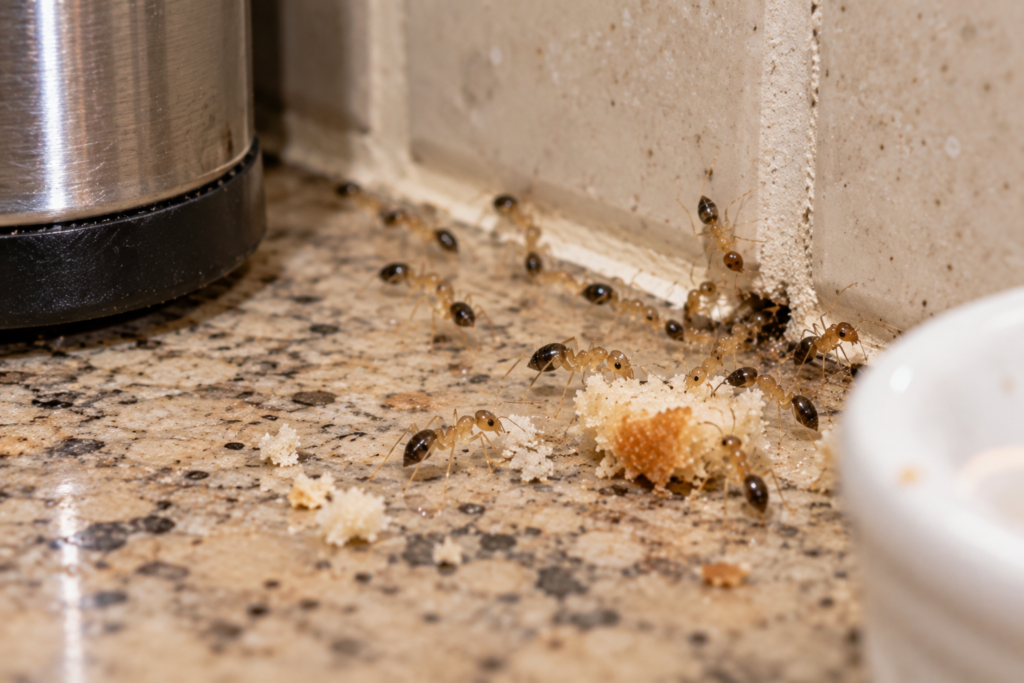
Not sure which ant you’re seeing? Our Ant Identification Guide can help you compare some of the ants found around North Florida homes.
Why Store-Bought Spray May Not Solve the Problem
A store-bought spray may kill ants that contact the product. That doesn’t necessarily mean it reaches the colony.
If the colony, food source, moisture condition, or entry point remains, the activity may continue. In some situations, repeated spraying can turn the problem into a frustrating cycle:
Ants appear → Spray → Visible ants disappear → More workers appear
The result may look like a new ant problem when it is actually continued activity from a colony that was never addressed.
Look at the Conditions Around the Activity
Recurring ant activity isn’t always about finding a hole and sealing it. Food, moisture, landscaping, and other conditions around the property can influence where ants travel and establish colonies.
Some things worth looking for include:
- Moisture around sinks, plumbing, bathrooms, or exterior areas
- Food residue and accessible pet food
- Vegetation touching the structure
- Mulch or landscape materials near the foundation
- Small gaps around doors, windows, pipes, and utility penetrations
- Trails leading into protected areas
- Wood affected by moisture or deterioration
- Outdoor colonies close to frequently used areas
The goal is to understand why the ants are there, not simply kill the ones currently visible.
What Kind of Ant Is It?
If you’re not sure what kind of ant you’re seeing, identification is a good place to start.
Size, color, body shape, trails, nesting locations, and where the ants are found can all provide useful information. Some species may look similar at first glance, so a closer look can make a difference.
Our Ant Identification Guide includes photos and information about several ants found around North Florida homes, including ghost ants, bigheaded ants, Pharaoh ants, longhorn crazy ants, Florida carpenter ants, and red imported fire ants.
You can also send Bug Cops a pest photo if you’d like help narrowing down what you’ve found.
When It’s Time to Request Backup
Seeing an occasional ant doesn’t always mean you have a serious problem. Repeated trails, increasing activity, ants appearing in several areas, or activity returning after you’ve tried to address it may be a reason to take a closer look.
Bug Cops provides ant control services throughout Clay and Putnam Counties. We begin by identifying the type of ant whenever possible and looking at where the activity is occurring, rather than focusing only on the ants currently visible.
Because effective ant control isn’t just about the ants you can see. It’s about understanding where they’re coming from and why they’re there.
See it. Identify it. Solve it.
Protecting what matters most.