
Silverfish Identification Guide for Clay & Putnam Counties
This Silverfish Identification Guide will help you recognize silverfish, understand where they may be hiding, identify signs of activity, and distinguish them from similar insects such as firebrats.
Silverfish (Lepisma saccharina) are small, wingless insects commonly associated with humid, protected areas around homes. Their flattened bodies allow them to hide in narrow cracks, gaps, storage areas, and other secluded spaces.
Silverfish are usually silver to pearl-gray, with tapered bodies, long antennae, and three distinctive tail-like appendages. They are primarily active at night and may move quickly when disturbed.
Seeing the insect isn’t the only clue. Damage to paper, book bindings, wallpaper paste, stored materials, or other starch-containing items, along with activity in humid areas, can help indicate that silverfish may be present.
Not sure whether you’ve found a silverfish or a similar insect? Take a clear photo and send it to Bug Cops. We’ll help you take a closer look at your suspect.
What Do Silverfish Look Like?
This Silverfish Identification Guide highlights the distinctive features that can help identify silverfish. Their flattened, elongated bodies gradually taper toward the rear. Their silvery scales, long antennae, and three tail-like appendages make them fairly recognizable once you know which features to look for.
Silverfish typically have:
- Six legs
- No wings
- A flattened, tapered body
- Silver to pearl-gray scales
- Two long antennae
- Three long tail-like appendages
- Quick movement when disturbed
- Mostly nighttime activity
One of the strongest identification features is the combination of a tapered, scale-covered body and three long appendages at the rear. The body is broader near the front and gradually narrows toward the tail.
Color and habitat provide additional clues. Silverfish typically have a shiny silver or pearl-gray appearance and favor humid, protected areas. A similar insect—the firebrat—has a more mottled gray or brown appearance and is more strongly associated with hot areas.

Identification Note: Look beyond color alone. A flattened tapered body, silver-gray scales, long antennae, three tail-like appendages, quick movement, and where the insect was found can provide stronger identification clues.
Silverfish vs. Firebrat
Silverfish and firebrats are closely related insects with similar body shapes, long antennae, and three tail-like appendages. Color, markings, temperature preference, and where the insect is found can help distinguish them.
Silverfish
Lepisma saccharina
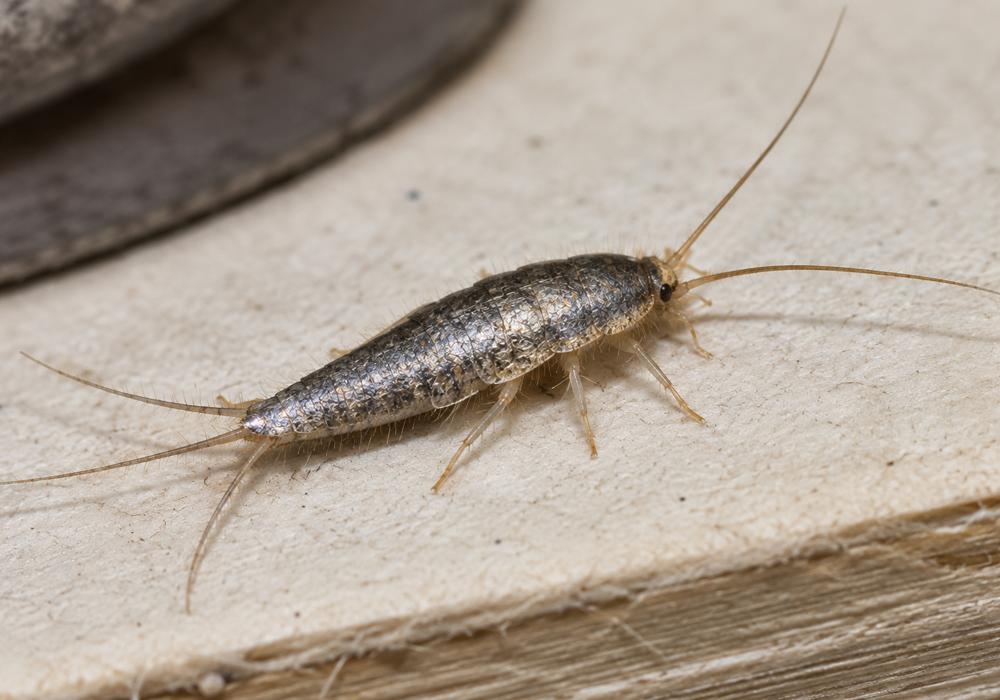
Silverfish typically have shiny silver to pearl-gray bodies with a flattened shape that gradually tapers toward the rear. They have long antennae and three long tail-like appendages.
They favor humid, protected areas and may be encountered around bathrooms, closets, bookcases, storage areas, baseboards, attics, and other secluded locations.
Firebrat
Thermobia domestica
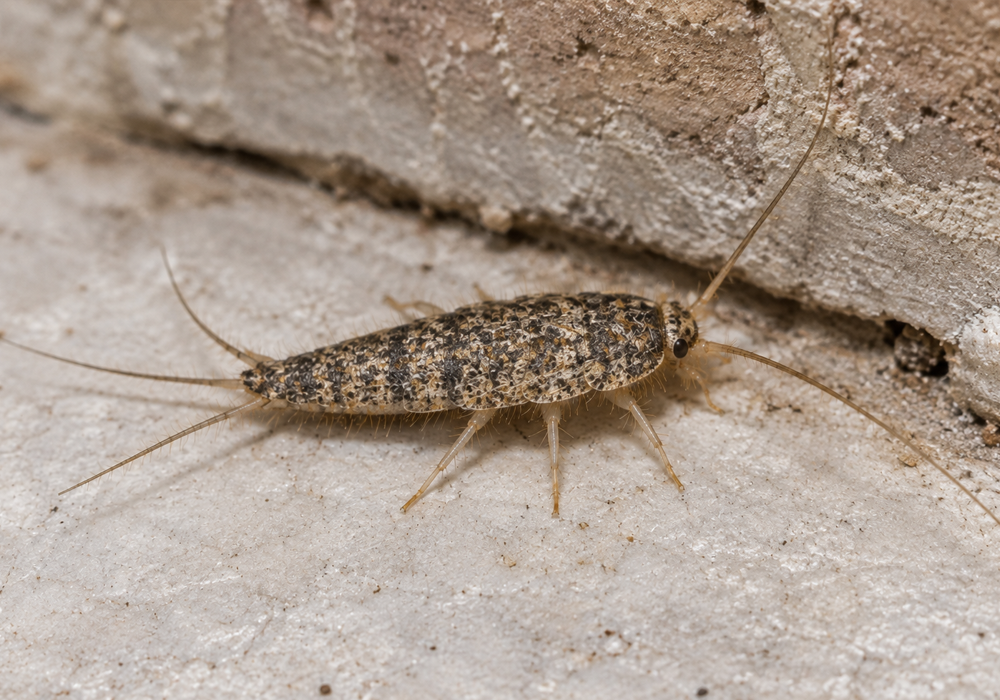
Firebrats have a similar tapered body but generally appear mottled gray or brown rather than uniformly silver. Like silverfish, they are wingless and have long antennae and three tail-like appendages.
The biggest behavioral clue is heat. Firebrats favor hot, dark locations and may occur around furnaces, fireplaces, hot-water pipes, boilers, or other warm areas.
Identification Note: Silverfish and firebrats have similar body shapes. Look closely at color and markings as well as temperature and location—silverfish favor humid protected areas, while firebrats are more strongly associated with hot locations.
Where Are Silverfish Found Around the Home?
Silverfish favor humid, protected, and relatively undisturbed areas where suitable food materials may also be available. Because they hide in cracks and narrow spaces during the day, activity may go unnoticed until a silverfish is disturbed or damage is discovered.
Bathrooms & Moisture-Prone Areas
Bathrooms, plumbing areas, and other humid spaces can provide conditions silverfish favor. Persistent moisture and limited airflow can make protected areas especially suitable.
Closets & Storage Areas
Closets, boxes, shelving, and stored materials can provide dark, protected hiding places. Paper, cardboard, fabrics, and other stored items may also provide potential food sources.
Bookcases & Paper Storage
Silverfish may occur around books, papers, magazines, documents, and cardboard. Starches found in paper products, bindings, glues, and pastes can provide food.
Attics & Secluded Spaces
Attics and other quiet protected areas may provide silverfish with hiding places, particularly where humidity is elevated or suitable materials are stored.
Baseboards, Cracks & Wall Spaces
Their flattened bodies allow silverfish to hide in narrow cracks, gaps, baseboards, wall spaces, and around door or window frames during daylight hours.
Kitchens & Pantry Areas
Silverfish may be found around stored foods and pantry areas where starch-containing materials are available, although seeing one in a kitchen does not necessarily mean food has been contaminated.
For more information about silverfish found around Florida homes, visit the UF/IFAS Extension Silverfish resource.
Identification Note: Where a silverfish is found can provide an important clue. Look for humidity, protected hiding spaces, paper or stored materials, and repeated activity in the same area when evaluating possible silverfish activity.
Signs of Silverfish Activity
This Silverfish Identification Guide also covers signs that may reveal activity even when the insects are hiding.
Live Silverfish
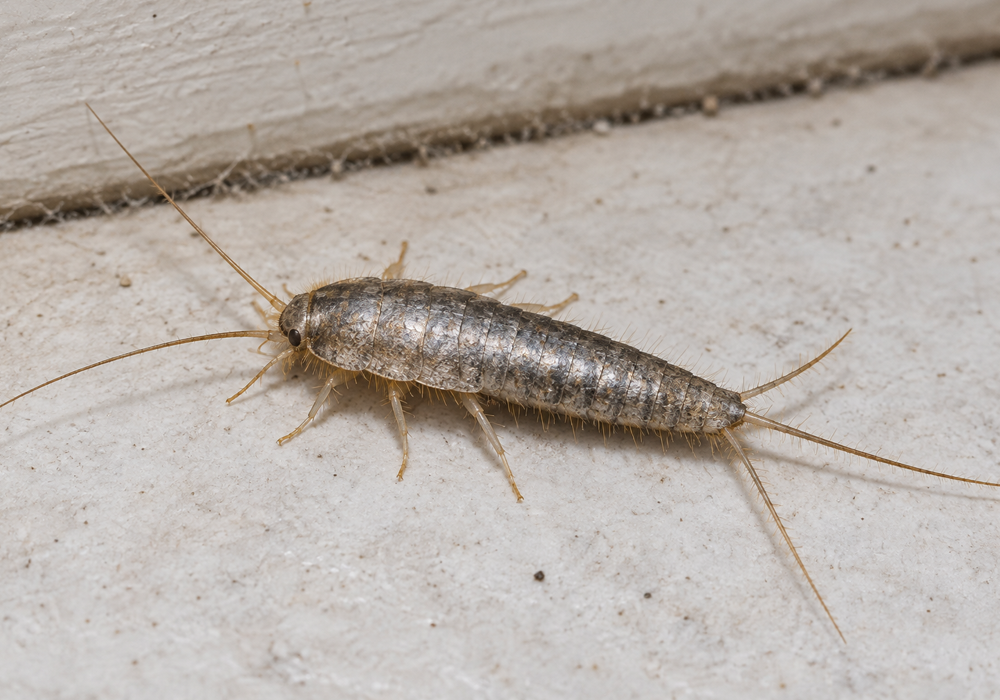
Seeing silverfish—particularly at night or when moving stored items—can be the most obvious sign. They may quickly retreat into cracks, gaps, baseboards, shelving, or other protected spaces when disturbed.
Irregular Feeding Damage

Silverfish feeding may leave irregular scraped areas, notches, or holes in paper, cardboard, book bindings, wallpaper, or other starch-containing materials.
Damage to Books & Paper

Books, documents, photographs, magazines, labels, and stored papers may show surface damage where silverfish have fed on paper, bindings, glues, or pastes.
Yellowish Staining
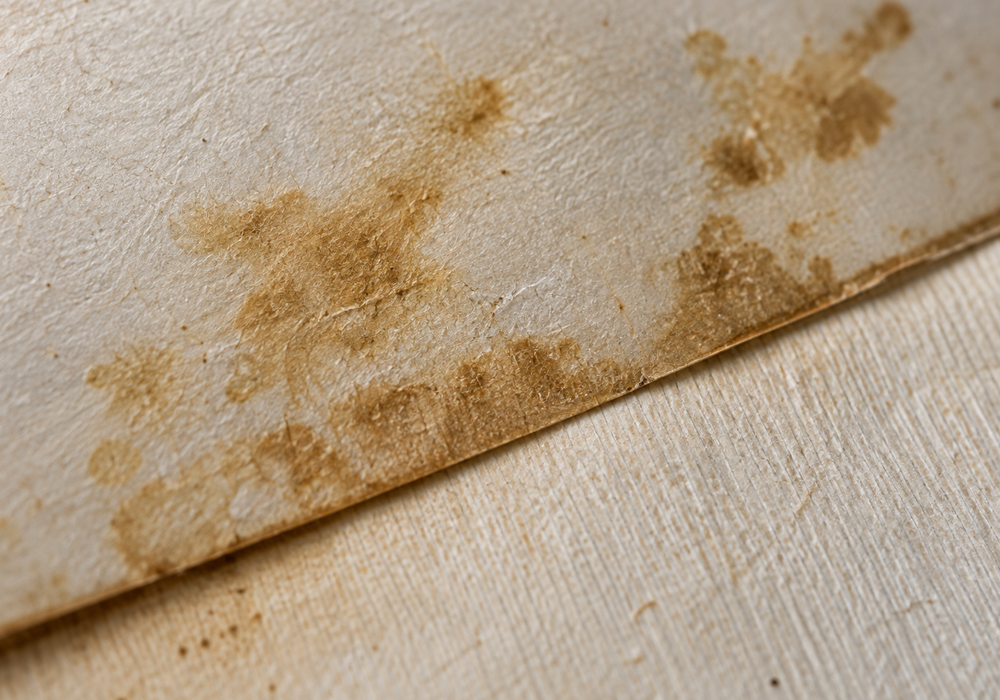
Silverfish activity may sometimes leave yellowish stains or discoloration on paper, fabrics, or other materials associated with feeding or hiding areas.
Shed Scales & Skin
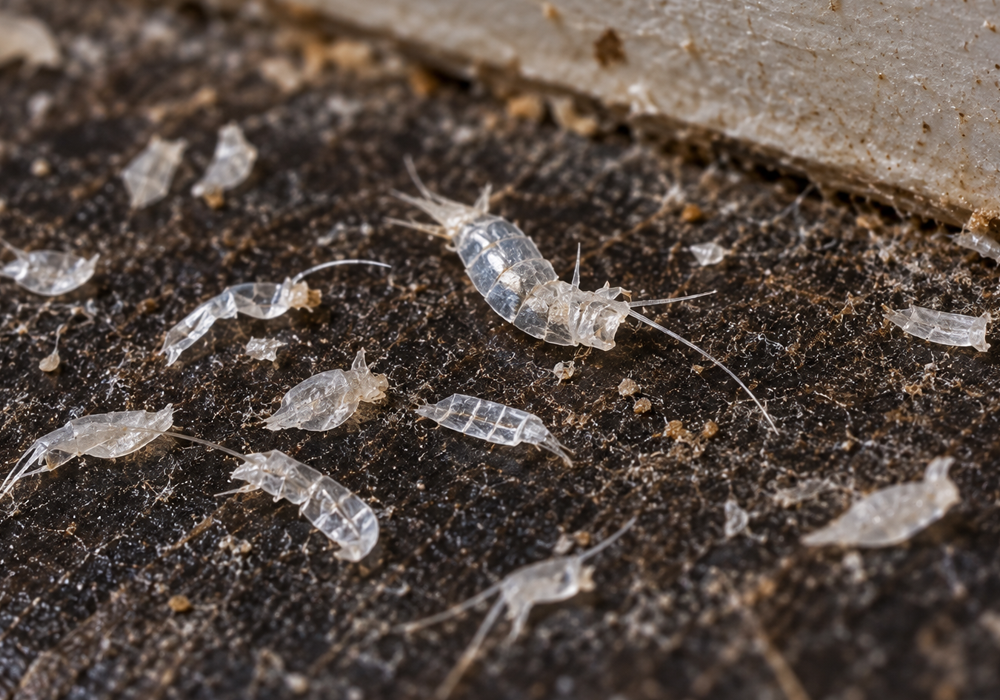
Tiny scales or shed material may accumulate where silverfish repeatedly hide or travel. These signs can be difficult to notice without looking closely.
Repeated Activity in Humid Areas
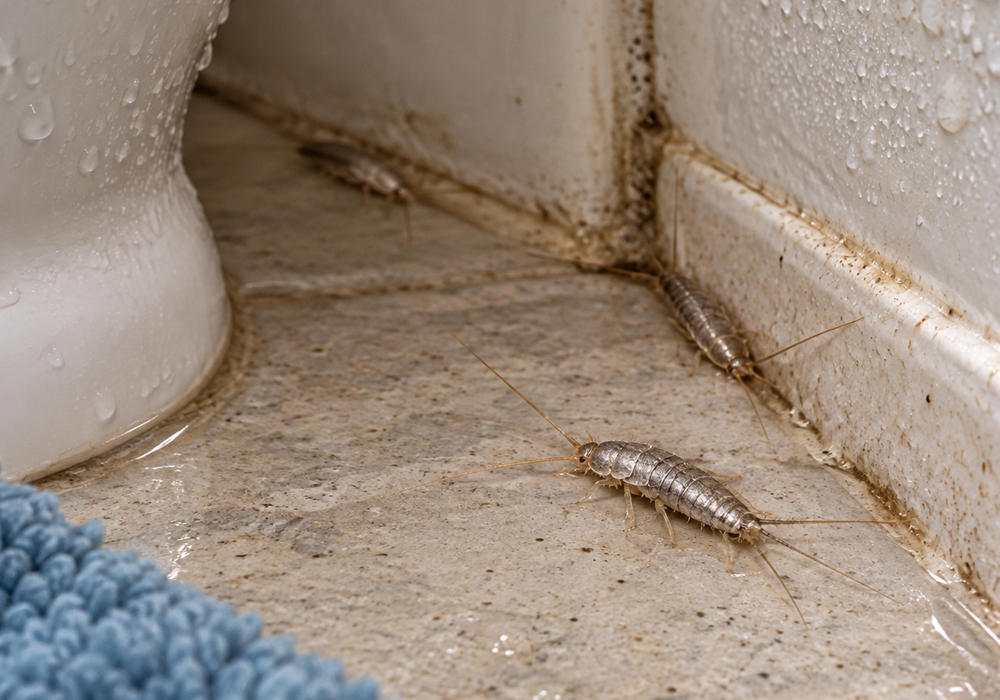
Silverfish repeatedly appearing around bathrooms, closets, storage areas, bookshelves, baseboards, or other humid protected locations can indicate suitable conditions nearby.
Identification Note: Don’t rely on damage alone. Look for live silverfish, the type of material affected, staining or shed material, humidity, and repeated activity in the same area for stronger clues.
Why Am I Seeing Silverfish?
Silverfish usually appear around a home because they have found humidity, protected hiding spaces, suitable food materials, and conditions that allow them to remain undisturbed. Activity may become more noticeable when these conditions persist.
High Humidity Is Present
Silverfish favor humid conditions. Bathrooms, plumbing areas, attics, storage spaces, and other areas with persistent moisture may provide suitable conditions.
They’ve Found Food Materials
Silverfish can feed on materials containing starches and carbohydrates, including paper, cardboard, book bindings, wallpaper paste, glues, cereals, and some fabrics.
Protected Hiding Spaces Are Available
Cracks, gaps, baseboards, shelving, wall spaces, boxes, and other narrow protected areas can provide daytime hiding places.
Stored Materials Provide Shelter
Boxes, books, papers, magazines, fabrics, and other stored materials can create quiet spaces where silverfish can hide while also providing potential food sources.
Conditions Remain Undisturbed
Closets, storage rooms, attics, shelving, and other areas that are rarely disturbed can allow silverfish activity to remain unnoticed for extended periods.
Activity Has Become Established
Repeated sightings or recurring damage in the same area can indicate that suitable humidity, shelter, and food materials continue to support silverfish activity nearby.
Identification Note: If silverfish keep appearing, look beyond where you see the insect. Humidity, food materials, protected hiding spaces, stored items, and undisturbed areas can all contribute to recurring activity.
Silverfish vs. Firebrat: Identification Clues
This Silverfish Identification Guide compares silverfish and firebrats using their appearance, habitat, and environmental preferences.
Body Color
Silverfish: Shiny silver to pearl-gray appearance.
Firebrat: Mottled gray or brown appearance.
Body Shape
Silverfish: Flattened body that gradually tapers toward the rear.
Firebrat: Similar flattened, tapered body shape.
Antennae & Tail Appendages
Silverfish: Two long antennae and three long tail-like appendages.
Firebrat: Also has long antennae and three tail-like appendages, so these features alone do not separate the two.
Temperature Preference
Silverfish: More commonly associated with humid, protected areas at ordinary indoor temperatures.
Firebrat: Strongly associated with hot locations and elevated temperatures.
Typical Locations
Silverfish: Bathrooms, closets, bookcases, storage areas, baseboards, and other humid protected spaces.
Firebrat: Areas around furnaces, fireplaces, hot-water pipes, boilers, and other warm protected locations.
Best Identification Clue
Silverfish: Silver-gray appearance combined with a humid location.
Firebrat: Mottled appearance combined with a hot environment.
Identification Note: Body shape alone may not separate silverfish from firebrats. Compare color and markings, temperature, humidity, and where the insect was found for stronger identification.
When Should I Be Concerned About Silverfish?
Seeing an occasional silverfish does not necessarily indicate widespread activity. However, repeated sightings, increasing numbers, damage to stored materials, activity in multiple rooms, or persistent moisture conditions can warrant closer attention.
Silverfish Keep Appearing
Repeated sightings in the same bathroom, closet, storage area, bookcase, or other location can indicate that suitable hiding conditions are nearby.
Numbers Are Increasing
Seeing silverfish more frequently or finding several insects in a short period can suggest that conditions are supporting ongoing activity.
Books or Papers Are Being Damaged
New scraping, notches, holes, or other damage to books, documents, cardboard, wallpaper, or stored papers deserves closer attention.
Stored Materials Are Being Affected
Damage or staining on boxes, fabrics, labels, photographs, or other stored materials can indicate silverfish are feeding or hiding nearby.
Activity Is Appearing in Multiple Areas
Silverfish showing up in several rooms or different parts of the home may indicate that suitable humidity and hiding conditions extend beyond one isolated location.
Moisture Conditions Persist
Recurring silverfish activity around plumbing, bathrooms, attics, or other humid areas can point toward persistent moisture conditions that continue to provide suitable habitat.
Not sure whether the insect or damage you’re seeing is from silverfish? Bug Cops Pest Control offers free home inspections to help identify what you’re dealing with and determine the appropriate next step.

Inspection Note: Recurring silverfish activity can provide important clues. We look at where insects are appearing, what materials may be affected, whether humidity or moisture is present, and whether activity is limited to one area or occurring throughout the property.
Silverfish Identification Guide FAQs
Silverfish favor humid, protected areas, so bathrooms can provide suitable conditions, especially around plumbing, baseboards, cabinets, and other secluded spaces where moisture persists.
Yes. Silverfish can feed on paper, book bindings, glues, pastes, cardboard, and other starch-containing materials. Feeding may leave irregular scraped areas, notches, holes, or surface damage.
Silverfish typically have a shiny silver to pearl-gray appearance and favor humid, protected areas. Firebrats are generally mottled gray or brown and are more strongly associated with hot locations, such as areas around furnaces, fireplaces, and hot pipes.
Silverfish are primarily active at night. During the day, they commonly hide in cracks, gaps, baseboards, shelving, storage areas, and other protected spaces and may move quickly when disturbed.
Not necessarily. One silverfish may be an isolated sighting. However, repeated sightings, increasing numbers, recurring damage, or activity in several areas can provide stronger evidence that suitable conditions are supporting ongoing activity.
Not Sure If You’ve Found Silverfish?
This Silverfish Identification Guide can help when silverfish are confused with firebrats or other small household insects. Body shape, color, long antennae, three tail-like appendages, and where the insect was found can all provide useful identification clues.
Don’t guess. If you’ve found an insect or damage you don’t recognize, take a clear photo and send it to Bug Cops. We’ll help you take a closer look at your suspect.
Protecting & Serving Clay and Putnam Counties Since 1993
If silverfish activity keeps returning around your home or property, Bug Cops Pest Control can help identify the insect, evaluate where activity may be occurring, and determine whether moisture, hiding spaces, or other conditions may be contributing.
Free home inspections are available if you’d like us to take a closer look.