Fall Armyworm Identification Guide
This Fall Armyworm Identification Guide will help North Florida homeowners recognize fall armyworms, understand the turf damage they can cause, and know where to look for evidence of activity. Fall armyworms are turf-feeding caterpillars that can damage grass quickly when populations are high, making the insect itself and its feeding pattern important identification clues.
If you’re seeing signs of fall armyworm activity or unexplained turf damage, Bug Cops can help determine what’s happening in your lawn.
What Does a Fall Armyworm Look Like?
Fall armyworm caterpillars vary in color from greenish or tan when young to brown, gray, or nearly black as they mature. Fully grown larvae can reach approximately 1½ inches long.
Two markings are especially useful when examining a mature caterpillar:
• An obvious pale, inverted “Y” on the head
• Four dark spots arranged roughly in a square near the rear of the body
Those markings can help distinguish a fall armyworm from some of the other caterpillars that may be found in turf.
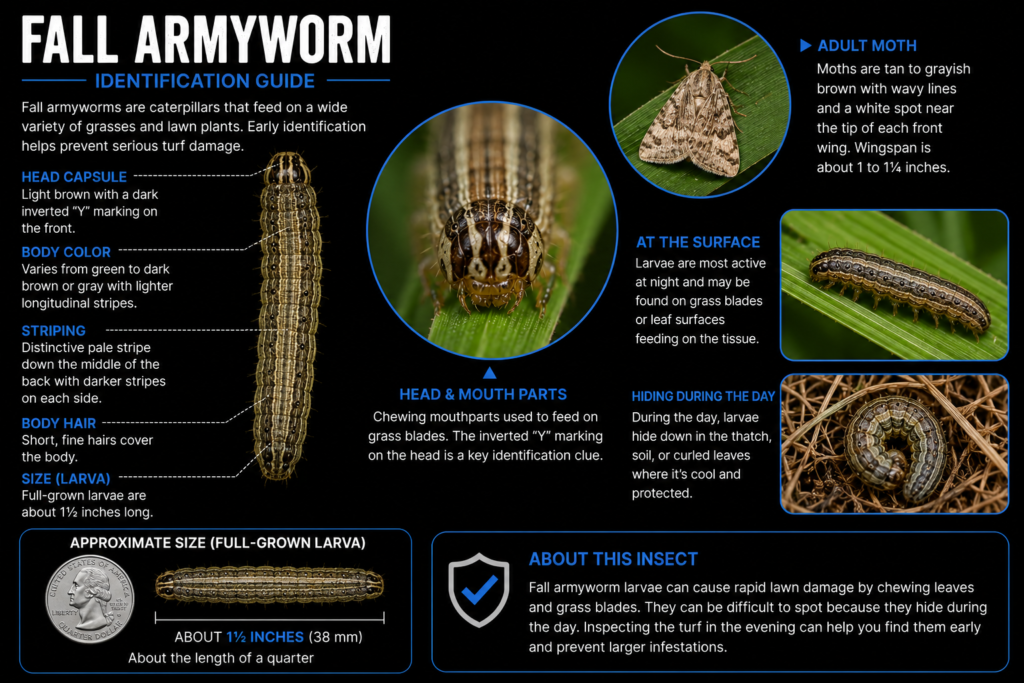
Identification Note: Webworm or Armyworm? Check the Caterpillar. Both tropical sod webworms and fall armyworms chew grass blades, so the lawn damage can sometimes look similar. The caterpillar itself can provide the better clue. On a mature fall armyworm, look closely for the pale inverted “Y” on the head and the group of four dark spots near the rear of the body. Identifying which caterpillar is actually present is more reliable than identifying it from brown turf alone.
What Does Fall Armyworm Damage Look Like?
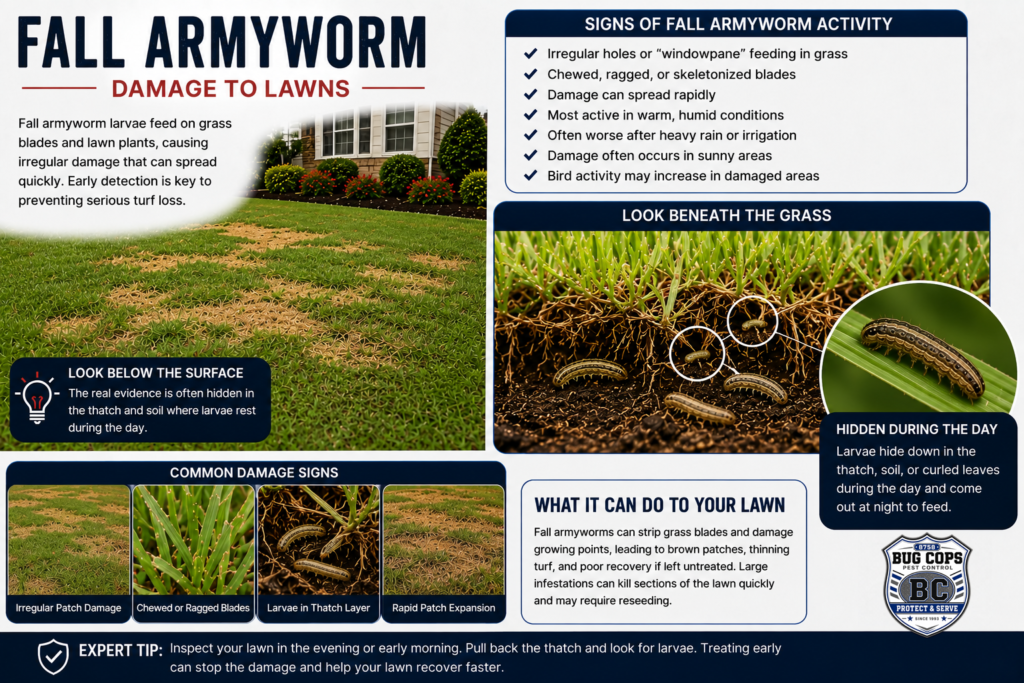
Young larvae may initially scrape or chew the surface of grass blades. As the caterpillars grow, their feeding becomes more aggressive and larger portions of the blades may disappear.
When fall armyworms are active, look for clues that suggest widespread chewing rather than damage occurring below the turf:
- Grass blades with obvious chewing or missing portions
- Turf that appears thinned, ragged, or closely cropped
- Brown or bare-looking areas as feeding becomes heavier
- Multiple caterpillars present within an affected area
- Damage that seems to progress across an area of turf
Where Should You Look?
Start in areas where turf appears freshly chewed or unusually thin and inspect the grass blades, thatch, and surface of the soil.
Fall armyworms are generally more active during the cooler portions of the day and at night, so they may be easier to find early in the morning or later in the day than during the hottest, brightest part of the afternoon.
When an area appears to be changing quickly, inspecting the edge of the actively damaged turf may help locate feeding caterpillars.
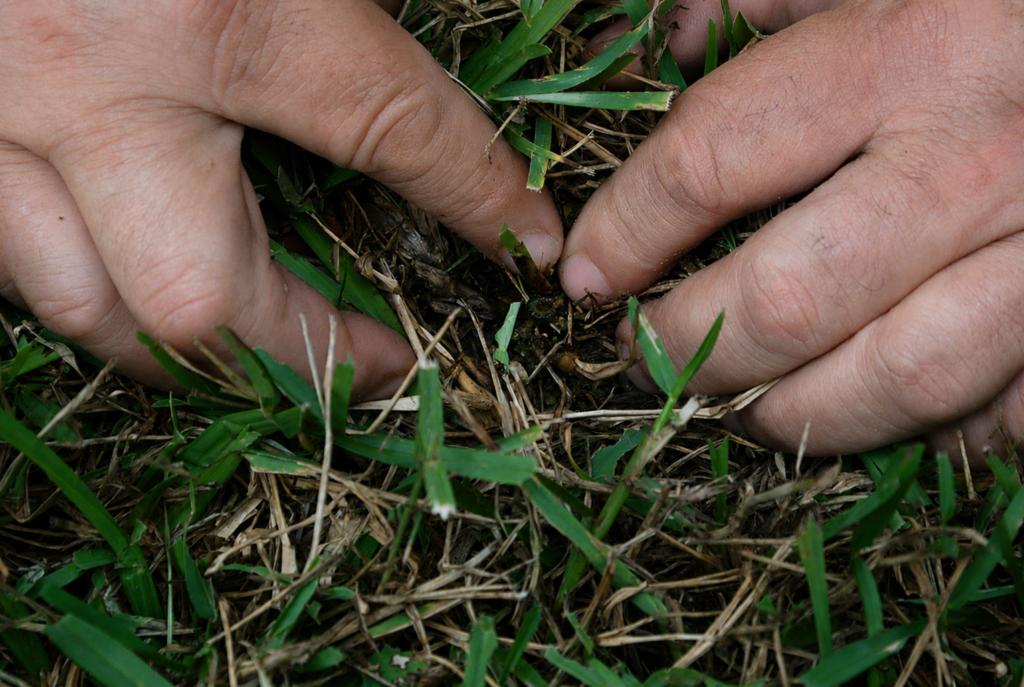

Inspection Note: When turf damage appears to be spreading, we look closely at the edge of the actively damaged area. Parting the grass and thatch there may reveal feeding caterpillars or other evidence that helps identify what is causing the damage.
Not sure this is a fall armyworm? Compare fall armyworms with tropical sod webworms, chinch bugs, and mole crickets in our Turf-Damaging Insect Identification Guide. For additional university-based information about identifying and managing insects found in Florida lawns, visit the UF/IFAS Extension lawn insect resources.
Fall Armyworm Identification Guide FAQs
Fall armyworm caterpillars may be found on grass blades, within the thatch, and near the surface of the soil. They are generally more active during cooler portions of the day and at night, so they may be easier to find in the early morning or later in the day.
Young larvae may scrape or chew the surface of grass blades. As feeding becomes heavier, turf may appear thinned, ragged, brown, or closely cropped, and damaged areas can sometimes appear to progress quickly across the lawn.
One of the most useful identification clues is the pale, inverted “Y” marking on the head. Mature larvae also have four dark spots arranged roughly in a square near the rear of the body and can reach approximately 1½ inches long.
Fall armyworms feed directly on grass blades, and multiple caterpillars may be feeding within the same area. When populations are high, continued feeding can make a previously subtle area of damage become much more noticeable in a relatively short period.
Both caterpillars chew grass blades and can produce similar-looking turf damage. Examining the caterpillar itself provides a better clue. On a mature fall armyworm, look for the characteristic inverted “Y” on the head and the four dark spots near the rear of the body.
A Turf Feeder That Can Move Fast
Fall armyworms are caterpillars that feed on the leaves of many grasses, including Florida turfgrasses. Unlike insects that remain hidden in the soil or feed by sucking plant juices, fall armyworm larvae chew directly on the grass blades.
When populations are high, feeding can become noticeable very quickly. An area that initially looks slightly thin or discolored may develop into more obvious brown or closely eaten turf as the caterpillars continue feeding.
Not Sure What’s Damaging Your Lawn?
Brown spots, thinning turf, and damaged grass don’t always tell the whole story. Bug Cops looks at the damage pattern, turf condition, environmental factors, and evidence of pest activity to help determine what’s actually happening before recommending the appropriate next step.
The right lawn care starts with identifying the problem correctly. Don’t guess. Bug Cops offers free Lawn & Ornamental inspections if you’d like us to take a closer look.