
Spider Identification Guide for Clay & Putnam Counties
This Spider Identification Guide for Clay & Putnam Counties will help you recognize common signs of spider activity, understand where spiders are likely to hide, and learn what may be attracting them to your property.
Spiders are common around North Florida homes and play an important role outdoors by feeding on insects and other pests. While most spiders homeowners encounter are harmless, finding one inside—especially when you aren’t sure what kind it is—can understandably raise questions.
Their size, color, markings, and behavior can vary greatly. Some build webs in quiet corners, while others actively hunt for prey and may wander indoors through doors, windows, garages, or small openings around the home.
Not sure what kind of spider you found? Take a clear photo from a safe distance and send it to Bug Cops. We’ll help you identify your unexpected eight-legged visitor.
Identifying Spiders: What Do They Look Like?
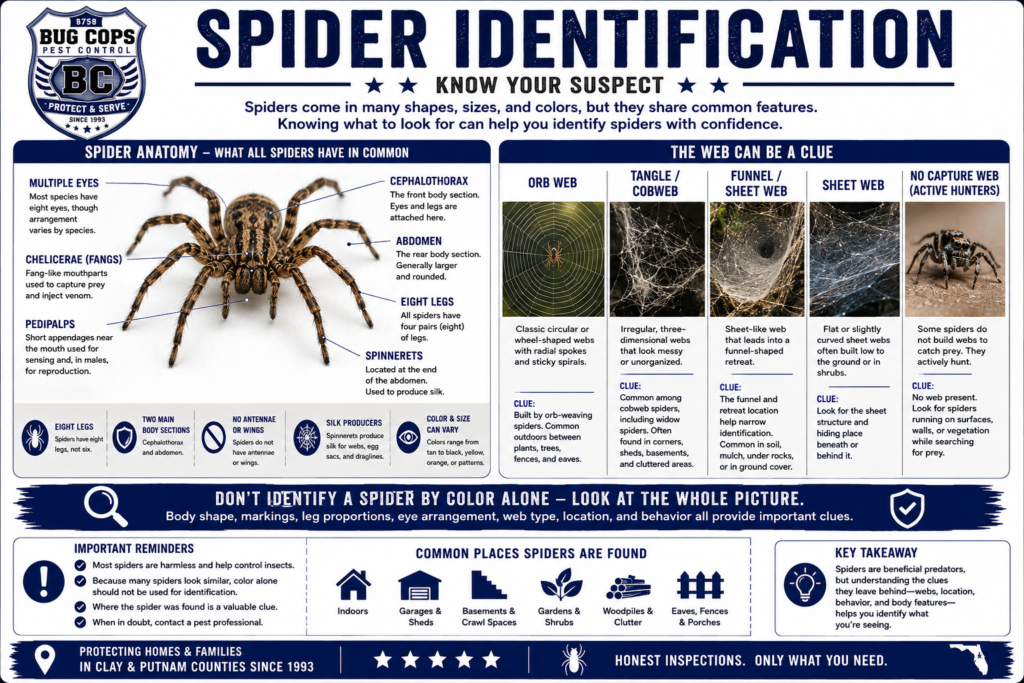
Use this Spider Identification Guide to compare appearance, habitat, web type, and other clues before deciding which suspect may be present. Even so, spiders come in many sizes, colors, and patterns, but they share several features that help distinguish them from insects.
Adult spiders typically have:
- Eight legs
- Two main body sections — the cephalothorax and abdomen
- No antennae or wings
- Multiple eyes — most species have eight, although the number and arrangement can vary
- Fang-like mouthparts called chelicerae
- Spinnerets used to produce silk
Depending on the species, a spider may be tiny and difficult to notice or large enough to be quite noticeable when it wanders across a wall or floor. Colors can range from tan, brown, and gray to black, yellow, orange, or combinations of several colors.
Body shape is also an important identification clue. Some spiders have round, bulbous abdomens, while others have long legs or compact, hairy bodies.
Webs can provide clues, too. Some spiders construct organized circular webs, others make irregular cobwebs or funnel-shaped retreats, and some hunting spiders don’t rely on a web to catch their prey at all.
Because many spiders can look similar at first glance, color alone should not be used to identify a spider. Body shape, markings, size, eye arrangement, web type, and where the spider was found can all help with identification.
Common Spider Suspects in Our Spider Identification Guide
North Florida is home to many species of spiders. Most are beneficial predators that help control flies, mosquitoes, moths, roaches, and other insects. For example, some live primarily outdoors, while others may wander into homes, garages, sheds, and other structures.
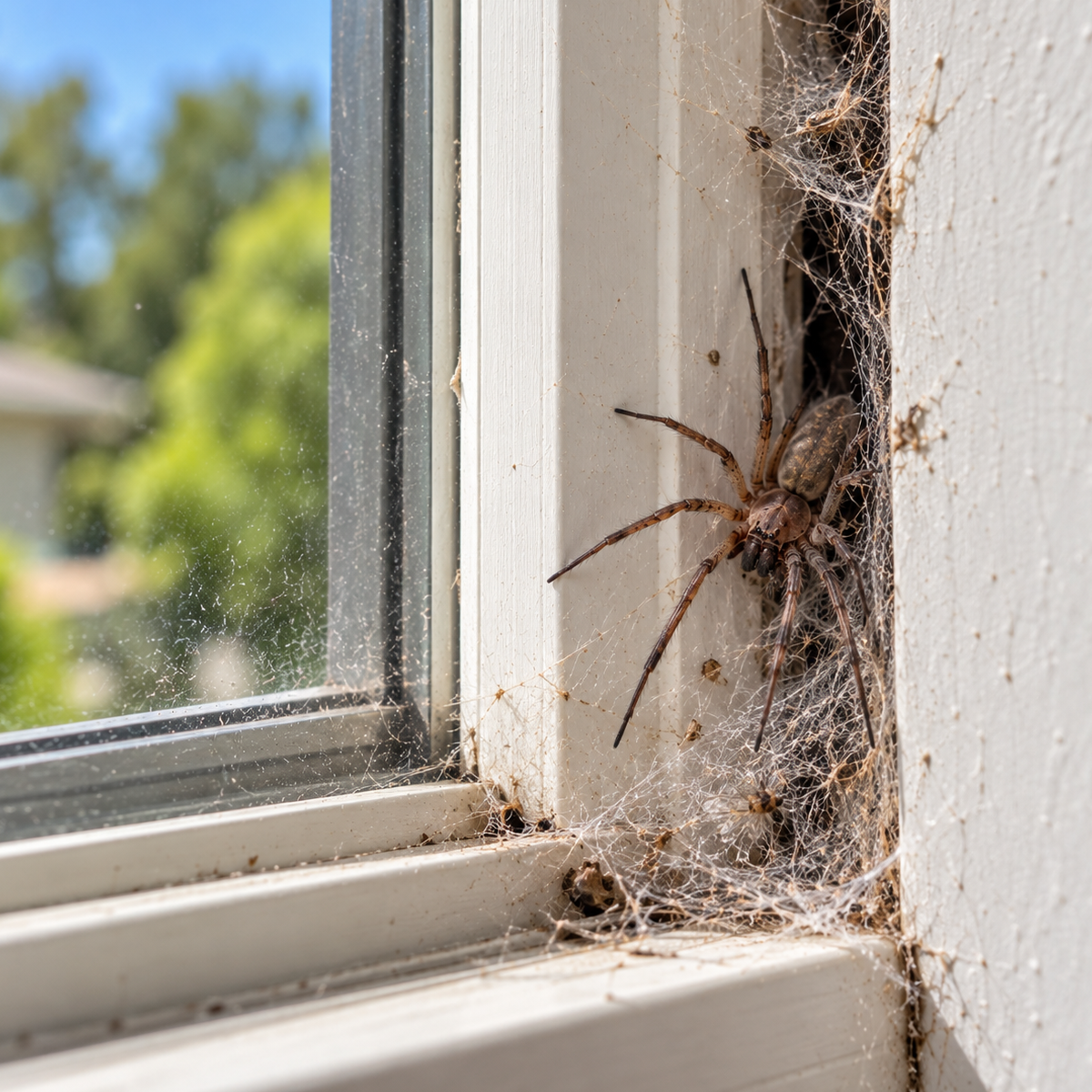
Southern House Spiders
Southern house spiders are commonly associated with buildings and may construct webs around cracks, crevices, window frames, shutters, garages, and other protected areas. However, their appearance can sometimes cause them to be mistaken for other brown spiders.
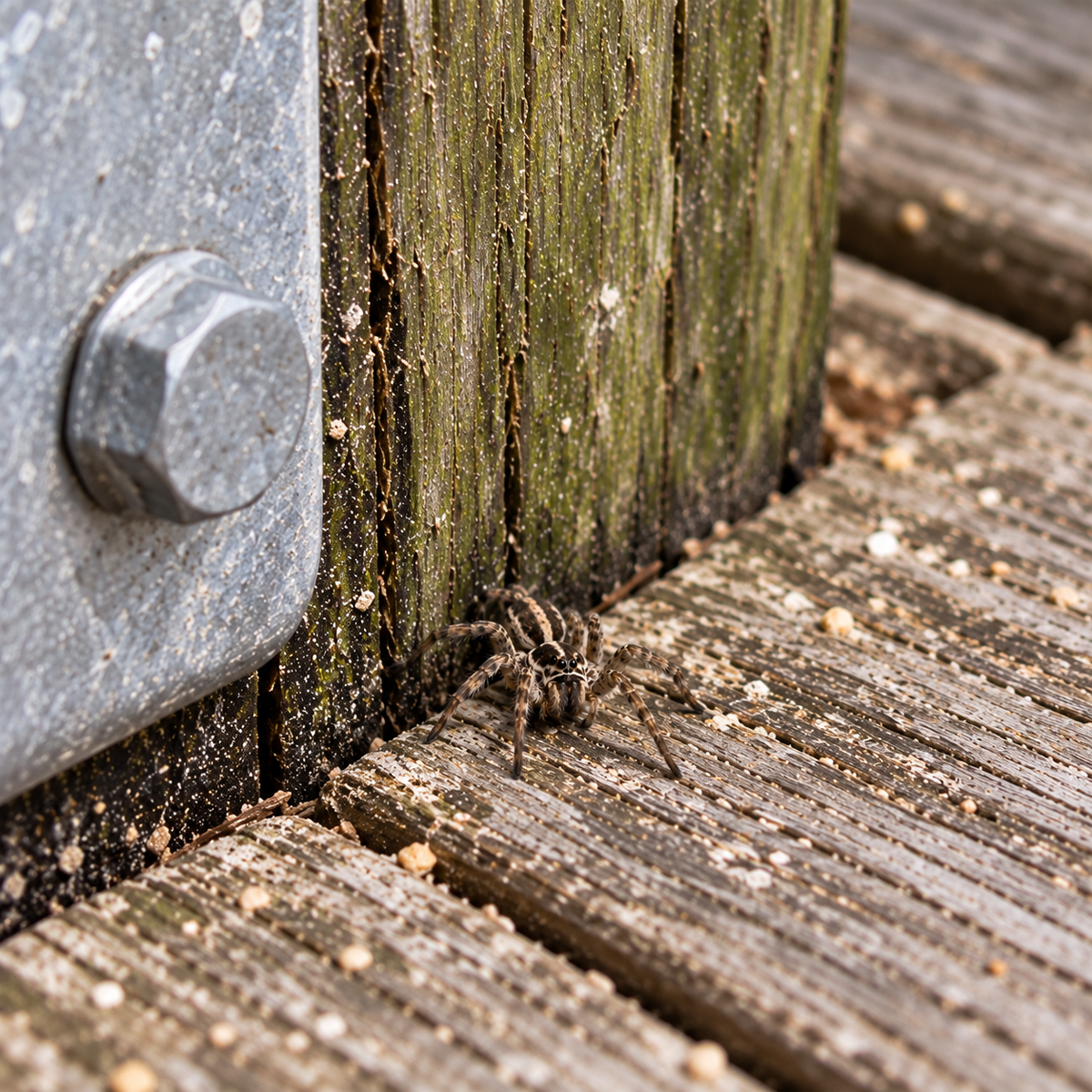
Wolf Spiders
Wolf spiders are active hunters that travel along the ground instead of building webs to catch prey. In addition, they are typically brown or gray and may be found in yards, landscaping, garages, sheds, or occasionally inside the home.
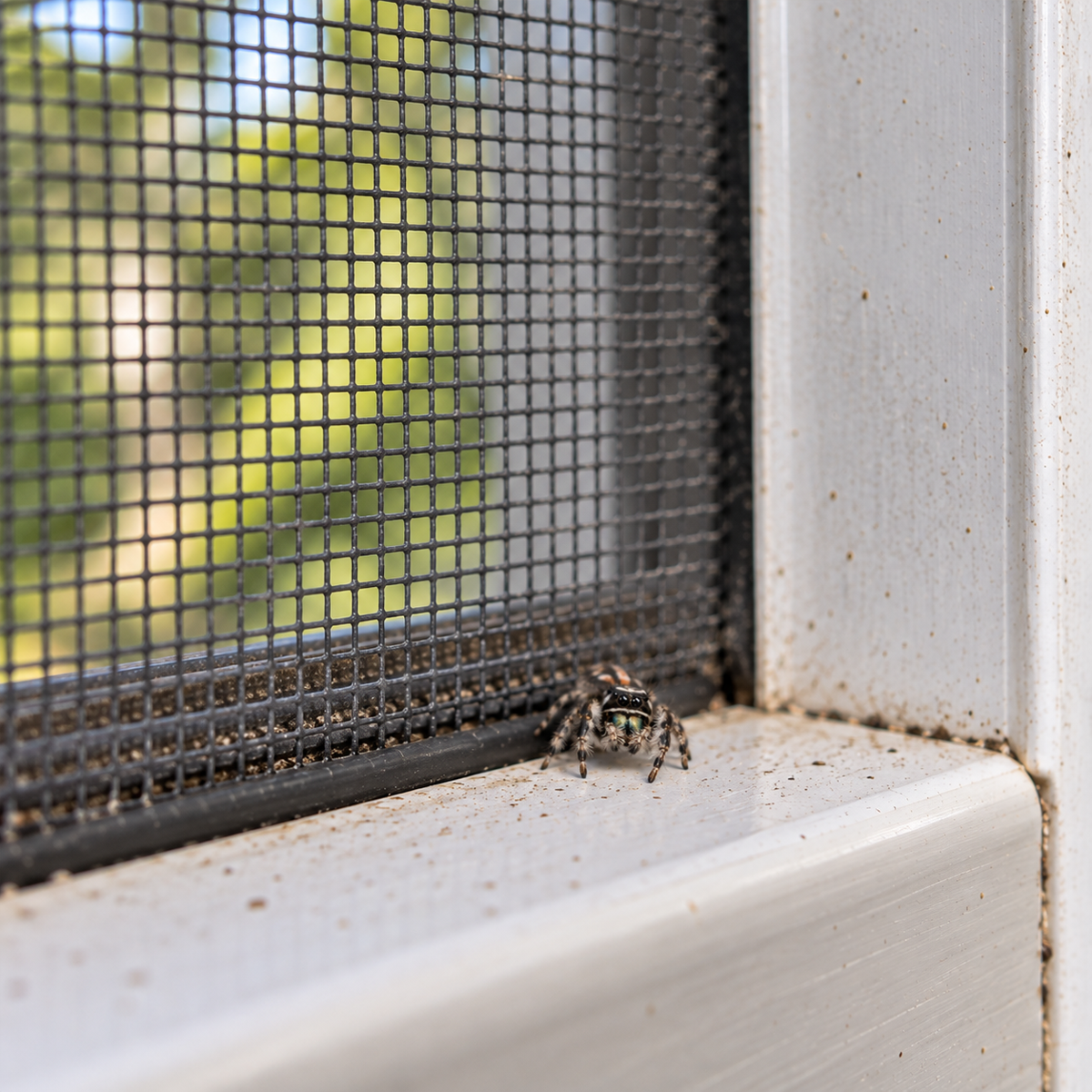
Jumping Spiders
Usually small and compact with relatively large forward-facing eyes, jumping spiders actively hunt rather than relying on a web to capture prey. Usually small and compact with relatively large forward-facing eyes, jumping spiders actively hunt rather than relying on a web to capture prey. They may be seen on walls, windows, fences, patios, and around sunny areas of the home.
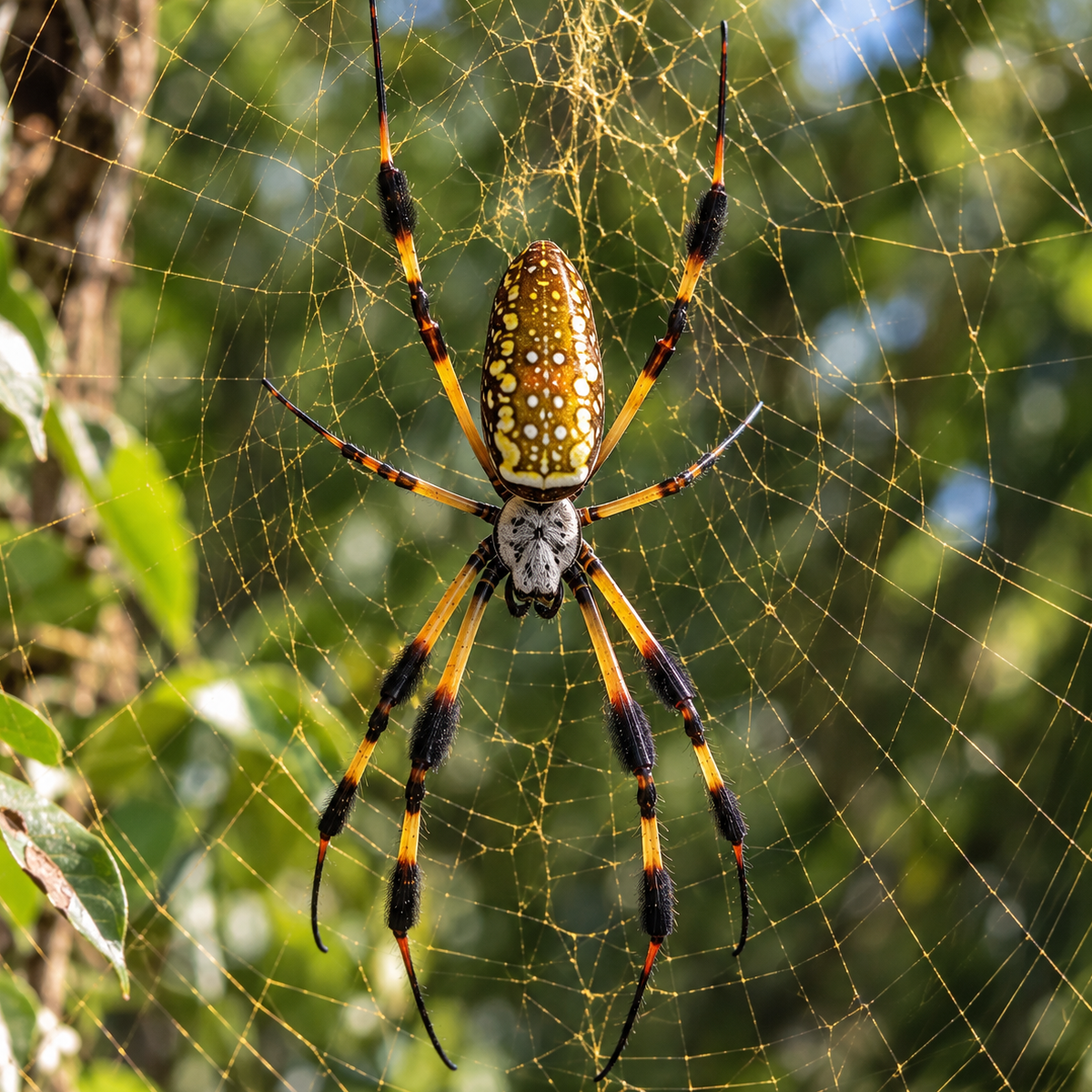
Golden Silk Orb-Weavers
These large, noticeable spiders build impressive golden-colored webs between trees, shrubs, and other outdoor structures. Despite their intimidating size, they generally avoid people and are most often encountered outdoors.
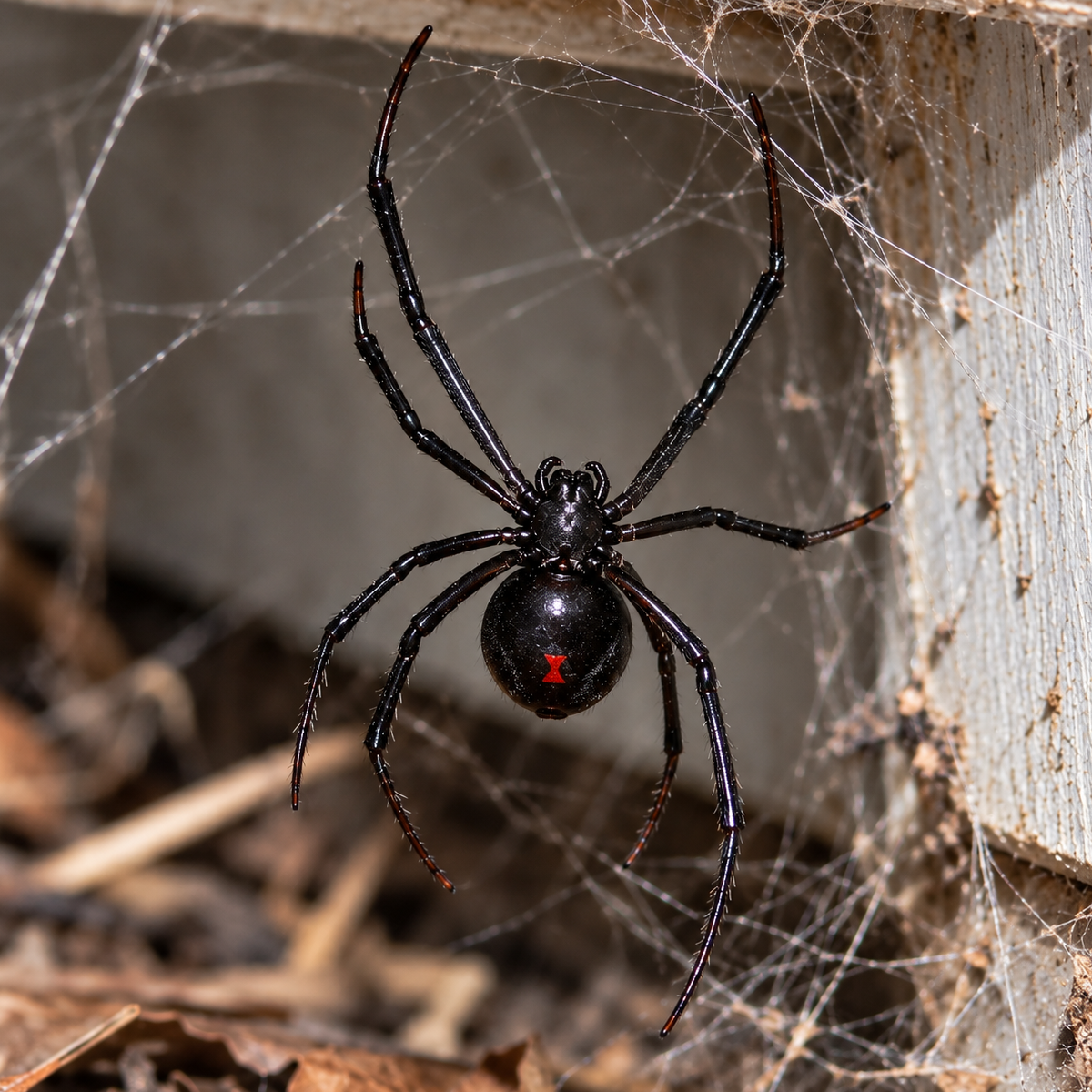
Black Widow Spiders
Black widows have glossy, dark bodies, and mature females typically display the distinctive red hourglass marking on the underside of the abdomen. They favor protected, relatively undisturbed locations such as sheds, garages, woodpiles, outdoor furniture, and cluttered storage areas. Because their venom is medically significant, they should not be handled.
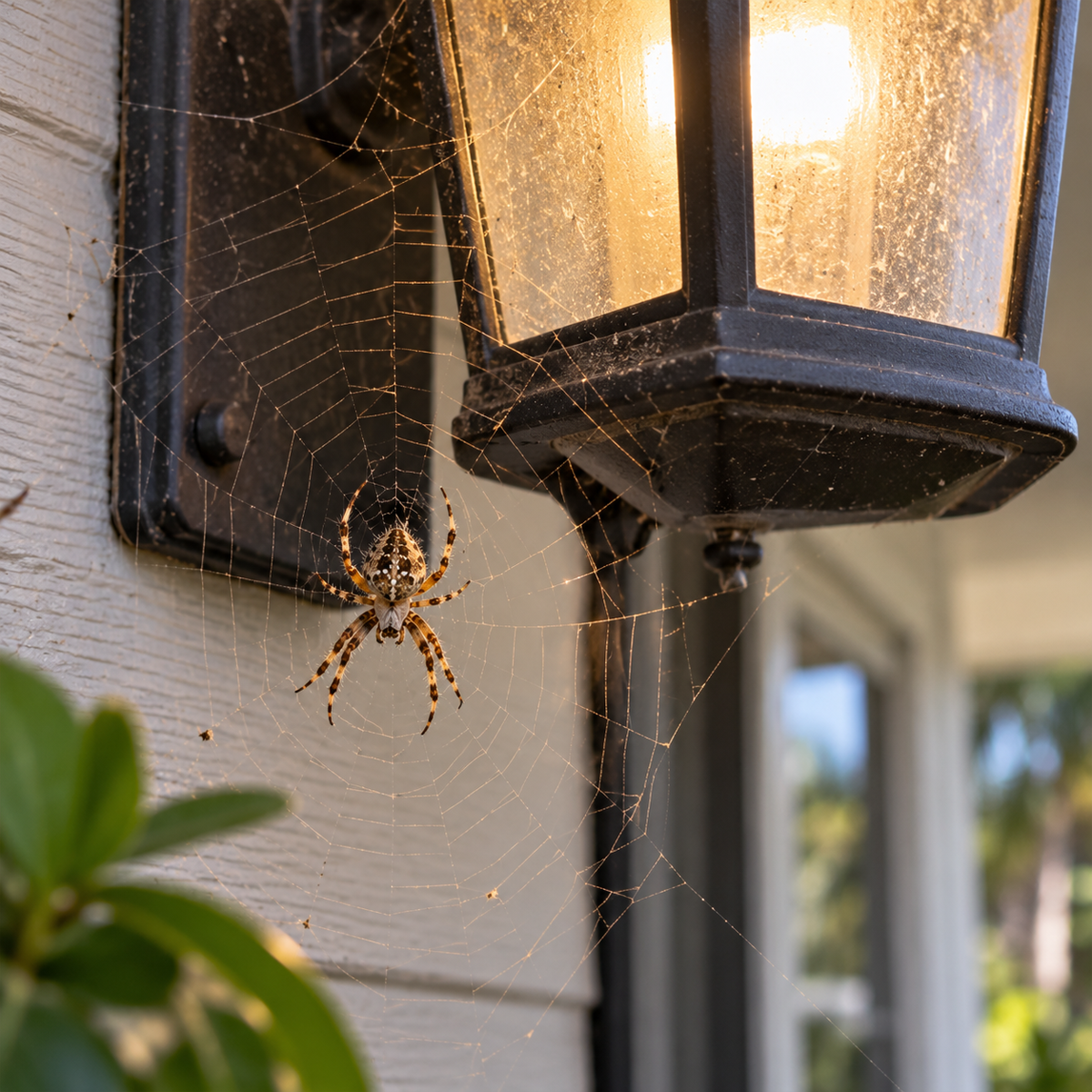
Orb-Weaver Spiders
Orb-weavers are known for the large, circular webs they build outdoors. In addition, they come in many colors and sizes and are commonly found around gardens, trees, porches, and exterior lighting where flying insects are plentiful.
A Word About Brown Recluse Spiders
Brown recluse spiders get a lot of attention, but they are not considered widely established in Florida. UF/IFAS documents only limited verified records in the state, including isolated specimens and localized infestations associated with individual buildings.
Identification can also be tricky. Male Southern House Spiders are frequently mistaken for brown recluses, which is one reason a brown spider should not be identified by color alone.
Brown recluses have six eyes arranged in three pairs and may have a dark violin-shaped marking on the carapace. However, identifying a spider from a single marking can be unreliable. When possible, look at several characteristics—or send us a clear photo for help narrowing down the suspect. Want to dig deeper? Read the University of Florida’s detailed UF/IFAS Brown Recluse Spider profile.
If you find a spider you don’t recognize, avoid handling it with your bare hands. Take a clear photo from a safe distance and send it to Bug Cops for help with identification.
Seeing spiders repeatedly around your home? Visit our Pest Control Services page to learn how Bug Cops investigates spider activity and the conditions that may be supporting it.
Spider Identification Guide: Where Are Spiders Found Around the Home?
Spiders usually settle in places that provide shelter and a reliable supply of insects to eat. Some prefer quiet, undisturbed spaces, while others build webs near lights, doors, and windows where flying insects are easy to catch.
Outside the Home
Look for spiders and webs around:
- Porches, patios, and entryways
- Exterior lights
- Eaves and rooflines
- Window and door frames
- Shrubs, trees, and landscaping
- Fences and decks
- Garages, sheds, and outbuildings
- Woodpiles and stored materials
- Outdoor furniture and equipment
Inside the Home
Spiders that wander indoors or establish themselves inside are often found around:
- Corners and ceilings
- Windows and doors
- Closets and storage areas
- Garages and utility rooms
- Basements or crawl spaces
- Behind furniture and appliances
- Around boxes and other undisturbed belongings
- Cracks, gaps, and other protected spaces
Why Are They Hanging Around?
Seeing an occasional spider indoors doesn’t necessarily mean you have a spider infestation. Spiders may simply wander inside while searching for food, shelter, or a mate.
However, frequent spider activity or numerous webs can indicate that plenty of insect prey is available nearby. In that case, the spiders may be telling you something else about what’s happening around your home.
Spiders often become more noticeable where other insects are active. Our Cockroach Identification Guide can help identify one common type of household insect activity.

Identification Note: Frequent spider activity can tell us something beyond which spider is present. When we see numerous spiders or webs around a property, we also look for the insects providing their food source. Reducing that prey activity may be an important part of understanding why the spiders are there.
Spider Identification Guide: Signs of Activity
A Spider Identification Guide can also help you recognize evidence even when the spider itself isn’t visible. Seeing a spider is the most obvious sign of activity, but spiders often leave other clues behind. As a result, knowing what to look for can help you determine whether you’re seeing an occasional visitor or more consistent spider activity around your home.
Spider Webs
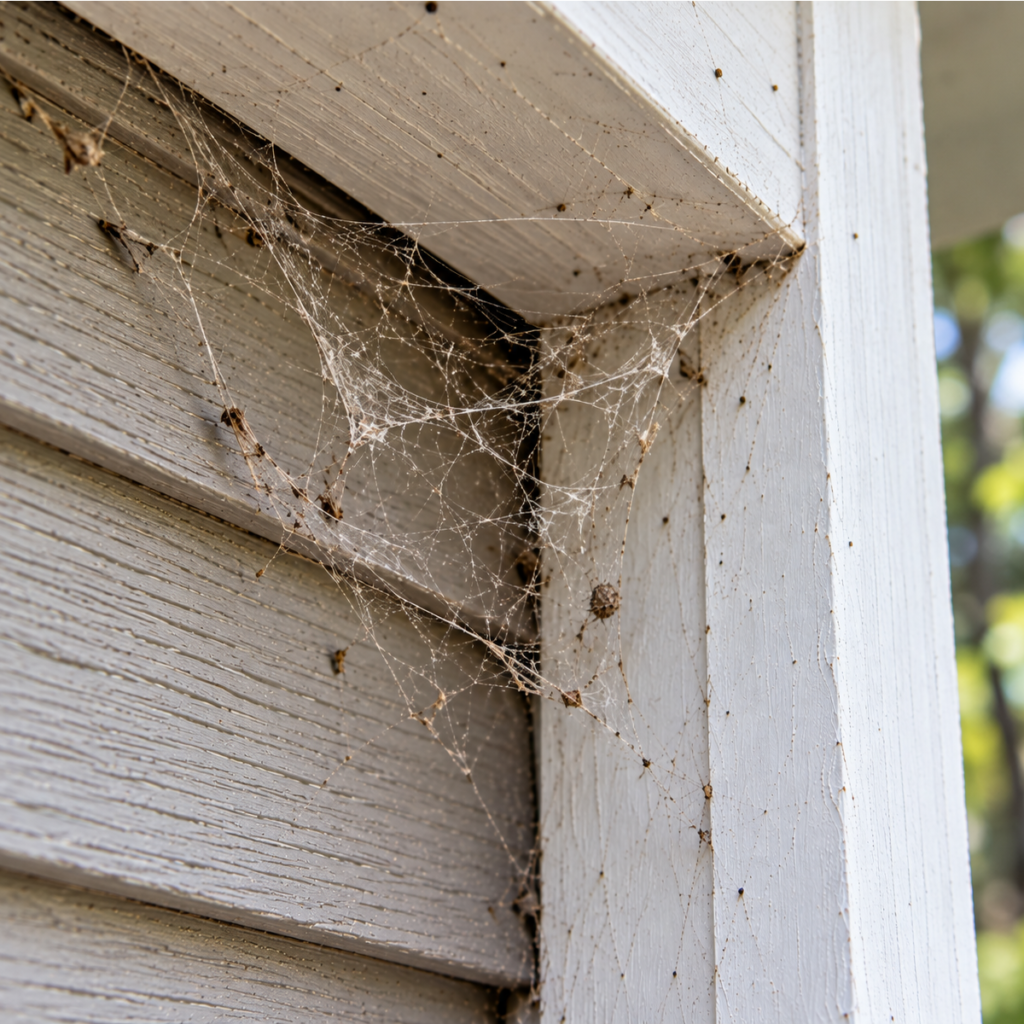
Webs are one of the easiest signs to spot. For example, depending on the species, they may be large and circular, tangled and irregular, funnel-shaped, or tucked into cracks and corners.
Finding new webs shortly after you remove old ones can indicate active spiders in the area.
Egg Sacs
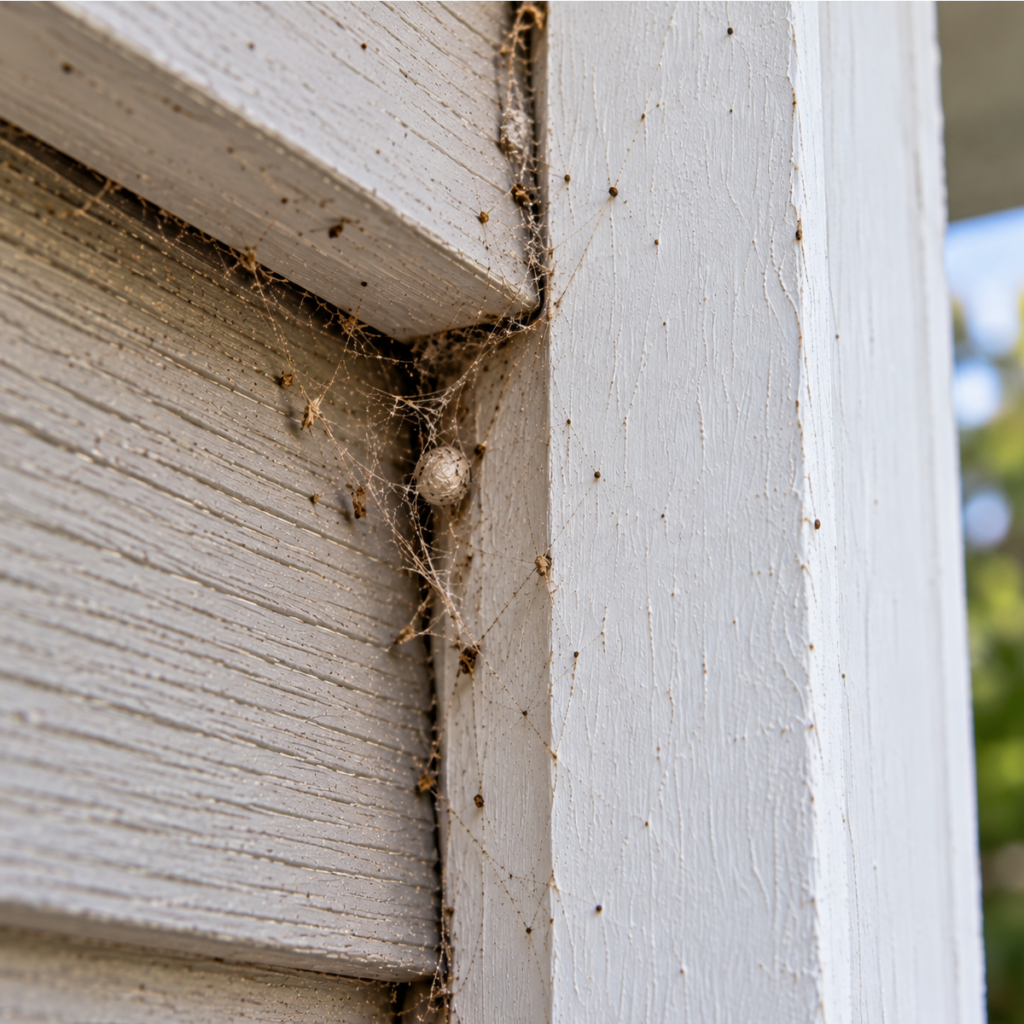
These silk bundles may appear small, round, or flattened. Depending on the species, they can be white, cream, tan, or brown and may be attached to a web or hidden in a protected location.
For this reason, avoid handling an unidentified egg sac with your bare hands.
Shed Skins
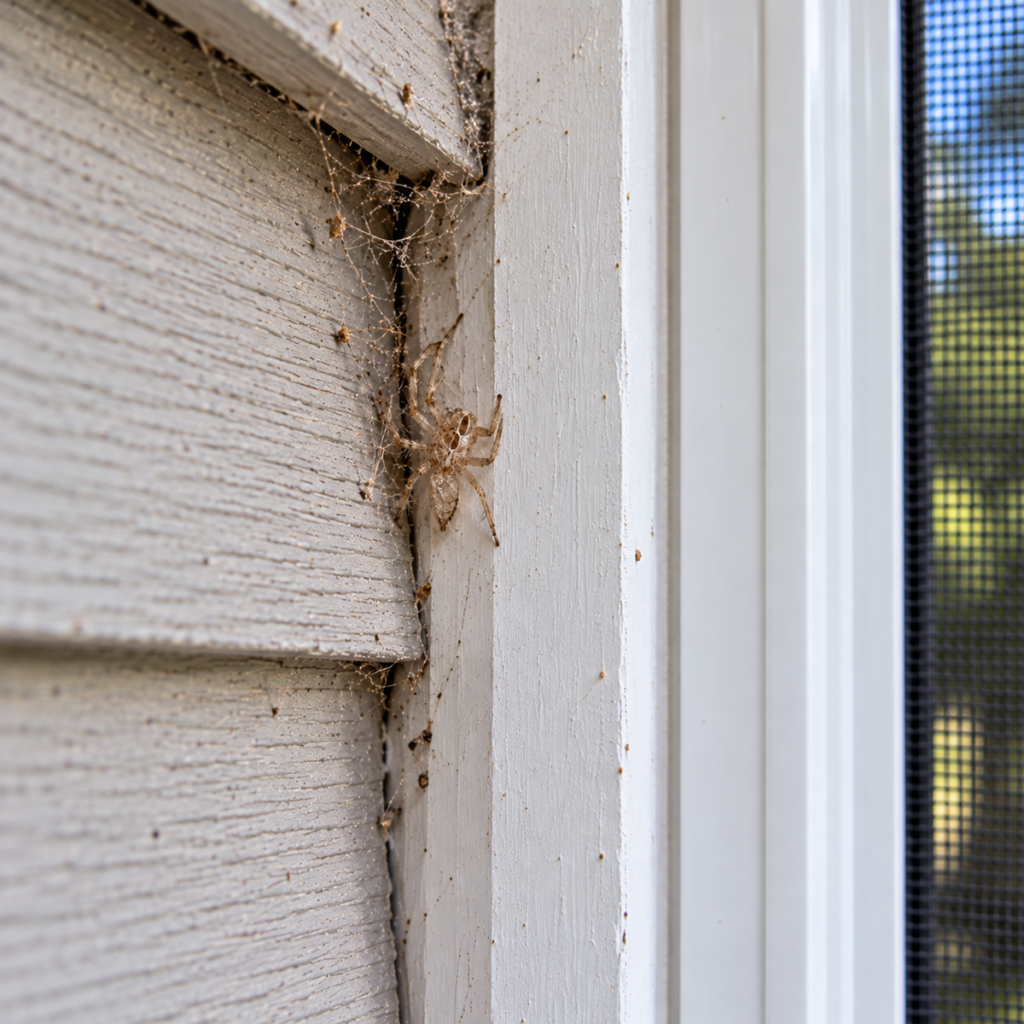
As spiders grow, they shed their outer covering. In addition, you may find these empty molts in webs, corners, storage areas, or other protected spaces, where they can look surprisingly similar to a dead spider.
Frequent Spider Sightings
An occasional spider inside a North Florida home isn’t unusual. Seeing spiders frequently, finding several in the same area, or continually discovering new webs may indicate more activity nearby.
Plenty of Insect Prey
Spiders go where the food is. For example, flies, moths, mosquitoes, roaches, and other insects around your home can provide a steady food source.
That’s why recurring spider activity may actually be a clue to another pest problem. Reducing the insects they’re feeding on can be an important part of keeping the spider population under control, too.
Spiders in Unexpected Indoor Areas
For example, finding spiders repeatedly in bathrooms, bedrooms, kitchens, or other living spaces may indicate easy entry into the home or a dependable food source indoors.
Check nearby doors, windows, screens, and other openings for possible entry points.
If you’re unsure which spider you’ve found, send us a pest photo and tell us where you found it.
Why Am I Seeing Spiders?
Spiders don’t usually show up around a home by accident. Like other pests, they’re looking for the basics: food, shelter, and suitable places to live.
Insects Are Providing a Food Source
This is one of the biggest reasons spiders stick around. Flies, mosquitoes, moths, roaches, ants, and other insects provide a steady food supply. Where insect populations are plentiful, spiders often follow.
Exterior Lights Are Attracting Insects
Porch lights, garage lights, and other exterior lighting can attract flying insects after dark. Spiders may build webs nearby to take advantage of the easy meal.
Landscaping Provides Shelter
Dense shrubs, vegetation, leaf litter, woodpiles, and other materials around the property provide protected places for spiders and the insects they feed on.
There Are Easy Entry Points
Gaps around doors and windows, damaged screens, cracks, utility penetrations, and other small openings can allow spiders to wander indoors.
Quiet Areas Offer Good Hiding Places
Garages, sheds, closets, storage areas, and other spaces that aren’t disturbed frequently can provide ideal hiding places for spiders.
Seasonal Changes Can Bring Them Indoors
Weather changes, heavy rain, extreme heat, or changes in available prey can cause outdoor spiders to seek different shelter. Some may end up inside while searching for food, protection, or a mate.
The important thing to remember: If spiders keep appearing, simply removing the spiders or their webs may not address what’s attracting them. Identifying the food sources, hiding places, and entry points around the home can help address the reason they’re there in the first place.
Spider Prevention Tips
Although you may not be able to keep every spider away from your property, making your home less inviting can help reduce the conditions that attract them.
Reduce Insect Activity
Spiders follow their food. Therefore, addressing flies, moths, roaches, ants, and other insects around the home can help reduce the food sources that encourage spiders to stay.
Remove Webs Regularly
Remove accessible spider webs from porches, eaves, windows, garages, and other areas around the home. Regular removal can discourage spiders from repeatedly using the same locations.
Seal Entry Points
Check for gaps around doors, windows, utility lines, and other openings. In addition, repair damaged screens and seal accessible cracks and gaps that may allow spiders and other pests indoors.
Keep Landscaping Maintained
Trim shrubs, branches, and vegetation away from the structure when practical. Also, remove excessive leaf litter, debris, and other materials that provide shelter close to the home.
Be Mindful of Exterior Lighting
Exterior lights attract many of the flying insects spiders feed on. When practical, reduce unnecessary nighttime lighting or position lights away from doors and frequently used entrances.
Reduce Clutter and Hiding Places
Keep garages, sheds, closets, and storage areas organized. Avoid leaving cardboard boxes and other materials undisturbed for long periods, especially in areas where spider activity has been noticed.
Remember: Long-term spider management isn’t just about removing spiders. Reducing their food, shelter, and access to the home can make your property a much less attractive place for them to settle.

Protection Note: Spider prevention often starts with the conditions supporting them. Reducing insect prey, removing accessible webs, repairing screens, sealing entry points, and limiting protected hiding places can make the property less inviting to spiders.
When Should I Be Concerned About Spiders?
Most spiders found around North Florida homes are not dangerous and would rather avoid people. However, certain situations deserve a little more attention.
You Suspect a Black Widow
Black widows may occupy protected, undisturbed areas where someone could accidentally come into contact with them. If you suspect a black widow, avoid handling the spider or disturbing its hiding place with your bare hands.
Spiders Keep Appearing Indoors
One occasional spider isn’t unusual. Repeated sightings throughout the home may indicate easy entry points, suitable hiding places, or an abundance of insects providing a food source.
You’re Finding Numerous Webs or Egg Sacs
Continually finding new webs, multiple spiders, or egg sacs can indicate established spider activity around a particular area of the property.
Spiders Are in High-Contact Areas
Pay additional attention to spiders around children’s play areas, frequently used outdoor furniture, garages, storage areas, shoes, gloves, or other places where accidental contact is more likely.
You Can’t Identify the Spider
Don’t rely on color alone or an internet photo that “looks close.” For example, many harmless spiders can resemble species homeowners are concerned about.
Take a clear photo from a safe distance instead. Bug Cops can help you determine what you’ve found and whether it warrants further attention.
Someone May Have Been Bitten
Spider bites can be difficult to identify based on the skin reaction alone. If someone develops concerning or severe symptoms after a suspected bite, contact an appropriate medical professional rather than relying on pest identification to determine the cause.
Spider Identification Guide FAQs
No. Most spiders found around North Florida homes are not considered dangerous to people and actually help control other insects. However, medically significant species such as black widows do occur in Florida, so unfamiliar spiders should be observed rather than handled.
Spiders may enter through gaps around doors, windows, screens, utility openings, and other small entry points. Frequent sightings can also mean your home is providing hiding places or a steady supply of insects for them to eat.
Not necessarily. An occasional spider indoors is common. Repeated sightings, numerous webs, egg sacs, or spiders continually appearing in the same areas may indicate more established activity or an abundant insect food source nearby.
Adult female black widows typically have a glossy black body with a rounded abdomen and the characteristic red or reddish-orange hourglass marking on the underside of the abdomen. Because markings can vary, avoid handling an unidentified spider based on appearance alone.
Not necessarily. Spiders outdoors are beneficial predators that help control many other insects. Management is generally more important when spiders are repeatedly entering the home, occurring in high-contact areas, or when a medically significant species is suspected.
Not sure what kind of spider you’ve found? Take a clear photo from a safe distance and send it to Bug Cops. A good photograph can often provide the clues needed to help identify your eight-legged suspect.
Found a Spider You Don’t Recognize?
If our Spider Identification Guide doesn’t match what you’ve found, send Bug Cops a clear photo from a safe distance. With so many spiders in North Florida, identifying one from a quick glance isn’t always easy. Color, size, markings, body shape, and even where you found it can provide important clues.
Don’t guess—and don’t pick it up. Take a clear photo from a safe distance and send it to Bug Cops. We’ll help you determine what kind of eight-legged suspect you’ve found.
Protecting & Serving Clay and Putnam Counties Since 1993
If spider activity around your home has become more than an occasional visitor, we can help determine what’s attracting them and recommend the appropriate next step.