Lawn Care Services in Clay & Putnam Counties
Bug Cops provides professional lawn care services throughout Clay and Putnam Counties, Florida. A healthy lawn depends on more than fertilization alone. Insects, weeds, disease, nutrient deficiencies, irrigation, soil conditions, and seasonal weather can all influence turf health. That’s why we begin by evaluating the lawn and identifying conditions that may be affecting its growth and appearance.
North Florida lawns face changing challenges throughout the year. St. Augustinegrass and other warm-season turfgrasses can experience insect damage, weed pressure, discoloration, thinning, and environmental stress. Because these problems can produce similar symptoms, Bug Cops considers visible damage, pest activity, growing conditions, and the property’s specific needs before recommending an appropriate treatment program.
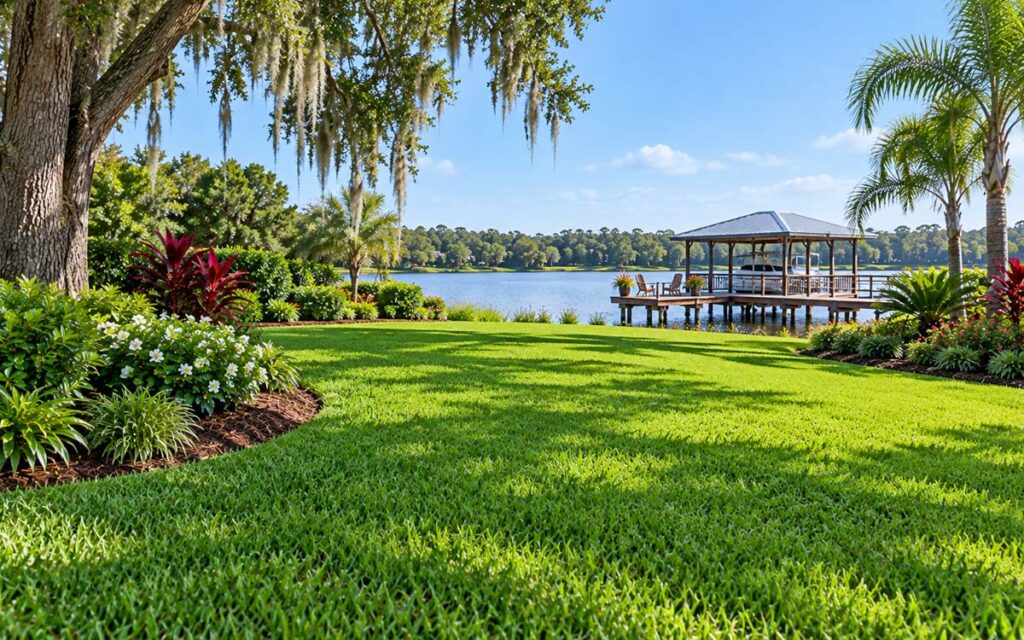
More Than Just a Green Lawn
A lawn can look unhealthy for many different reasons. Insects, weeds, disease, nutrient deficiencies, moisture, soil conditions, and environmental stress can produce symptoms that sometimes look surprisingly similar.
Bug Cops lawn care services focus on understanding those conditions and providing the appropriate treatment for the property—not simply applying the same solution to every lawn.

Lawn Fertilization & Micronutrients
Healthy turf needs the right nutrients at the right time. Therefore, our fertilization applications are designed to support root development, healthy growth, color, and the lawn’s ability to handle seasonal stress. We also consider nutrient deficiencies and changing growing conditions when determining what the lawn may need throughout the year.

Lawn Weed Management
Weed pressure can affect the appearance and health of otherwise desirable turf. For this reason, Bug Cops provides targeted management of common broadleaf weeds, including Carolina geranium, dollarweed, Asian pennywort, clover, dandelions, and other broadleaf weeds covered by our program. Our lawn program does not include control of grassy weeds or sedges.

Lawn Pest Management
Chinch bugs, mole crickets, sod webworms, fire ants, and other pests can damage North Florida lawns—and their symptoms aren’t always easy to distinguish from disease or environmental stress. Therefore, we look for pest activity and the evidence insects leave behind before determining whether treatment is appropriate and which approach makes sense for the lawn.

Lawn Disease Management
Lawn diseases can cause discoloration, thinning, patches, and declining turf health. However, similar symptoms may also result from insect activity, nutrient deficiencies, moisture problems, or environmental stress. We evaluate visible symptoms and growing conditions before determining whether disease treatment is appropriate.
Lawn Care Services and Treatment Options
Changes in your lawn often leave clues about what may be happening below the surface. Yellowing, thinning, brown patches, weeds, damaged grass blades, or unusual activity can point to several different causes. Looking at the pattern, location, surrounding conditions, and other evidence helps us narrow down what may actually be affecting the turf.
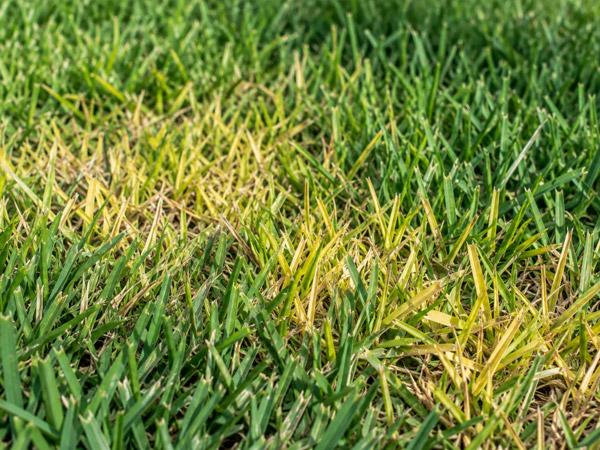
Yellowing or Discoloration
Changes in color may be related to nutrients, moisture, disease, insects, or environmental stress.
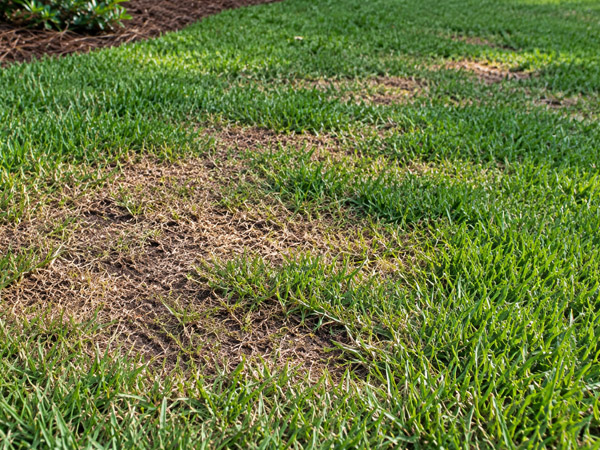
Brown or Thinning Areas
The shape, location, and progression of damaged areas can provide important clues about the cause.
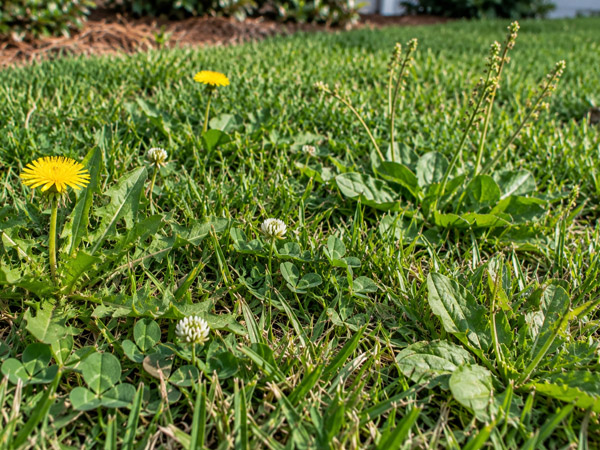
Weed Activity
The types of weeds present—and where they’re growing—can tell us something about turf density and growing conditions.
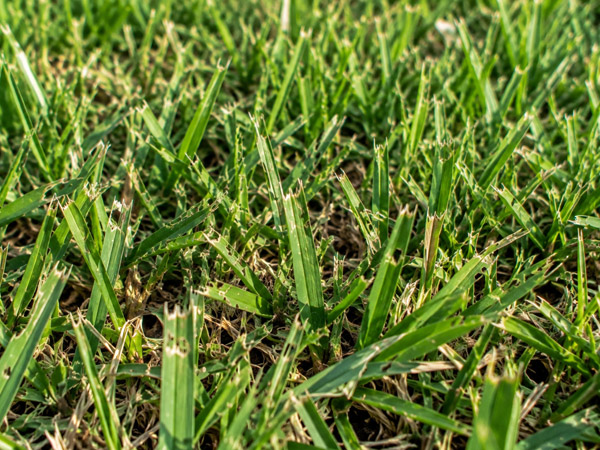
Chewed or Damaged Grass
Visible feeding damage may indicate lawn-damaging insects are active.
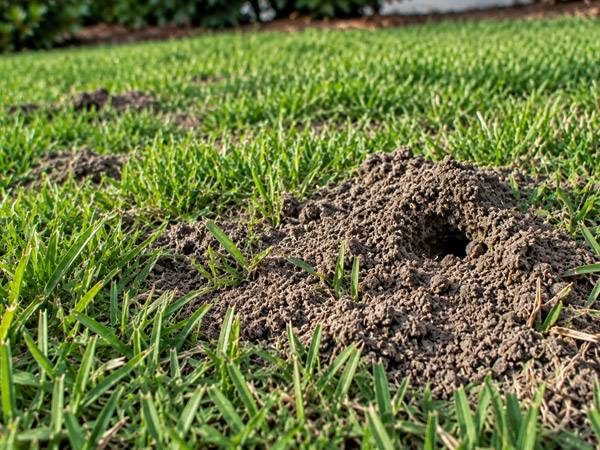
Loose Soil or Tunneling
Disturbed soil and turf that lifts easily can be signs of activity below the surface.
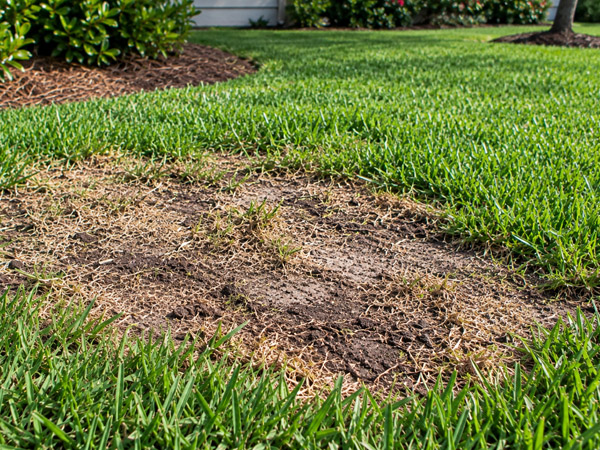
Bare or Dead Patches
Areas where grass is missing or dying may indicate insect damage, disease, soil problems, excessive shade, or other growing conditions.
Not Sure What’s Happening in Your Lawn?
Lawn problems can look similar at first glance. Our identification guides can help you compare common insects and weeds before deciding what may be affecting the turf.
Turf-Damaging Insects
Chinch bugs, mole crickets, tropical sod webworms, and fall armyworms can create thinning, discoloration, or damaged turf. Learn what to look for and compare the common suspects found in North Florida lawns.
Broadleaf Weeds
The weeds growing in a lawn can provide useful clues about turf conditions. Compare common North Florida broadleaf weeds by leaf shape, growth habit, flowers, and where they tend to appear.
Inspection Note: We look beyond visible lawn symptoms. Damage patterns, pest activity, soil conditions, irrigation, and surrounding factors help us identify what may be affecting the turf before recommending an appropriate treatment.
Lawn Care Problems: A Brown Patch Isn’t a Diagnosis
Lawns can show very similar symptoms for very different reasons. For example, insect activity, disease, nutrient deficiencies, moisture problems, soil conditions, environmental stress, and maintenance practices can all affect how turf looks and performs.
Weather and irrigation matter too. Too much rain can leave soil saturated and create conditions that stress turf or encourage disease, while too little rain can cause drought stress that may resemble insect damage. Uneven irrigation, clogged or broken sprinkler heads, poor sprinkler coverage, or areas receiving too much water can also create isolated brown, thinning, or declining areas.
Rather than treating the visible symptom alone, we look at the pattern of damage, where it is occurring, how it is progressing, current growing conditions, irrigation, recent weather, and any other evidence present. Those clues help us narrow down the likely cause and determine whether treatment is appropriate—and what type of treatment the lawn may actually need.
The goal isn’t simply to make an application. It’s to make an informed decision about the lawn first.
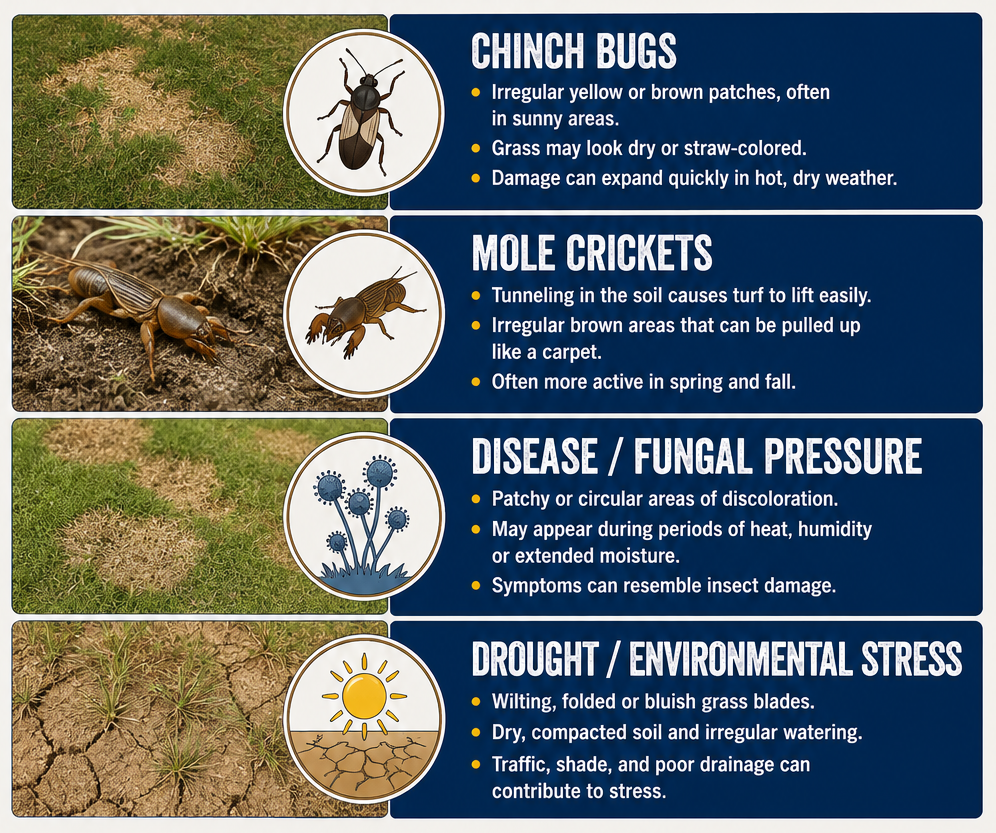
Brown or thinning grass can have several causes. Bug Cops looks at insect activity, disease, moisture, and environmental conditions before determining the appropriate treatment.For additional information about maintaining healthy Florida lawns, explore the University of Florida’s Florida-Friendly Landscaping Program
Bug Cops in the Field
Every property is different, and what we observe during a service visit helps guide what happens next. From managing weeds and lawn-damaging insects to evaluating ornamental plants, palms, and cycads, Bug Cops considers the property’s conditions when determining appropriate care.
Bug Cops on the Property
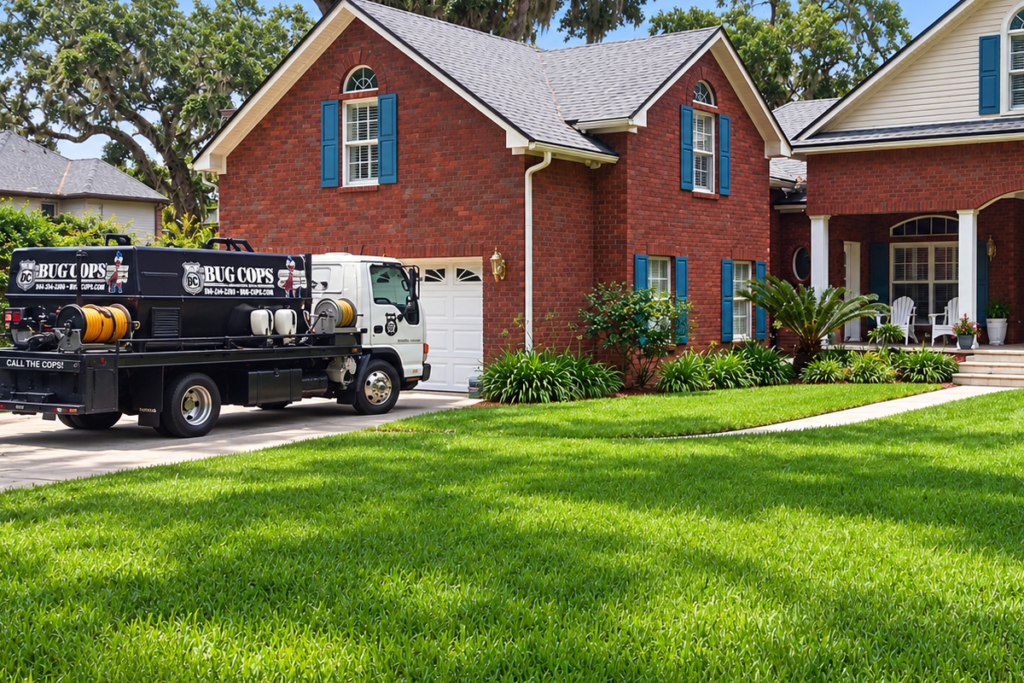
Bug Cops provides lawn and ornamental care at North Florida residential properties. Therefore, each service begins with understanding the property’s needs.
Caring for Turf & Ornamentals
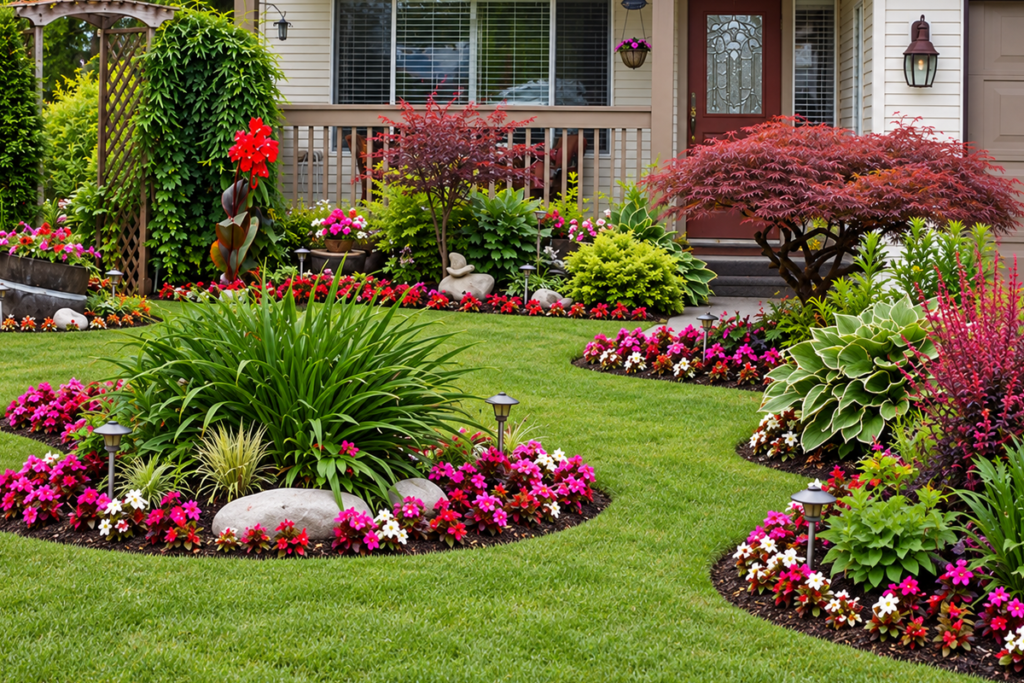
Healthy turf and ornamental plantings are evaluated together. As a result, treatment recommendations consider the needs of the entire landscape.
Looking at the Whole Property
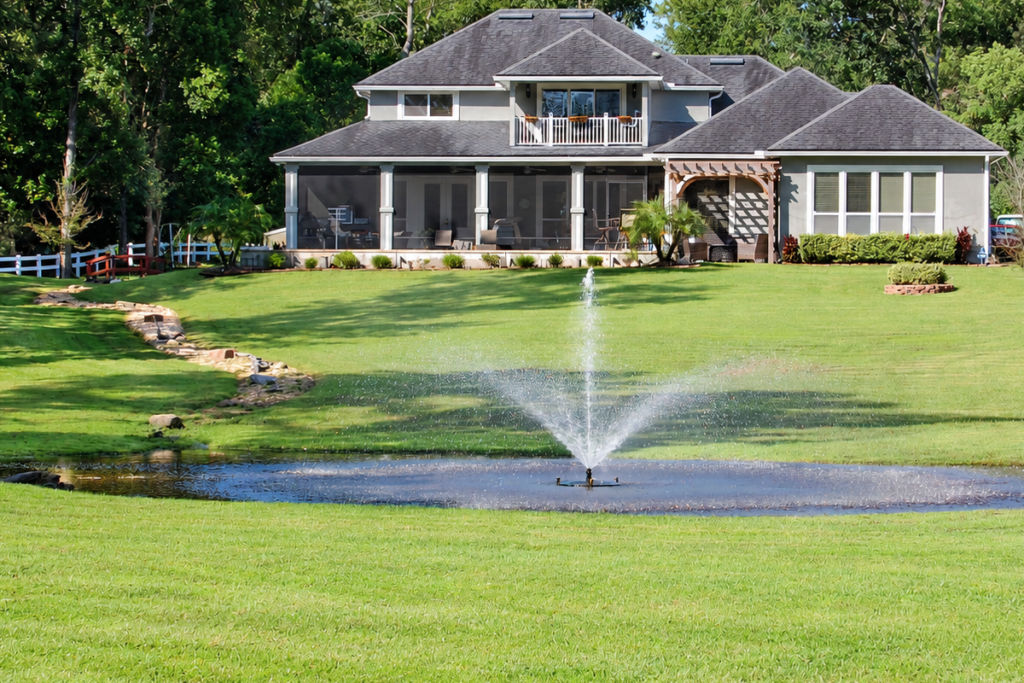
Lawn conditions can vary across a property due to irrigation, drainage, sunlight, and soil conditions. For example, shaded areas may respond differently than areas receiving full sun.
Lawn Care Services FAQs
Lawn care works best as an ongoing program because turf, weeds, pest pressure, weather, and growing conditions change throughout the year. Treatment frequency depends on the program and the needs of the property.
Yes. Mowing too short can weaken turf, reduce root growth, and increase stress, making lawns more vulnerable to insects, disease, and drought. For most standard St. Augustinegrass varieties, UF/IFAS recommends a mowing height of 3.5 to 4 inches. Additionally, no more than one-third of the grass blade should be removed during a single mowing. Proper mowing height helps maintain a healthy North Florida lawn.
Yes. Our lawn program includes management of common broadleaf weeds, such as Carolina geranium, dollarweed, Asian pennywort, clover, and dandelions. Grassy weeds and sedges are not included in our weed-control program.
Yes. Bug Cops provides lawn fertilization and micronutrient treatments based on turf conditions and nutritional needs. We evaluate the lawn’s health, growing conditions, and visible symptoms before recommending an appropriate treatment program.
No. Bug Cops provides professional lawn and ornamental treatment services. We do not provide mowing, general landscape maintenance, or irrigation repair. However, if we notice an irrigation problem—such as poor coverage or a broken sprinkler head—we may point it out because it can affect the health of the lawn.
Something Doesn’t Look Right in Your Lawn?
Yellowing grass, weeds, thinning turf, insect activity, or unexplained brown patches can have several different causes. The first step is understanding what’s affecting your lawn before deciding which treatment may be appropriate.
Let Bug Cops take a closer look.
Healthy lawns begin with understanding what they need. Bug Cops Pest Control provides targeted lawn care services throughout Clay and Putnam Counties, Florida. From fertilization and weed management to lawn pest and disease treatments, our recommendations are based on the conditions we find at your property.