
Tick Identification Guide for Clay & Putnam Counties
This Tick Identification Guide will help you identify ticks, understand their life cycle, recognize signs of tick activity, and learn where ticks may be encountered around your home and property.
Ticks are small, blood-feeding arachnids commonly associated with wildlife, pets, wooded areas, tall vegetation, and places where animals travel. Unlike insects, adult ticks have eight legs and do not have wings or antennae.
North Florida provides favorable habitat for several tick species. Ticks may be encountered while working or playing outdoors, walking through vegetation, caring for pets, or spending time in areas frequently traveled by wildlife.
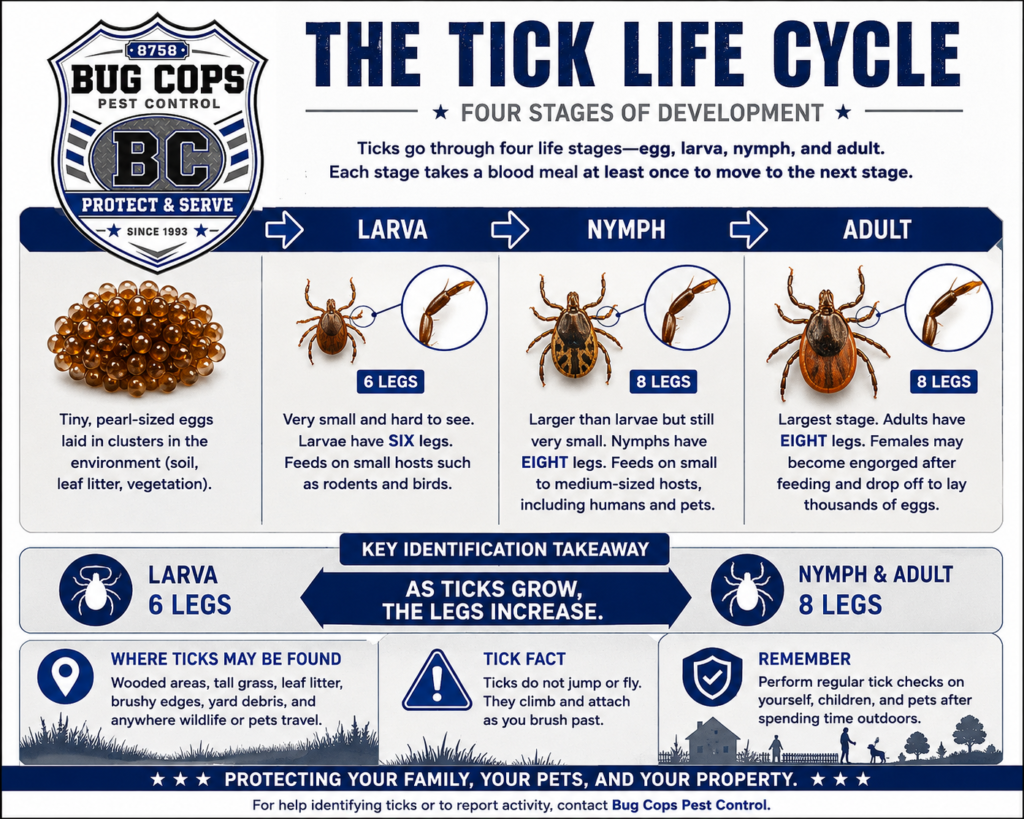
One reason tick identification can be challenging is that their appearance changes considerably as they develop. Ticks progress through four life stages—egg, larva, nymph, and adult—and the immature stages can be extremely small. Larvae have six legs, while nymphs and adults have eight.
Not sure whether the tiny creature you found is a tick? Take a clear photo from a safe distance and send it to Bug Cops. We’ll help you identify your tiny hitchhiking suspect.
What Do Ticks Look Like?
Ticks are small, eight-legged arachnids that are often mistaken for insects. Unlike insects, ticks do not have wings or antennae. Their appearance changes significantly as they move through their life cycle, and some stages can be extremely difficult to see without a close look.
Ticks typically have:
- Eight legs (larvae are the exception and have six legs)
- A small, oval-shaped body
- No wings or antennae
- A flattened appearance before feeding
- A larger, rounded body after taking a blood meal
- Mouthparts designed to attach and feed on a host
Ticks vary in size depending on their species, life stage, and whether they have recently fed. A larval tick may be tiny and difficult to notice, while an engorged adult female can become much larger after feeding.
The Tick Life Cycle
Ticks develop through four life stages:
Egg → Larva → Nymph → Adult
The larval stage is unique because it has six legs. After the tick molts into the nymph stage, it develops eight legs, which remain through adulthood.
Each stage requires a blood meal before progressing to the next stage. Depending on the species, ticks may feed on wildlife, pets, livestock, or people.

Inspection Note: A tick’s size alone does not always identify it. Life stage, leg count, body shape, and where the tick was found are important clues when determining what you may have discovered.
Common Ticks in North Florida
North Florida is home to several tick species, and they can differ in markings, body shape, preferred habitat, and the animals they commonly feed on. Some species are encountered primarily outdoors, while others can become established around homes or kennels. Here are five ticks homeowners may encounter in our area.
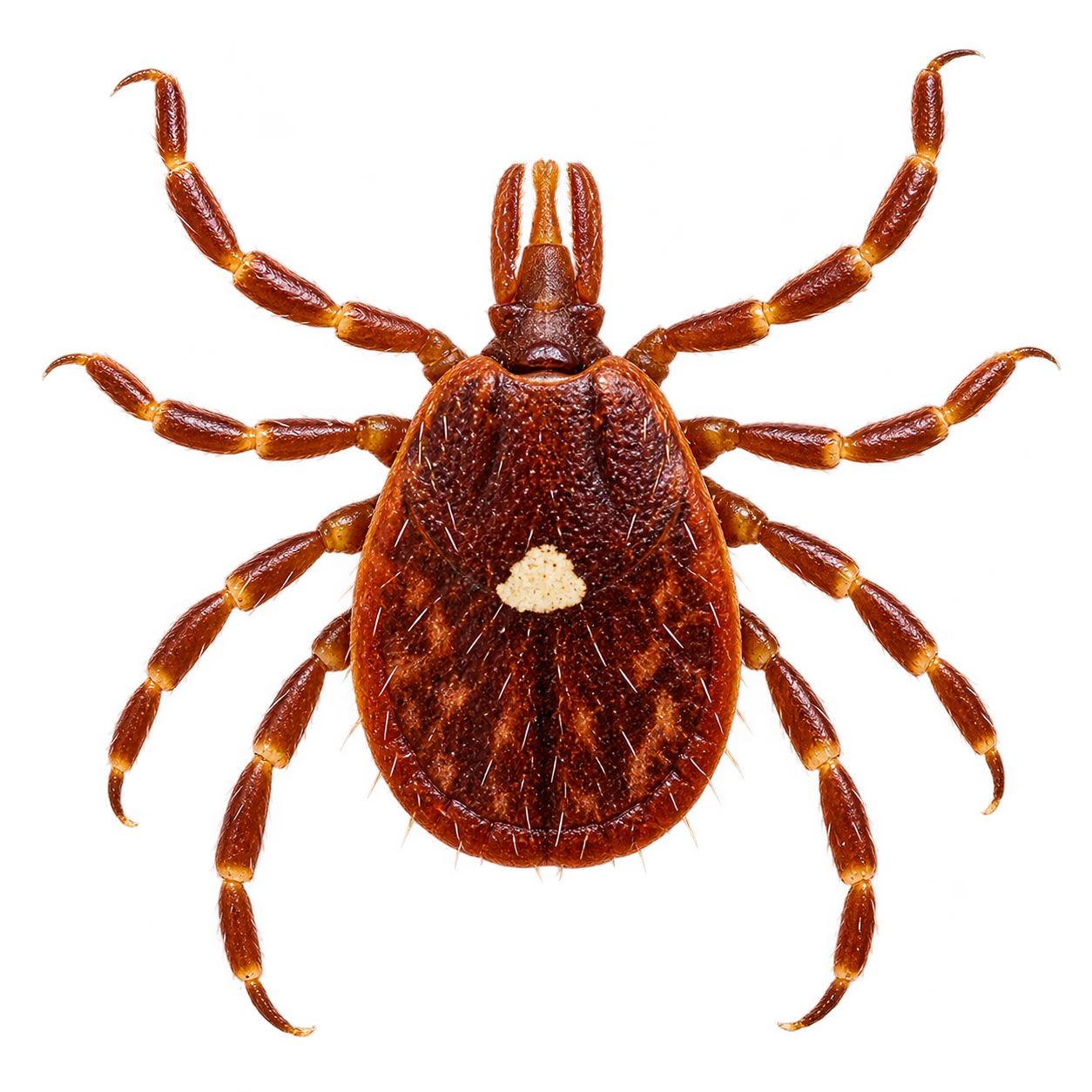
Lone Star Tick (Amblyomma americanum)
Lone star ticks are reddish-brown ticks with relatively long mouthparts. Adult females have a distinctive single pale or silvery-white spot on the back, which gives the species its common name.
Adult males look different. Instead of one prominent central spot, males typically have pale markings around the outer edge of the body. Lone star ticks are commonly associated with wooded, brushy areas and places traveled by wildlife.
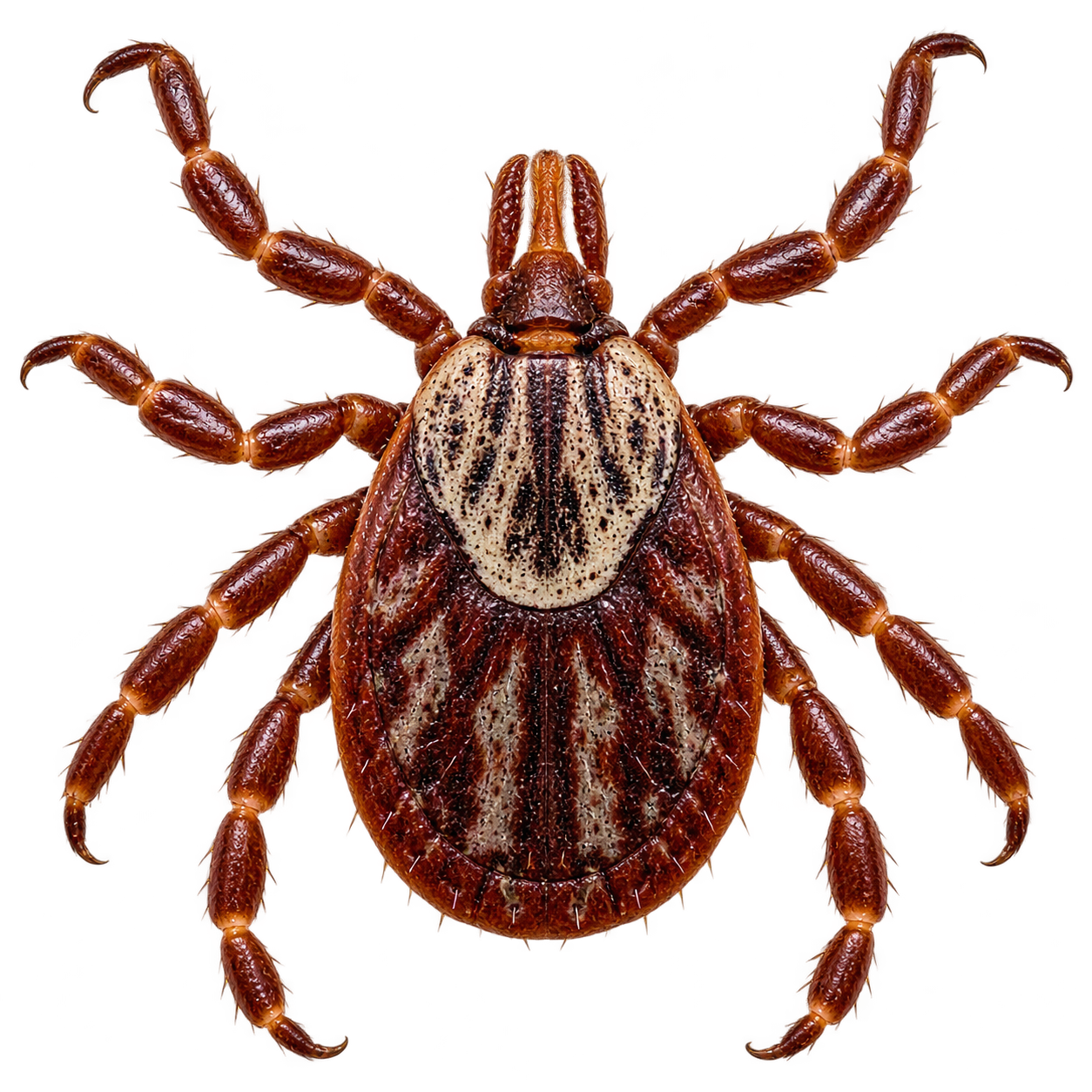
American Dog Tick (Dermacentor variabilis)
American dog ticks are reddish-brown with distinctive pale gray, cream, or silvery ornamentation on the back. The pattern varies between males and females, so individual ticks may not look exactly alike.
Adults are commonly associated with dogs and other larger mammals but may also attach to people. They are often encountered in grassy, brushy, or vegetation-covered areas where hosts regularly travel.
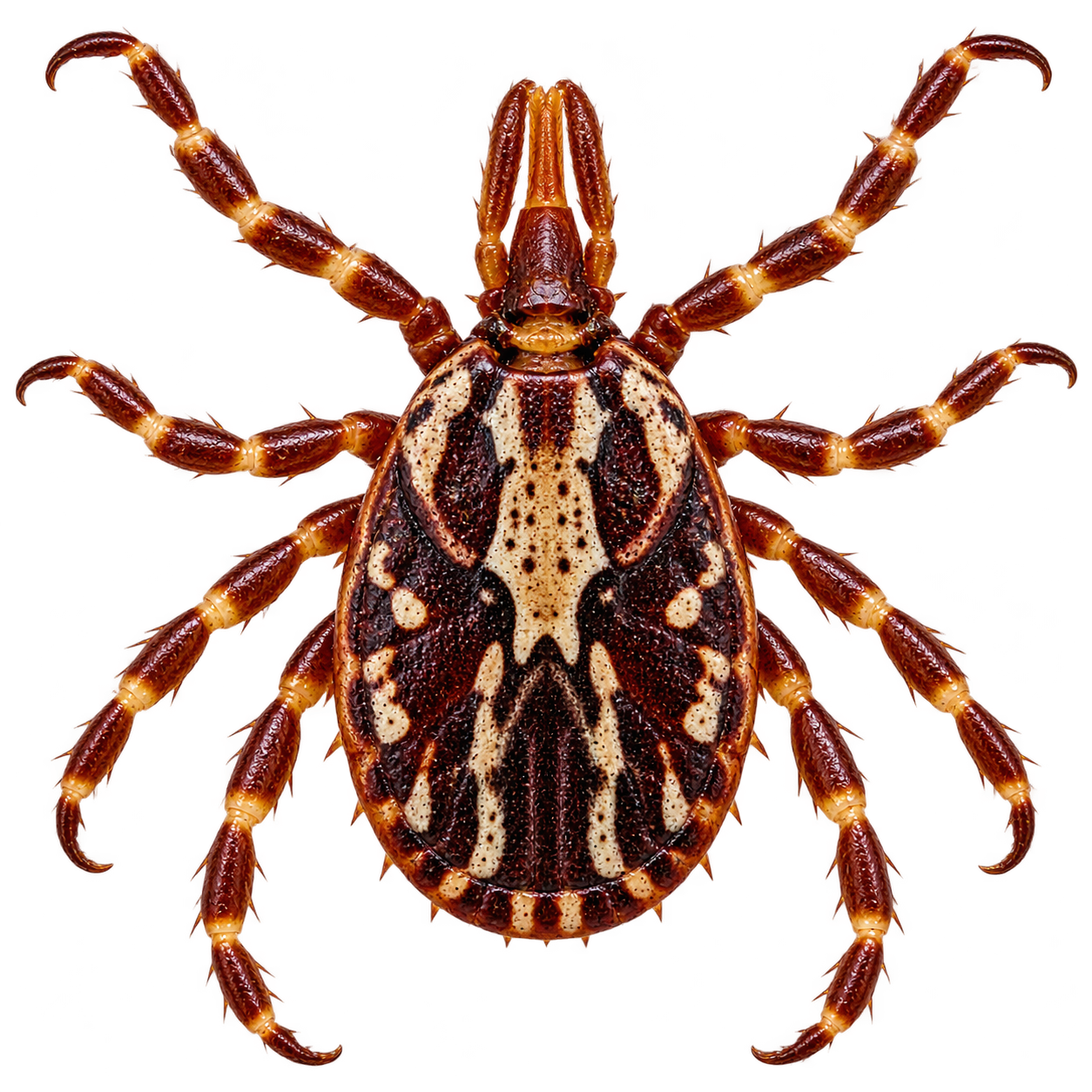
Gulf Coast Tick (Amblyomma maculatum)
Gulf Coast ticks are reddish-brown with ornate pale markings and relatively long mouthparts. Their patterned appearance can resemble other ornate tick species, making identification from color alone difficult.
These ticks are associated with grassy, brushy, and coastal habitats and may attach to wildlife, livestock, pets, or people. Their long mouthparts are an important feature when distinguishing them from some similar-looking ticks.
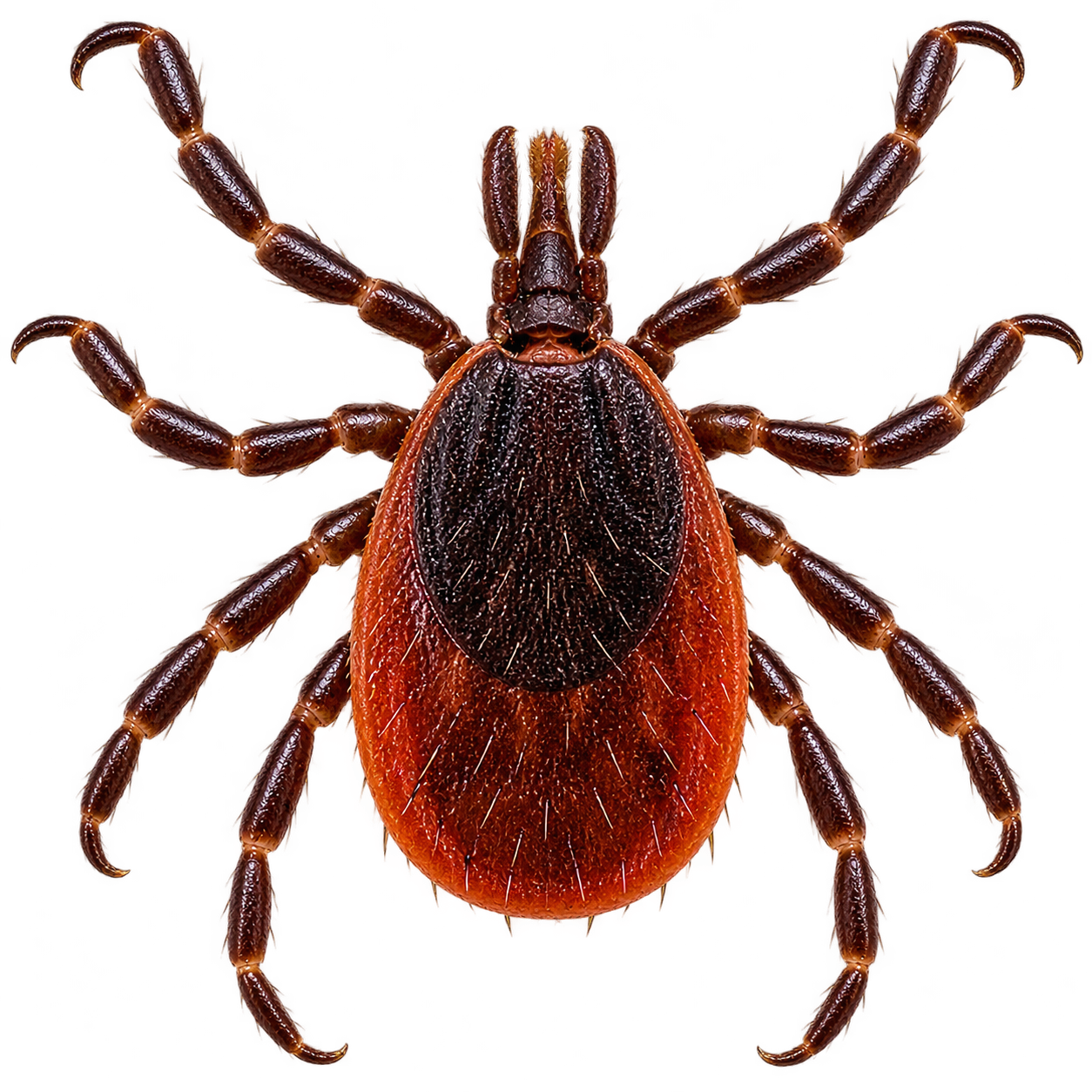
Blacklegged Tick (Ixodes scapularis)
Adult female blacklegged ticks typically have dark legs, a dark shield near the front of the body, and a contrasting reddish-orange abdomen. Males are generally darker overall and do not have the same contrasting appearance.
Also called the deer tick, this species is associated with wooded and leafy habitats where wildlife travels. Different life stages can vary considerably in size, so appearance and size alone should not be used for identification.
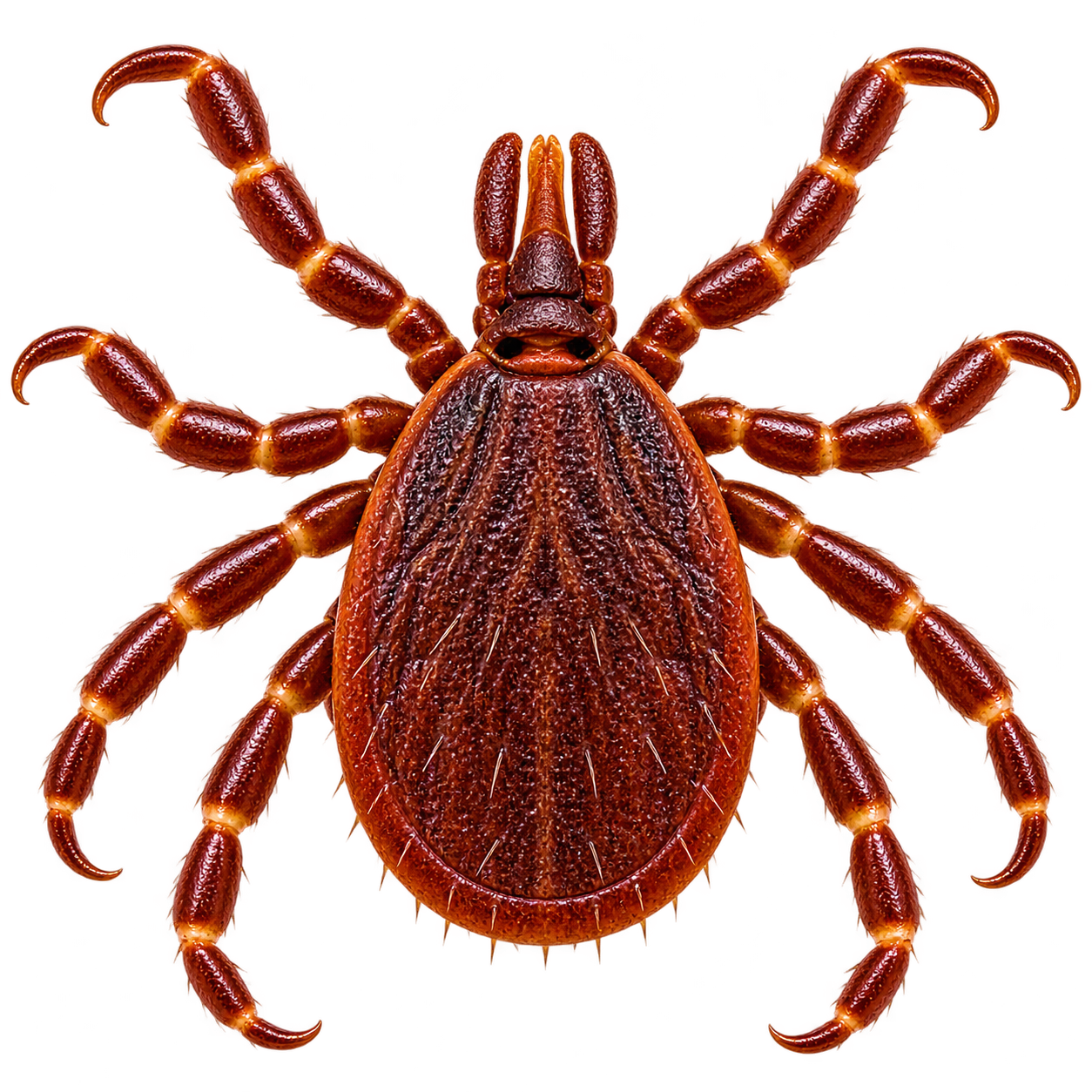
Brown Dog Tick (Rhipicephalus sanguineus)
Brown dog ticks are generally reddish-brown with relatively uniform coloration and lack the prominent pale ornamentation seen on several other common tick species.
What makes this tick especially noteworthy is its close association with dogs. Unlike many ticks encountered primarily outdoors, brown dog ticks can become established inside homes, kennels, and other buildings where dogs spend time.
Inspection Note: Tick identification should not rely on color or a single marking alone. Body pattern, mouthparts, life stage, sex, where the tick was found, and the animal or person it was attached to can all provide useful identification information.
Where Are Ticks Found Around the Home?
Ticks are often associated with places where vegetation, moisture, pets, and wildlife overlap. They do not jump or fly; instead, many ticks position themselves where a passing animal or person can brush against them.
Wooded & Brushy Edges
Property edges where lawns meet woods, brush, or dense vegetation can provide favorable tick habitat. These transition areas are also commonly traveled by wildlife that may carry ticks onto the property.
Tall Grass & Dense Vegetation
Tall grass, weeds, shrubs, and other vegetation can provide shaded, humid conditions and places where ticks can wait for a passing host.
Leaf Litter & Yard Debris
Fallen leaves, accumulated plant material, wood piles, and other protected areas can help retain moisture and provide shelter for ticks and the wildlife hosts they depend on.
Wildlife Travel & Resting Areas
Deer, raccoons, opossums, rodents, and other wildlife can carry ticks through a property. Fence lines, trails, areas beneath shrubs, and other regularly traveled routes may experience increased tick activity.
Pet Areas & Outdoor Living Spaces
Dog runs, kennels, shaded resting spots, patios, and areas where pets spend time may become places where ticks are encountered—particularly when these areas border vegetation or wildlife habitat.
Inside Homes & Kennels
Most ticks homeowners encounter are associated with outdoor environments, but brown dog ticks are an important exception. They can become established inside homes, kennels, and other buildings where dogs spend time.
Inspection Note: When checking a property for ticks, pay particular attention to the edges between maintained areas and vegetation, places traveled by wildlife, and the areas where pets regularly rest or play.
Signs of Tick Activity
Ticks can be difficult to notice because some life stages are extremely small and they may remain attached while feeding. A few signs can help homeowners recognize when tick activity may be occurring around people, pets, or the property.
Ticks Attached to Pets
Finding an attached tick on a dog or other pet is one of the clearest signs of tick exposure. Check around the ears, neck, between the toes, under collars, and other protected areas where ticks may be difficult to see.
Ticks Found on People
Ticks may crawl on clothing or skin before attaching. Finding a tick after spending time outdoors can indicate exposure somewhere along a trail, vegetation edge, wildlife area, or other tick habitat.
Crawling Ticks Indoors
An occasional tick may be carried indoors on a person or pet. Repeatedly finding crawling ticks inside the home, however, deserves closer attention—particularly in homes with dogs because brown dog ticks can become established indoors.
Ticks Around Pet Resting Areas
Ticks found near dog beds, crates, kennels, porches, or other places where pets regularly spend time may indicate that animals are repeatedly encountering ticks nearby.
Increased Activity After Outdoor Exposure
Ticks may be discovered after hiking, yard work, hunting, camping, walking through tall vegetation, or spending time in wooded or brushy areas. Pets can also pick them up while exploring these environments.
Multiple Ticks Over Time
Finding ticks repeatedly on people or pets may indicate continued exposure to a favorable tick habitat or an animal source around the property. Repeated indoor findings can warrant a closer inspection of pet and resting areas.
Inspection Note: Finding one tick doesn’t necessarily tell you where it came from. Consider where people and pets have recently traveled, where wildlife moves through the property, and whether ticks are being found repeatedly indoors or outdoors.
Why Am I Seeing Ticks?
Ticks around a home usually have a reason for being there. Pets, wildlife, vegetation, outdoor activity, and suitable habitat can all bring people or animals into contact with ticks.
Wildlife Is Moving Through the Property
Deer, raccoons, opossums, rodents, and other wildlife can carry ticks through yards and landscaped areas. Properties bordering woods, brush, or natural areas may experience regular wildlife traffic.
Pets Are Picking Them Up Outdoors
Dogs and other pets can encounter ticks while exploring tall grass, wooded edges, trails, shrubs, or wildlife-traveled areas and then carry them closer to the home.
The Yard Provides Favorable Habitat
Shaded vegetation, leaf litter, brush, yard debris, and humid protected areas can provide conditions that help ticks survive while waiting for a suitable host.
People Are Bringing Them Home
Hiking, hunting, camping, gardening, yard work, or simply walking through vegetation can result in ticks crawling onto clothing or skin and being carried back to the property or indoors.
Wildlife or Rodents Are Near Structures
Animals nesting or traveling beneath decks, around sheds, in crawl spaces, or near other structures may introduce ticks into areas frequently used by people or pets.
Brown Dog Ticks May Be Established Indoors
If ticks are being found repeatedly inside a home with dogs, brown dog ticks deserve particular attention. Unlike many common ticks, this species can complete its life cycle indoors and become established in homes or kennels.
Inspection Note: Recurring tick activity usually means there is continued exposure somewhere. Follow the movement of pets, people, and wildlife to help narrow down where ticks may be coming from.
Tick Prevention Tips
Reducing tick exposure starts with understanding where ticks are most likely to be encountered. Paying attention to yard conditions, wildlife activity, outdoor habits, and the places where people and pets spend time can help reduce opportunities for ticks to attach or be carried closer to the home.
Maintain Yard & Vegetation
Keep grass trimmed and manage overgrown brush, weeds, and dense vegetation around frequently used areas. Pay particular attention to edges where maintained lawn meets woods or natural areas.
Remove Leaf Litter & Yard Debris
Clear accumulated leaves, brush, and unnecessary yard debris from areas near the home, patios, play areas, and places where pets spend time. These materials can create protected, humid conditions.
Check Pets After Outdoor Activity
Check dogs and other pets after they’ve spent time outdoors, especially after walking through tall grass, wooded areas, brush, or wildlife-traveled locations. Discuss appropriate tick prevention for your pet with a veterinary professional.
Check Yourself After Being Outdoors
After hiking, gardening, hunting, yard work, or spending time in tick habitat, check clothing and exposed skin for crawling or attached ticks. Pay particular attention to protected areas that may be easy to overlook.
Learn more about preventing tick bites from the Florida Department of Health.
Reduce Wildlife Harborage Near the Home
When practical, discourage wildlife and rodents from nesting or resting beneath decks, around sheds, in crawl spaces, or close to frequently used areas. Wildlife can carry ticks onto the property.
Pay Attention to Indoor Tick Activity
An occasional tick may simply have hitchhiked indoors, but repeated indoor findings—especially in a home with dogs—deserve closer attention because brown dog ticks can become established indoors.
Inspection Note: Tick prevention isn’t about eliminating every natural area around your home. Focus on reducing favorable habitat near frequently used spaces and checking people and pets after potential exposure.
When Should I Be Concerned About Ticks?
Finding a tick doesn’t automatically mean that illness will occur, but certain situations deserve closer attention. An attached tick, repeated tick activity, ticks becoming established indoors, or health concerns following a tick bitemay require an appropriate next step.
You Find an Attached Tick
An attached tick has begun feeding and should be removed promptly and properly. If you’re unsure how to remove an attached tick safely, follow guidance from a qualified public-health or medical source.
Ticks Keep Appearing on Pets
Repeatedly finding ticks on a pet may indicate continued exposure around the property or during outdoor activity. Consider where the animal spends time and discuss appropriate tick prevention with a veterinary professional.
Ticks Are Repeatedly Found Indoors
Finding an occasional hitchhiking tick indoors can happen. Repeated indoor tick activity, particularly in a home with dogs, deserves closer investigation because brown dog ticks can become established inside buildings.
Multiple People or Pets Are Encountering Ticks
When several members of a household or multiple pets are encountering ticks, there may be a common exposure area around the property, along frequently used trails, or in places visited by wildlife.
Tick Activity Suddenly Increases
A noticeable increase in ticks may reflect changes in wildlife activity, vegetation, pet exposure, or other environmental conditions. Look at what’s changed around the property and where people and animals have recently traveled.
You Have Health Concerns After a Tick Bite
Ticks can transmit disease, but a tick bite alone does not mean that disease transmission occurred. If you develop symptoms or have concerns following a tick bite, contact an appropriate medical professional.
Inspection Note: Finding the tick can provide useful information. If appropriate and safe to do so, keep track of when and where it was found and take a clear photo that may help with later identification.
Tick Identification FAQs
No. Ticks do not jump or fly. They crawl and may position themselves on vegetation or other surfaces where they can make contact with a passing person or animal.
A tick’s appearance can vary by species, sex, life stage, and whether it has recently fed. Larvae, nymphs, adult males, adult females, and engorged ticks may look considerably different from one another.
Most ticks homeowners encounter are associated with outdoor environments and may simply be carried inside on people or pets. Brown dog ticks are an important exception because they can become established indoors, particularly in homes or kennels where dogs are present.
Ticks are arachnids rather than insects. Nymph and adult ticks have eight legs and no wings or antennae. Tick larvae are the exception—they have six legs, which can make identification more challenging.
Finding or being bitten by a tick does not automatically mean that disease transmission occurred. Different tick species can be associated with different pathogens, and many tick bites do not result in illness. If you have concerns about a tick bite or develop symptoms afterward, contact an appropriate medical professional.
Not Sure If It’s a Tick?
Ticks can vary considerably in size and appearance depending on their species, life stage, sex, and whether they have recently fed.
Don’t guess. If you’ve found a tick or tick-like creature you don’t recognize, take a clear photo and send it to Bug Cops. We’ll help you determine what kind of tiny hitchhiking suspect you’ve found.
Protecting & Serving Clay and Putnam Counties Since 1993
If tick activity continues around your home, pets, or property, Bug Cops Pest Control can help identify conditions that may be contributing to the activity and determine the appropriate next step.