
Flea Identification Guide for Clay & Putnam Counties
This Flea Identification Guide will help you identify fleas, understand their life cycle, recognize signs of flea activity, and learn where they may be developing around your home.
Fleas may be tiny, but once they become established around a home, they can be difficult to ignore. These small, wingless insects feed on blood and are commonly associated with pets, wildlife, and areas where animals spend time.
In North Florida, the cat flea is the species homeowners are most likely to encounter—and despite its name, it commonly infests both cats and dogs. Fleas can also bite people, particularly when populations become established inside the home or around animal resting areas.
What makes fleas especially challenging is that the adult fleas you see are only one stage of the problem. Eggs, larvae, and pupae can be developing in carpets, pet bedding, furniture, cracks, and other protected areas away from the animal.
Not sure whether the tiny jumping insect you found is a flea? Take a clear photo and send it to Bug Cops. We’ll help you identify the insect.
What Do Fleas Look Like?
Fleas are tiny, wingless insects that are specially adapted for jumping and feeding on blood. Adult fleas are usually dark reddish-brown, flattened from side to side, and only about 1/16 inch long, making them difficult to spot without a close look.
Adult fleas typically have:
- A small, flattened body that allows them to move easily through animal fur
- Six legs, including powerful hind legs designed for jumping
- No wings
- Short antennae
- A narrow body covered with tiny spines and hairs
- Piercing mouthparts used for feeding
Fleas are excellent jumpers and can move quickly through pet hair, carpet fibers, bedding, furniture, and other protected areas.
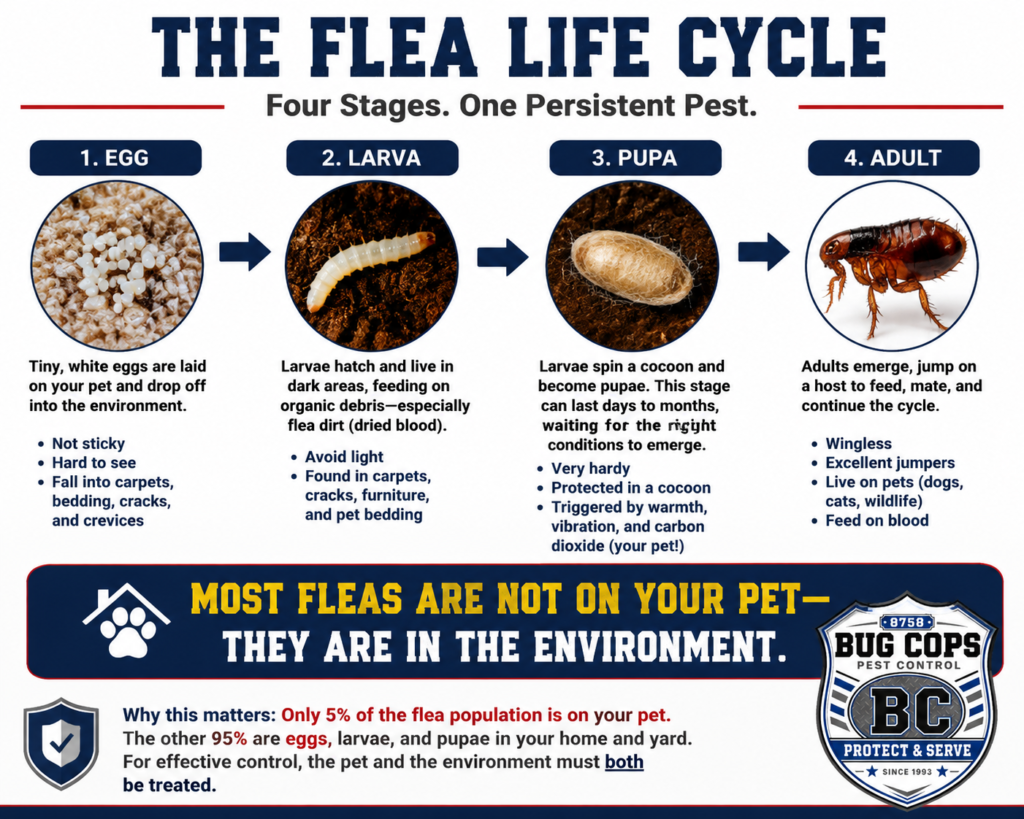
The Flea Life Cycle
Fleas develop through four life stages: egg, larva, pupa, and adult.
Egg → Larva → Pupa → Adult
The adult flea is the stage most people notice because it feeds on pets and can bite people. However, eggs, larvae, and pupae develop in the environment—especially in areas where pets rest, sleep, or spend time.
This is why simply removing visible adult fleas may not solve the entire problem. Understanding the flea life cycle helps explain why complete control often requires addressing both the pet and the environment.

Identification Note: Fleas are often mistaken for tiny jumping insects or specks of dirt. Their ability to jump, flattened body shape, and rapid movement are important clues that you may be dealing with fleas.
Common Fleas in North Florida
The cat flea is the flea North Florida homeowners are most likely to encounter, but pets aren’t the only way fleas can become established around a property. Knowing what you’re looking for—and what can be mistaken for a flea—can make identification easier.
The Primary Flea Suspect: Cat Flea
The cat flea (Ctenocephalides felis) is the flea North Florida homeowners are most likely to encounter. Despite its name, cat fleas commonly infest both cats and dogs and may also feed on wildlife and people.
Adult cat fleas are small, reddish-brown, wingless, and flattened from side to side. Their powerful hind legs allow them to jump quickly between hosts and through areas where animals rest.
Flea — or Something Else?
Several tiny insects can be mistaken for fleas, particularly when they’re seen quickly.
- Springtails are tiny insects that can jump but are usually associated with moisture and do not feed on blood.
- Fungus gnats are tiny flying insects commonly associated with damp soil and houseplants. Unlike fleas, they have wings.
- Bed bugs feed on blood but do not jump. Their bodies are broader and flatter, and they are considerably different in shape when viewed closely.
Fleas Can Arrive Without a Pet
Dogs and cats aren’t the only animals that can introduce fleas around a property. Raccoons, opossums, feral cats, rodents, and other wildlife can carry fleas and leave eggs behind in areas where they rest or travel.
Why Is It Called a Cat Flea If My Dog Has Them?
The name can be misleading. The cat flea isn’t limited to cats and is actually the flea commonly found on dogs in Florida as well. Finding fleas on a dog does not mean you’re necessarily dealing with a different species.
Identification Note: If the tiny insect jumps but doesn’t fly, has a narrow reddish-brown body, and is associated with pets or animal resting areas, those characteristics can help point toward a flea.
Where Are Fleas Found Around the Home?
Adult fleas spend much of their time on an animal host, but flea eggs can fall into the surrounding environment. Larvae and pupae then develop in protected areas where pets or other animals rest, sleep, or spend time.
Pet Bedding & Resting Areas
Pet beds, blankets, crates, rugs, and favorite sleeping spots can become concentrated areas of flea activity. These locations may contain eggs, larvae, pupae, and flea debris even when adult fleas aren’t immediately visible.
Carpets, Rugs & Upholstered Furniture
Flea eggs can fall from pets onto carpets, rugs, couches, chairs, and other upholstered surfaces. Larvae tend to move into protected areas between fibers, underneath furniture, and along edges where they’re less exposed to light.
Cracks, Crevices & Floor Edges
Protected spaces along baseboards, between floorboards, underneath furniture, and in other cracks and crevices can provide sheltered locations for developing flea stages.
Yards & Shaded Outdoor Areas
Outdoor flea activity is more likely in shaded, humid areas where pets or wildlife spend time. Under decks, porches, shrubs, crawl spaces, and animal resting areas can provide suitable conditions.
Wildlife Resting & Travel Areas
Raccoons, opossums, feral cats, rodents, and other animals can introduce fleas around a property. Areas beneath structures, along fences, near sheds, or anywhere wildlife regularly rests may become sources of flea activity.
Vehicles & Pet Travel Areas
Vehicles, pet carriers, kennels, and other places where an infested animal spends time can occasionally harbor flea eggs and developing stages. These areas are easy to overlook when investigating recurring flea activity.
Identification Note: When looking for the source of flea activity, follow the animal. The places where pets or wildlife regularly sleep, rest, and travel are often the most important places to inspect.
Signs of Flea Activity
Fleas can be difficult to spot because of their small size and quick movement, but they leave several signs that can help homeowners recognize activity around pets and the home.
Pets Scratching or Biting
Frequent scratching, licking, or biting at the skin may be associated with flea activity. Pets may pay particular attention to areas around the neck, back, belly, or base of the tail.
Adult Fleas on Pets
Adult fleas are small, reddish-brown insects that move quickly through fur and may jump when disturbed. Parting the fur and looking closely near the skin may reveal live fleas.
Flea Dirt
Tiny black or reddish-brown specks in pet fur, bedding, or resting areas may be flea dirt, which is flea waste containing digested blood. It can sometimes resemble ground pepper or ordinary dirt.
Flea Bites on People
Flea bites may appear as small, itchy bumps and are often noticed around the ankles or lower legs. Skin reactions alone, however, should not be used to confirm that fleas are the cause.
Tiny Jumping Insects
Seeing tiny insects suddenly jump from carpeting, furniture, pet bedding, or other surfaces is an important clue. Adult fleas have powerful hind legs and can jump quickly when disturbed.
Activity After a Home Has Been Vacant
Flea pupae can remain protected inside their cocoons and emerge when conditions become favorable. Activity may sometimes become noticeable when people or animals return to a previously quiet area.
Why Am I Seeing Fleas?
Fleas don’t appear around a home without a source. Pets are often involved, but wildlife, protected resting areas, and flea stages already developing in the environment can all contribute to continued activity.
A Pet Brought Fleas Home
Dogs and cats can pick up fleas outdoors, around other animals, or in places where fleas are already present. Once an adult flea begins feeding on a pet, eggs can fall into bedding, carpets, furniture, and other areas the animal visits.
Wildlife Is Visiting the Property
Raccoons, opossums, feral cats, rodents, and other wildlife can carry fleas into yards, crawl spaces, sheds, and areas beneath decks or structures. Fleas may remain behind even after the animal has moved on.
Flea Stages Are Already in the Home
Seeing fewer adult fleas doesn’t necessarily mean the life cycle has stopped. Eggs, larvae, and pupae may still be developing in carpets, furniture, pet bedding, cracks, and other protected areas.
Pupae Are Beginning to Emerge
The pupal stage is protected inside a cocoon. Adult fleas can emerge when conditions become favorable, which helps explain why fleas may seem to suddenly appear even after a period of little or no visible activity.
Pets Have Favorite Resting Areas
Where an animal spends the most time can become a concentrated flea-development area. Pet beds, couches, rugs, crates, shaded outdoor resting spots, and similar locations may support multiple flea life stages.
The Environment Is Favorable
Flea larvae do best in protected areas with suitable humidity, organic material, and shelter from direct sunlight. Warm North Florida conditions and protected areas around homes can help flea populations persist.

Inspection Note: If fleas seem to keep returning, don’t focus only on the adult fleas you can see. Look at the entire life cycle and the places where pets or wildlife spend the most time.
Flea Prevention Tips
Flea prevention involves more than watching for adult fleas on a pet. Paying attention to pets, their resting areas, the surrounding environment, and animals visiting the property can help reduce the conditions that allow flea populations to become established.
Keep Pets on a Flea Prevention Program
Work with your veterinarian to choose an appropriate flea prevention program for your pets. Consistent prevention can help reduce the chance of adult fleas becoming established and producing eggs around the home.
Learn more about flea prevention and pet pesticide safety from UF/IFAS Extension.
Wash Pet Bedding Regularly
Wash pet bedding, blankets, and washable covers regularly, especially when flea activity is suspected. Pay particular attention to the places where pets sleep or spend the most time.
Vacuum Frequently
Vacuum carpets, rugs, upholstered furniture, floor edges, and areas beneath furniture. Concentrate on pet resting areas and other locations where flea eggs, larvae, or debris may accumulate.
Pay Attention to Wildlife
Discourage wildlife from nesting or resting beneath decks, in crawl spaces, around sheds, or close to the home when practical. Wildlife can introduce fleas even in homes without pets.
Inspect Pet Resting Areas
Regularly check pet beds, crates, favorite furniture, and shaded outdoor resting spots for signs of flea activity. Catching activity early may make it easier to address before populations increase.
Don’t Forget the Environment
Flea prevention isn’t only about the animal. Because immature flea stages develop away from the host, keeping pet resting areas clean and addressing favorable environmental conditions is an important part of prevention.

Protection Note: Flea prevention works best when you think beyond the pet. Pay attention to the places your pet sleeps, rests, plays, and spends the most time.
When Should I Be Concerned About Fleas?
Finding an occasional flea doesn’t always mean a large population is established, but certain situations deserve a closer look. Recurring fleas, activity involving multiple pets or people, or fleas appearing without an obvious animal source may indicate that another part of the flea life cycle is continuing nearby.
Fleas Keep Reappearing
If adult fleas continue appearing after you’ve addressed the ones you can see, immature flea stages may still be developing in the environment. Eggs, larvae, and pupae can remain in protected areas and continue the life cycle.
You’re Finding Fleas on Multiple Pets
Finding fleas on more than one pet can indicate that flea activity has become established around the home or in areas where the animals spend time.
Fleas Are Biting People
When fleas begin biting people, particularly around frequently used rooms or animal resting areas, it may indicate that adult fleas are actively searching for available hosts.
You Don’t Have Pets—but Have Fleas
Fleas in a home without pets deserve a closer look. Wildlife, rodents, feral cats, previous occupants with pets, or flea stages already present in the environment may be contributing to the activity.
Fleas Appear After a Vacant Period
Adult fleas may emerge from protected pupal cocoons when people or animals return to an area. This can sometimes create what seems like a sudden flea problem after a home or room has been vacant.
Your Pet Is Uncomfortable or Having a Skin Reaction
Persistent scratching, biting, hair loss, irritated skin, or other concerning symptoms should be discussed with an appropriate veterinary professional. Skin reactions alone should not be used to determine whether fleas are the cause.
Inspection Note: When flea activity persists, think beyond the adult flea. Recurring activity often means there’s another part of the flea life cycle—or an animal source—that still needs to be identified.
Flea Identification FAQs
Yes. Despite the name, the cat flea is the flea most commonly found on both cats and dogs in Florida. The name refers to the species, not the only animal it can infest.
Yes. Wildlife such as raccoons, opossums, feral cats, and rodents can introduce fleas around a property. Flea stages may also remain in an environment after an animal or previous pet is no longer present.
Adult fleas are only one part of the flea life cycle. Eggs, larvae, and pupae may still be developing in carpets, pet bedding, furniture, cracks, and other protected areas, allowing new adults to continue emerging.
Flea dirt usually appears as tiny black or reddish-brown specks and may resemble ground pepper or ordinary dirt. It is flea waste containing digested blood and may be found in pet fur, bedding, or resting areas.
Not by themselves. Flea bites may cause small, itchy bumps, but skin reactions can have many causes. Finding adult fleas, flea dirt, or tiny jumping insects around pets and resting areas provides stronger identification evidence.
Not Sure If It’s a Flea?
Tiny jumping insects can be difficult to identify, especially when they disappear almost as quickly as you spot them.
Don’t guess. If you’ve found a small jumping insect you don’t recognize, take a clear photo and send it to Bug Cops Pest Control. We’ll help you determine whether the insect is a flea—or something else.
Protecting & Serving Clay and Putnam Counties Since 1993
If flea activity continues around your home, pets, or animal resting areas, Bug Cops Pest Control can help identify where activity may be coming from and determine the appropriate next step.