
Mosquito Identification Guide for Clay & Putnam Counties
Mosquitoes are a familiar part of life in North Florida, especially during our warm, humid months. While an occasional mosquito outdoors isn’t unusual, persistent mosquito activity can make patios, yards, and other outdoor spaces uncomfortable and may indicate nearby breeding sites. This Mosquito Identification Guide will help you identify mosquitoes, understand their life cycle, recognize common breeding areas around the home, and learn what conditions may be contributing to mosquito activity on your property.
Mosquitoes need water to complete their life cycle, and it doesn’t always take a pond or large puddle. Small amounts of standing water around a property can provide suitable places for certain mosquitoes to develop.
Not sure whether you’ve found a mosquito or another small flying insect? Send us a clear photo and Bug Cops can help you take a closer look.
What Do Mosquitoes Look Like?
Mosquitoes are small, slender flying insects that are usually gray, brown, or black, although markings vary by species. Most adults are only about 1/4 inch long, making some of their identifying features difficult to see without a close look.
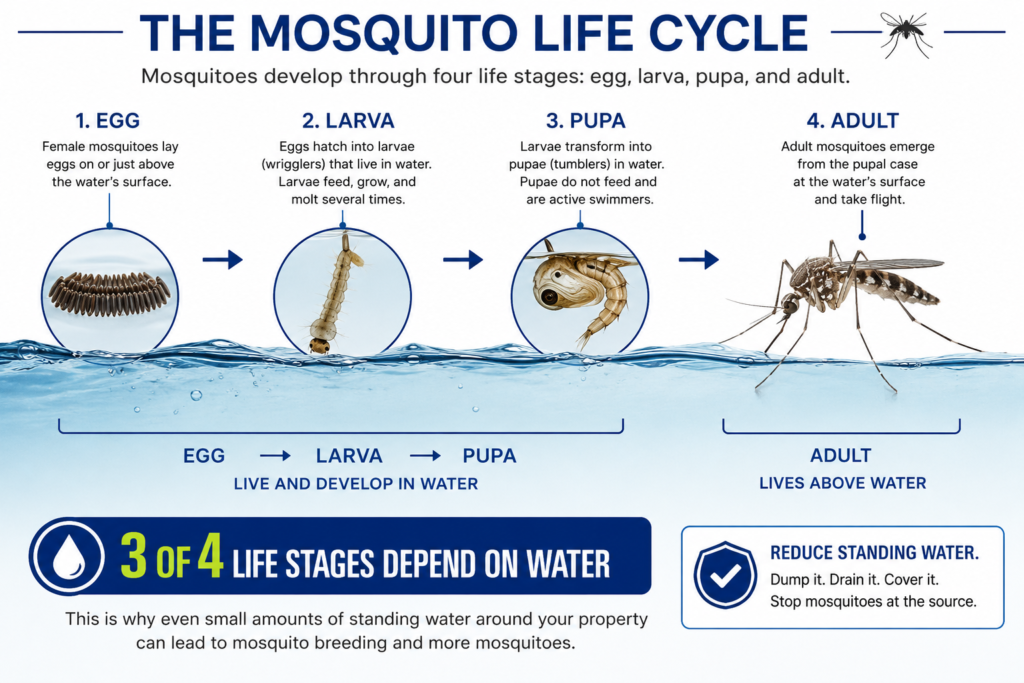
From Water to Wing: The Mosquito Life Cycle
Adult mosquitoes typically have:
- Six long, slender legs
- One pair of narrow wings
- A long, thin proboscis extending from the head
- Two antennae
- A narrow body with a distinct abdomen
- Tiny scales covering portions of the wings and body
Male mosquitoes often have noticeably bushier, feathery antennae than females. Only female mosquitoes take blood meals; males feed primarily on plant sugars and nectar.
The first three stages are closely associated with water. After hatching, mosquito larvae live and develop in water before becoming pupae. The adult mosquito then emerges from the pupal stage at the water’s surface.
This is why even small amounts of standing water around a property can be important when investigating mosquito activity.

Identification Note: A mosquito’s long legs and slender body may make it easy to recognize, but other small flying insects are sometimes mistaken for mosquitoes. A closer look at body shape, wings, antennae, and the long proboscis can help tell them apart.
Common Mosquito Suspects in Our Area
North Florida is home to many species of mosquitoes, and they don’t all behave the same way. Some are most active during the day, others are more noticeable around dusk and nighttime, and different species prefer different types of breeding sites.
Here are several mosquitoes that may be encountered in our area:
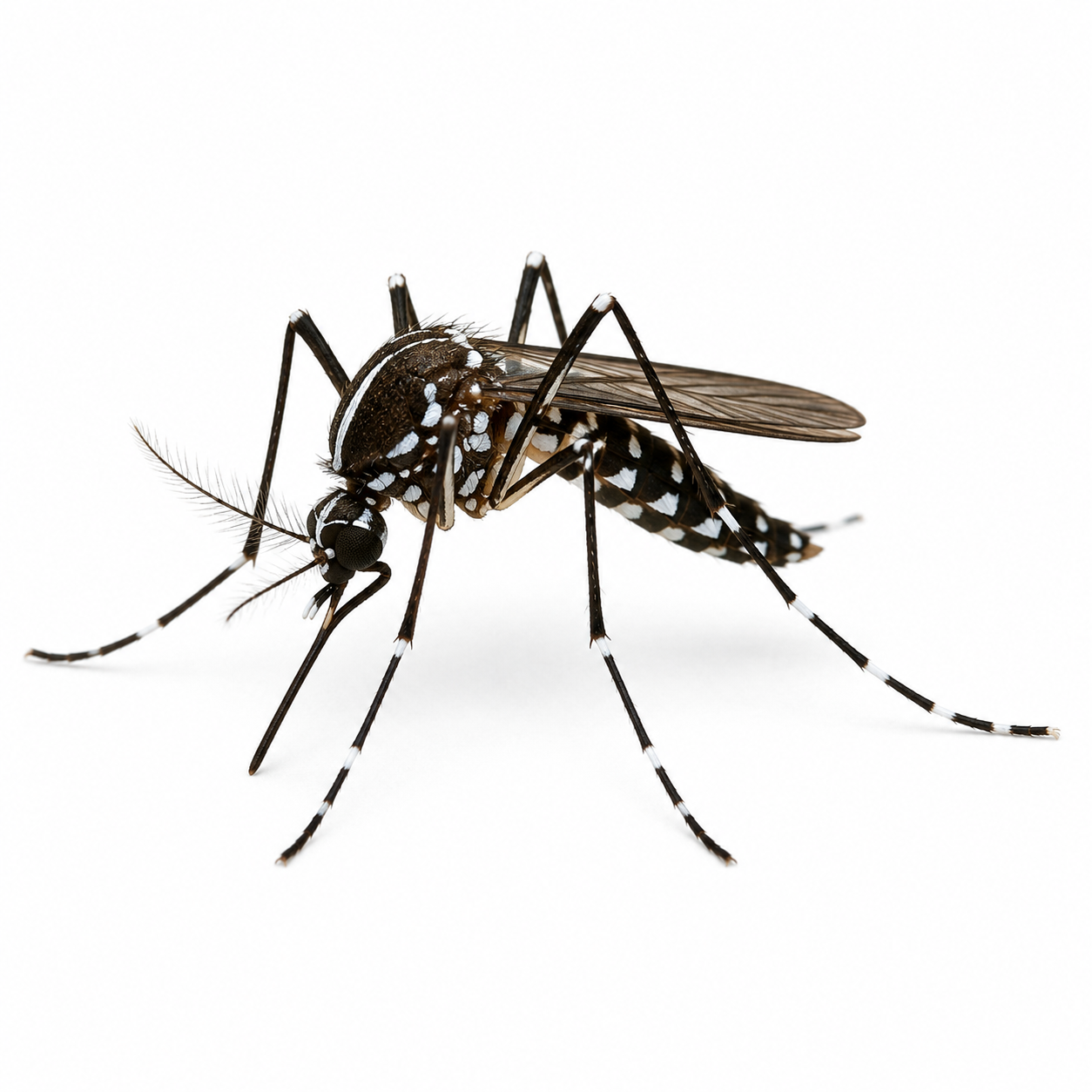
Asian Tiger Mosquito
The Asian tiger mosquito is a small, dark mosquito with distinctive white markings on its legs and a white stripe along the center of its back. It is an aggressive daytime biter and commonly develops in small containers and other water-holding objects around homes.
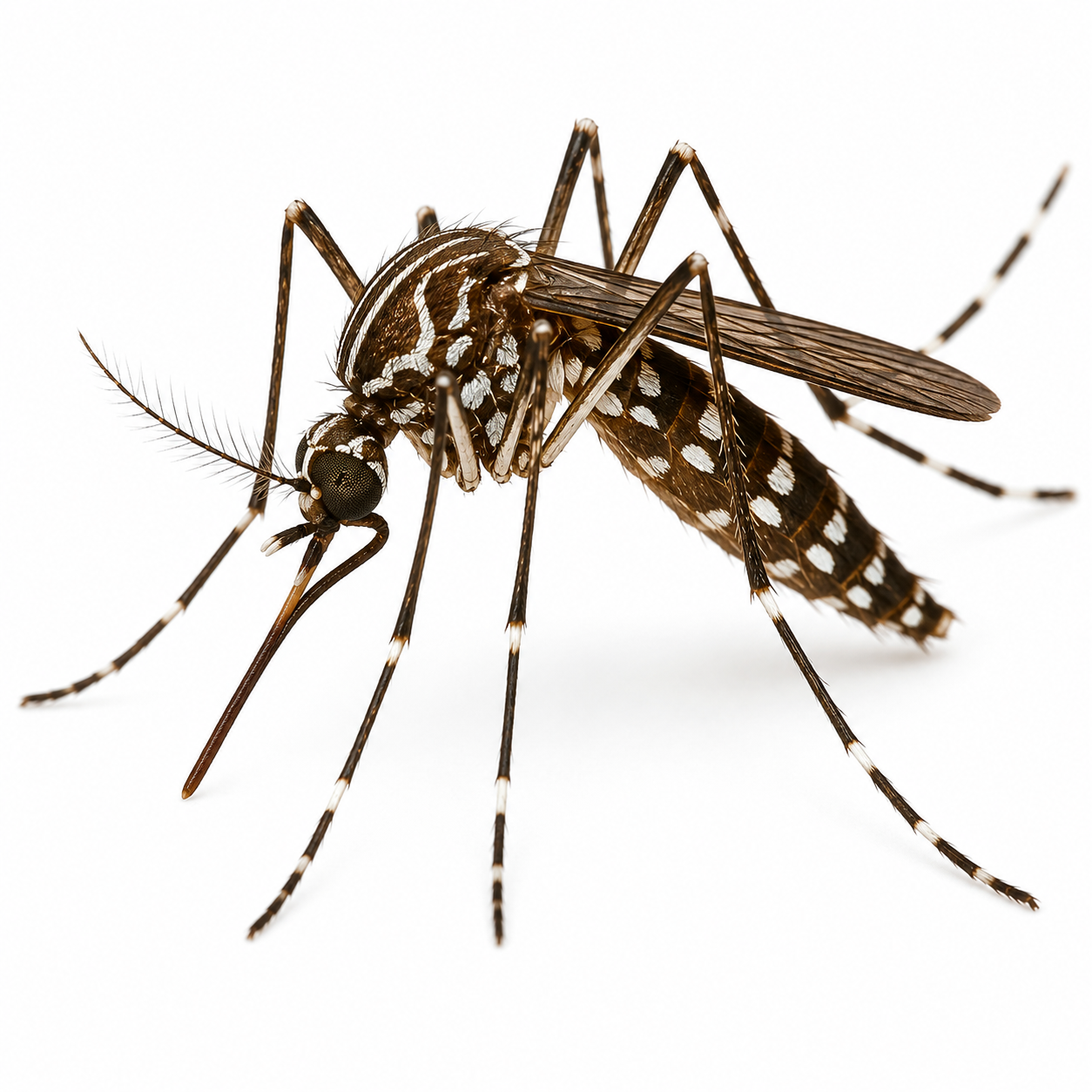
Yellow Fever Mosquito
Similar in appearance to the Asian tiger mosquito, the yellow fever mosquito is dark with white markings on its legs and distinctive pale markings on its upper body. It commonly breeds in containers holding water and is most active during daylight hours.
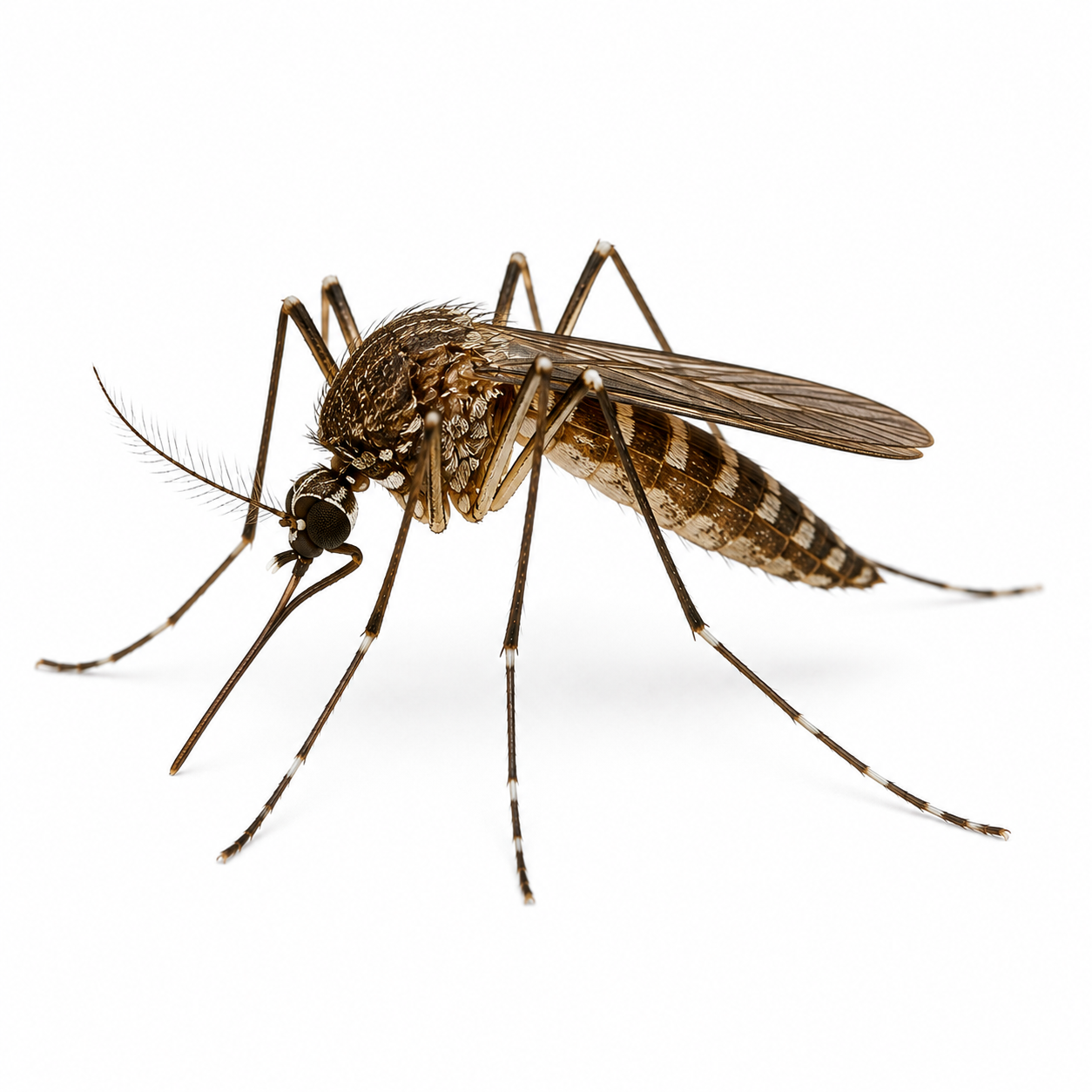
Southern House Mosquito
Usually brownish in appearance, the southern house mosquito is commonly associated with standing water containing organic material. It is primarily active from dusk through nighttime and may readily enter structures.
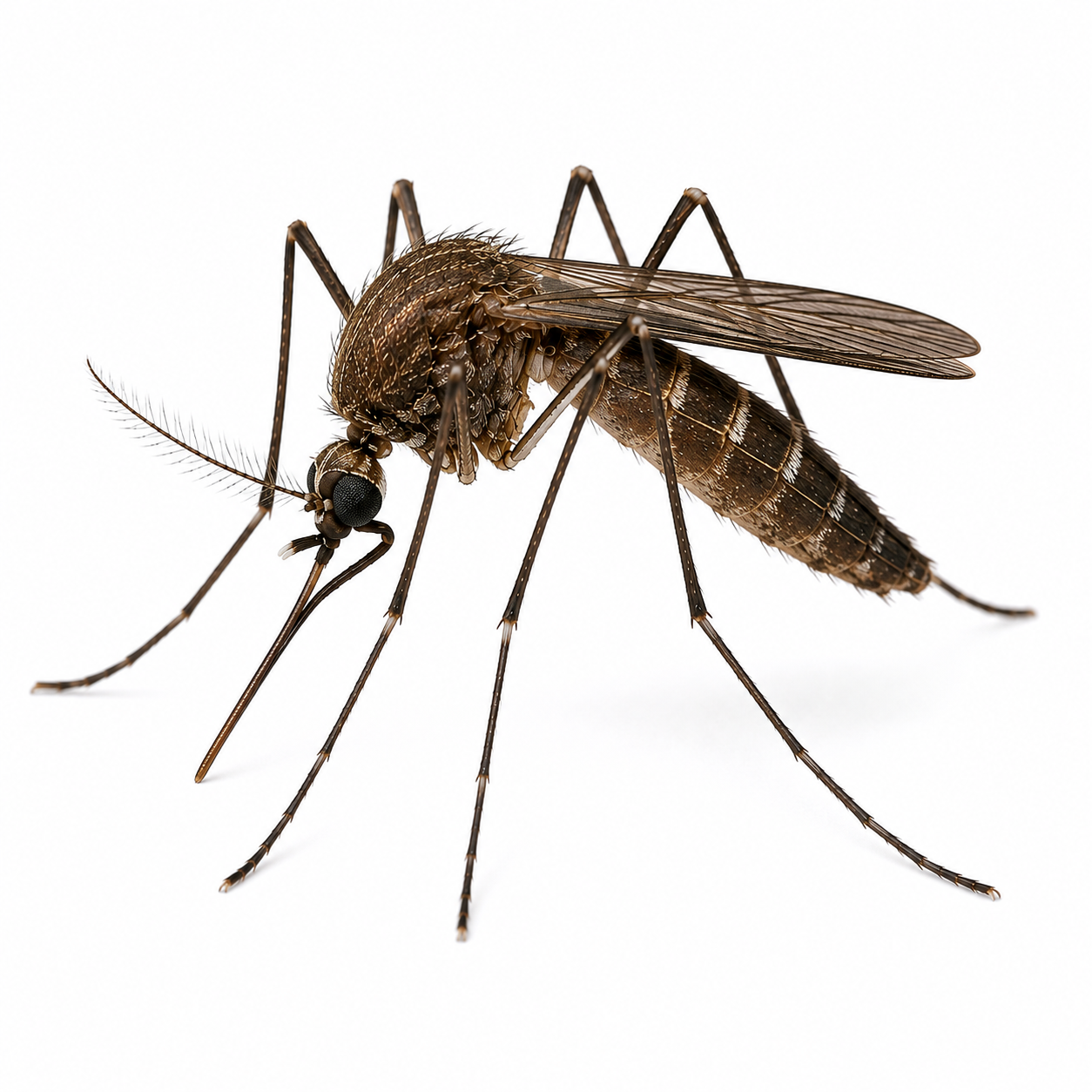
Florida SLE Mosquito
This small, generally brown mosquito is associated with a variety of freshwater habitats and may be especially noticeable during warmer, wetter periods. It is primarily active from dusk into the nighttime hours.
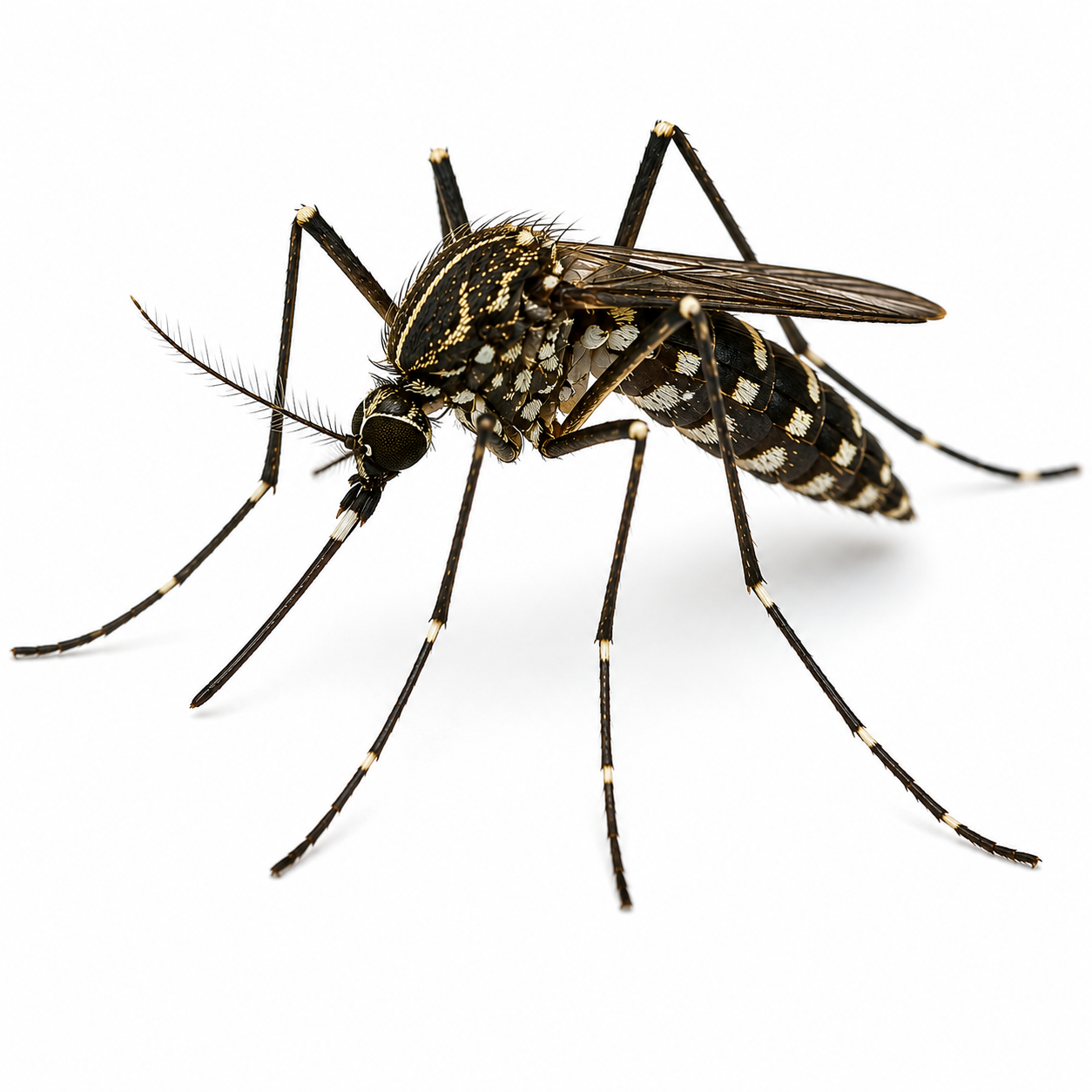
Eastern Saltmarsh Mosquito
These mosquitoes can develop in large numbers in coastal and saltmarsh habitats and are capable of traveling considerable distances from their breeding sites. They are persistent biters and may be active during both daytime and evening hours.
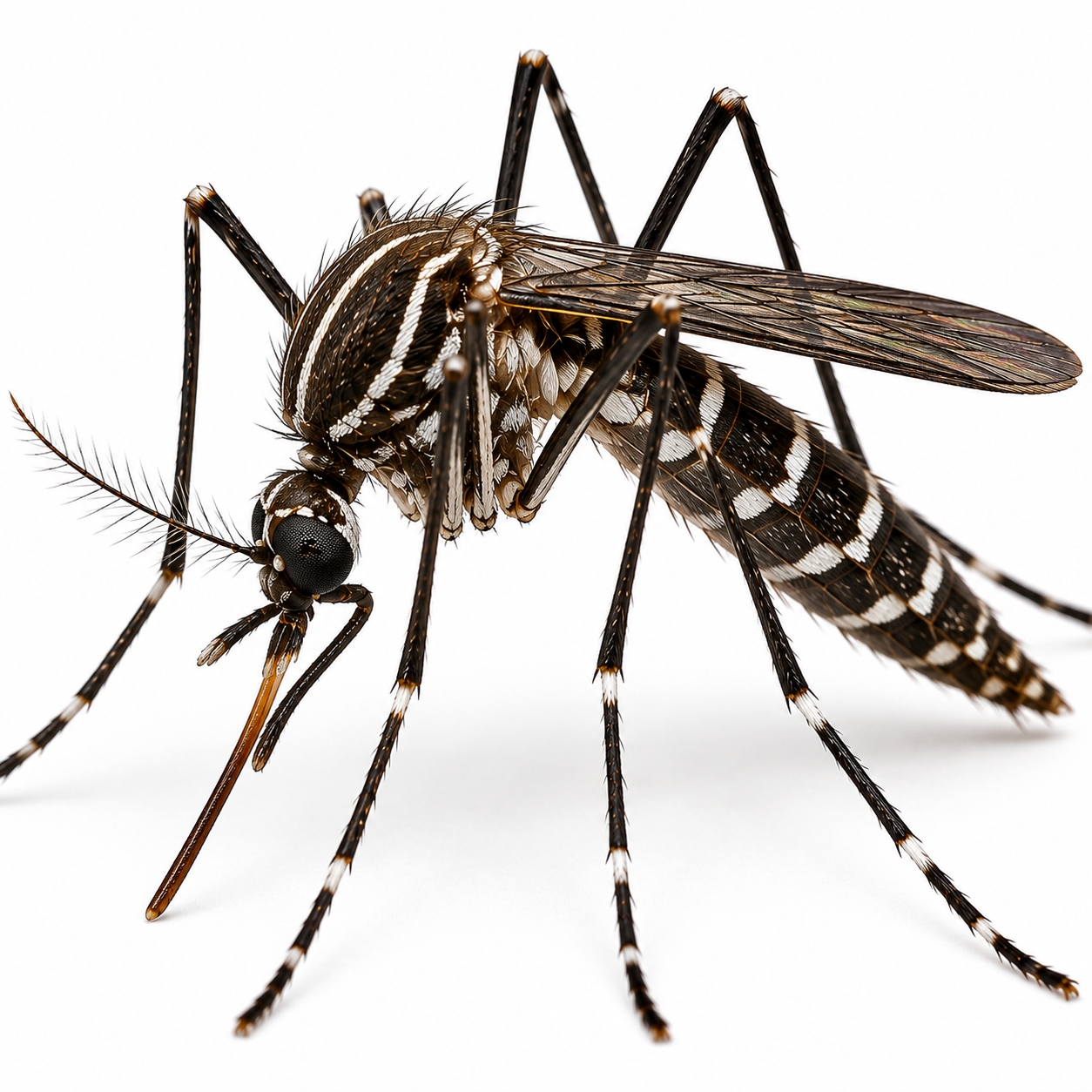
Black Saltmarsh Mosquito
The black saltmarsh mosquito is a dark mosquito with pale bands on its legs. It develops in temporary pools created by tides or rainfall in saltmarsh environments and can travel several miles in search of a blood meal.
Identification Note: Mosquito species can be difficult to distinguish without a close examination. Body color, leg markings, activity time, breeding habitat, and location can all provide useful clues—but a mosquito doesn’t need to be identified to the exact species before you start looking for standing water around your property.
Where Are Mosquitoes Found Around the Home?
Mosquitoes can be found almost anywhere outdoors in North Florida, but certain areas around a property provide the water, shade, and shelter they need to develop or rest.
Standing Water & Containers
Even small amounts of water can provide breeding sites for some mosquito species.
Check:
- Buckets and containers
- Flowerpot saucers
- Birdbaths
- Children’s toys
- Pet water bowls
- Wheelbarrows
- Tarps and covers that collect rainwater
- Discarded tires or other water-holding objects
Gutters & Drainage Areas
Clogged gutters, poorly draining areas, ditches, catch basins, and low spots in the yard can hold water long enough for mosquitoes to develop. Areas containing leaves and other organic material can be particularly attractive to certain species.
Shady Vegetation
Adult mosquitoes often rest in cool, shaded, humid areas during periods when they aren’t actively flying. Dense shrubs, tall grass, groundcover, and vegetation around porches or patios can provide protected resting places.
Look Around Your Yard
Mosquito breeding sites can be easy to overlook. Birdbaths, flowerpots, toys, tires, tarps, buckets, and other everyday objects can collect enough water for mosquitoes to develop.
Still Battling Mosquitoes?
Sometimes the source isn’t obvious—or mosquitoes may be traveling in from surrounding areas. Learn how Bug Cops approaches mosquito control and what options may be appropriate for your property.
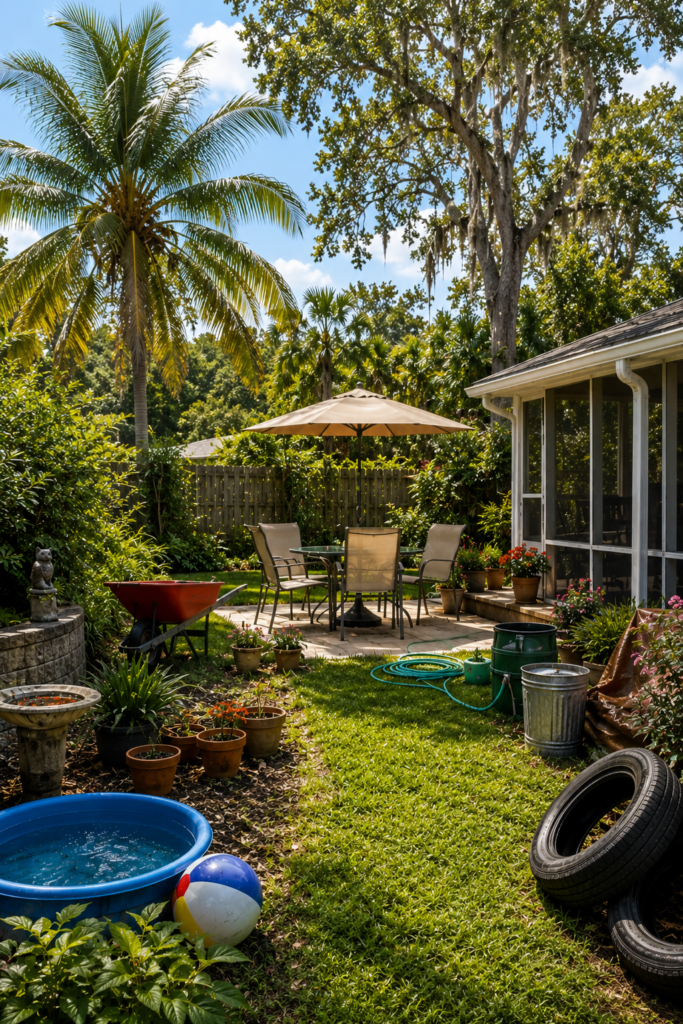
Around Outdoor Living Areas
Patios, porches, decks, pools, gardens, and children’s play areas may experience mosquito activity when breeding or resting sites are nearby. Mosquitoes may also be drawn to people and animals using these spaces.
Natural Water Sources
Ponds, marshes, wetlands, drainage areas, and other natural or semi-natural water sources can produce mosquitoes. Some species—particularly saltmarsh mosquitoes—can travel considerable distances from where they developed.
Don’t Overlook Small Water Sources
A mosquito breeding site doesn’t have to look like a pond. Bottle caps, clogged drains, folds in tarps, tree holes, and other small spaces can hold enough water for certain mosquitoes to develop.
Identification Note: When mosquito activity is persistent, one of the first things to investigate is where water is collecting and how long it’s staying there.
Signs of Mosquito Activity
Mosquitoes don’t leave behind the same obvious evidence as some household pests, but there are several clues that can help you recognize when mosquito activity is developing around your property. If mosquitoes seem to be increasing around your property, don’t just look for the adults. Look for the water that may be producing them.
Frequent Biting
Repeated mosquito bites while spending time outdoors are one of the most noticeable signs of activity. Depending on the species, biting may be worse during the day, around dusk, or after dark.
Mosquitoes Around Shaded Areas
Adult mosquitoes often rest in cool, humid, protected areas. You may notice them around dense shrubs, underneath leaves, shaded porches, tall grass, or other sheltered locations.
Mosquitoes Near Standing Water
Seeing mosquitoes around birdbaths, containers, clogged gutters, ditches, plant saucers, or other water-holding areas may indicate a nearby breeding site.
Larvae Moving in Water
Mosquito larvae live in water and are sometimes called “wrigglers” because of their movement. Look closely at stagnant water and you may see tiny larvae moving near the surface.
Increased Activity After Rain
Rain can fill containers, low spots, ditches, and other areas with water. An increase in mosquito activity following wet weather may indicate that new breeding sites have become available.
Mosquitoes Gathering Near People or Pets
Female mosquitoes searching for a blood meal may gather around patios, porches, play areas, or other places where people and animals spend time. Persistent activity in these areas can indicate mosquito populations nearby.
Why Am I Seeing So Many Mosquitoes?
North Florida’s warm temperatures, humidity, and frequent rainfall create favorable conditions for mosquitoes. When mosquito numbers suddenly seem higher around your home, one or more conditions nearby may be helping them develop or remain on the property.
Standing Water Is Nearby
Buckets, birdbaths, plant saucers, toys, clogged gutters, tires, tarps, and other water-holding objects can provide breeding sites. Even small amounts of standing water can be enough for certain mosquito species.
Recent Rain Has Created New Breeding Sites
Rain can quickly fill containers, ditches, low areas, and other places that were previously dry. After wet weather, these temporary water sources may provide new places for mosquitoes to develop.
Dense Vegetation Provides Shelter
Shrubs, tall grass, groundcover, and other dense vegetation create cool, shaded, humid resting areas where adult mosquitoes can shelter during the day or between periods of activity.
Nearby Natural Areas Are Producing Mosquitoes
Ponds, wetlands, marshes, drainage areas, wooded areas, and other natural habitats may support mosquito populations. Some species can travel considerable distances from their breeding sites, so the source may not always be on your property.
People and Animals Provide Blood Meals
Female mosquitoes locate people and animals using cues that include carbon dioxide, body heat, and odors. Outdoor living areas where people or pets spend time can naturally become areas of noticeable mosquito activity.
Warm Weather Speeds Development
Mosquito activity generally increases during warm weather. Higher temperatures can allow mosquitoes to develop more quickly, and North Florida’s long warm season gives many species an extended period in which to remain active.
Identification Note: Having mosquitoes around your yard doesn’t necessarily mean they’re all breeding on your property. But eliminating unnecessary standing water and reducing favorable resting areas can help address the conditions you can control.
Mosquito Prevention Tips
Empty Standing Water
Dump water from buckets, toys, plant saucers, wheelbarrows, tarps, and other containers after rain. Turn unused containers upside down or store them where they won’t collect water.
Refresh Water Regularly
Change the water in birdbaths, pet bowls, and other necessary water containers regularly. Scrub the inside surfaces when appropriate to help remove mosquito eggs that may be attached near the waterline.
Keep Gutters & Drainage Areas Clear
Remove leaves and debris from gutters and make sure water can drain properly. Check low spots, drains, and other areas where water remains after rainfall.
Maintain Landscaping
Trim overgrown vegetation, tall grass, and dense shrubs where practical. Reducing cool, shaded resting areas near patios, doors, and frequently used outdoor spaces can make those locations less inviting to adult mosquitoes.
Check Screens & Entry Points
Repair damaged window and door screens and keep doors closed when practical. This can help prevent mosquitoes from following people indoors.
Inspect the Yard After Rain
Take a quick walk around the property after rainfall. Look for water collecting in toys, containers, tarps, tires, clogged drains, and other places that may be easy to overlook.
Remember: You don’t need a large puddle to have a potential mosquito breeding site. If it can hold water, it’s worth checking.
When Should I Be Concerned About Mosquitoes?
Mosquitoes are a normal part of life in North Florida, but persistent or unusually heavy activity can deserve closer attention—especially when mosquitoes are interfering with the use of your outdoor spaces.
Mosquitoes Are Biting Heavily
If you can’t spend a short amount of time outdoors without repeatedly being bitten, mosquito populations may be particularly high nearby.
Activity Has Suddenly Increased
A noticeable increase after rainfall or warm weather may indicate newly available breeding sites. Take a walk around the property and check for standing water that wasn’t there before.
Mosquitoes Are Active Throughout the Day
Not all mosquitoes wait until evening to bite. Species such as Asian tiger and yellow fever mosquitoes are active during daylight hours, so persistent daytime biting can provide a clue about the mosquitoes you’re encountering.
You Find Larvae in Standing Water
Finding wriggling mosquito larvae in a container or other standing water confirms that mosquitoes are developing there. Empty the water when practical and address whatever is allowing it to collect.
Outdoor Areas Are Difficult to Use
Persistent mosquito activity around patios, porches, play areas, gardens, or other frequently used spaces may warrant a closer look at breeding sites and resting areas around the property.
There Is a Local Mosquito-Borne Disease Advisory
Mosquito-borne disease activity varies by location and season. Homeowners can check Florida Department of Health mosquito-borne disease surveillance for current information and follow recommendations issued by state or local health officials.
Important: Mosquito bites alone cannot tell you whether a mosquito was carrying a disease. If you have concerns about illness or symptoms following mosquito bites, contact an appropriate medical professional.
Mosquito Identification Guide FAQs
Warm weather, rainfall, standing water, dense vegetation, and nearby natural areas can all contribute to mosquito activity. Some mosquitoes may be developing on your property, while others can travel considerable distances from their breeding sites.
Certain mosquitoes can develop in surprisingly small amounts of standing water. Flowerpot saucers, toys, buckets, birdbaths, clogged gutters, tires, and even small objects that collect rainwater can provide suitable breeding sites.
Not all mosquitoes are primarily active at dusk or after dark. Asian tiger and yellow fever mosquitoes are well-known daytime biters, which is why mosquito activity can occur throughout the day in North Florida.
Mosquito larvae are small and live in water, often moving near the surface with a distinctive wriggling motion—which is why they’re sometimes called “wrigglers.” If you find larvae in a container that can be emptied, remove the water and address whatever is allowing it to collect.
Not necessarily, but it’s one of the most important steps homeowners can take. Some mosquitoes may be coming from ponds, wetlands, marshes, drainage areas, or other properties and can travel considerable distances. Eliminating unnecessary standing water helps remove the breeding sites you can control.
Not Sure What’s Biting You?
Mosquitoes aren’t the only small flying insects found around North Florida homes, and identifying one from a quick glance isn’t always easy.
Don’t guess. If you’ve found a mosquito or mosquito-like insect you don’t recognize, take a clear photo and send it to Bug Cops Pest Control. We’ll help you determine what you may be seeing.
Protecting & Serving Clay and Putnam Counties Since 1993
If mosquito activity is making it difficult to enjoy your outdoor spaces, Bug Cops Pest Control can help you look at the conditions around your property and determine the appropriate next step.