Tropical Sod Webworm Identification Guide
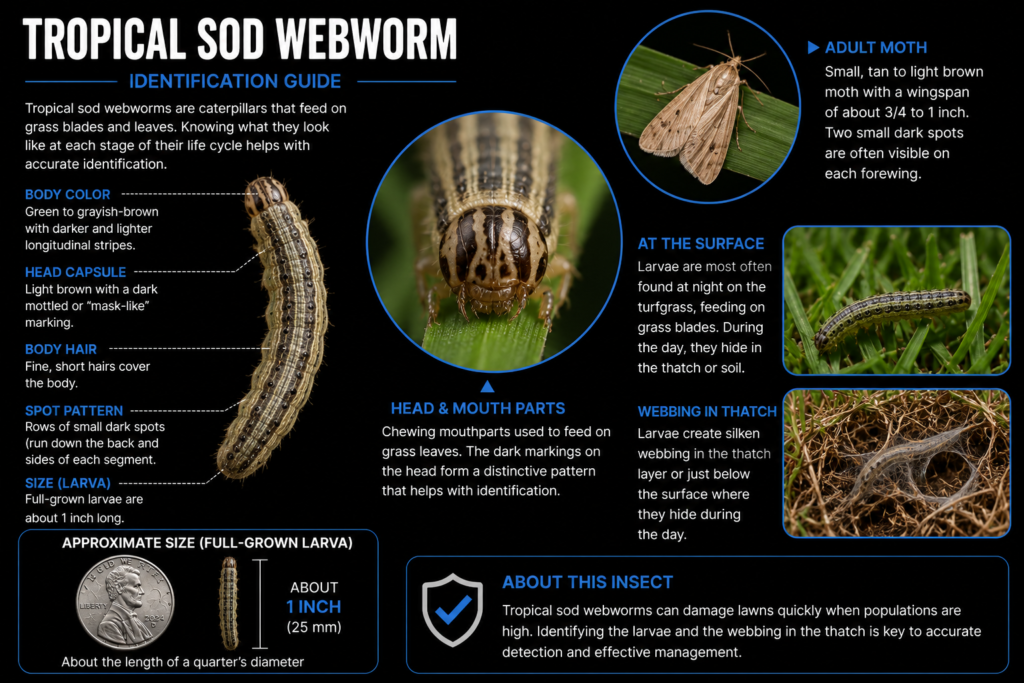
This Tropical Sod Webworm Identification Guide will help North Florida homeowners recognize tropical sod webworms, understand the turf damage they can cause, and know where to look for evidence of activity. Tropical sod webworms are turf-feeding caterpillars that chew grass blades, with much of their feeding occurring during the cooler evening and nighttime hours.
The Damage Often Happens After Dark
Tropical sod webworms are turf-feeding caterpillars that can damage several types of Florida lawn grasses. The larval, or caterpillar, stage causes the turf damage by chewing on grass blades.
Much of their feeding occurs from late afternoon through the night, while the caterpillars commonly retreat into the thatch or near the soil surface during the day. That means homeowners may notice damaged grass without immediately seeing what’s causing it.
What Does a Tropical Sod Webworm Look Like?
Young tropical sod webworm caterpillars are small and can be difficult to spot among grass and thatch. As they mature, they can reach roughly ¾ to 1 inch long.
Their bodies may appear greenish, grayish, or brownish and have darker spots along the body. One useful identification feature is the presence of small dark spots on each body segment.
Adults look completely different. They’re small, tan-to-brown moths that may be noticed flying low over the lawn, particularly when the turf is disturbed.
What Does Tropical Sod Webworm Damage Look Like?
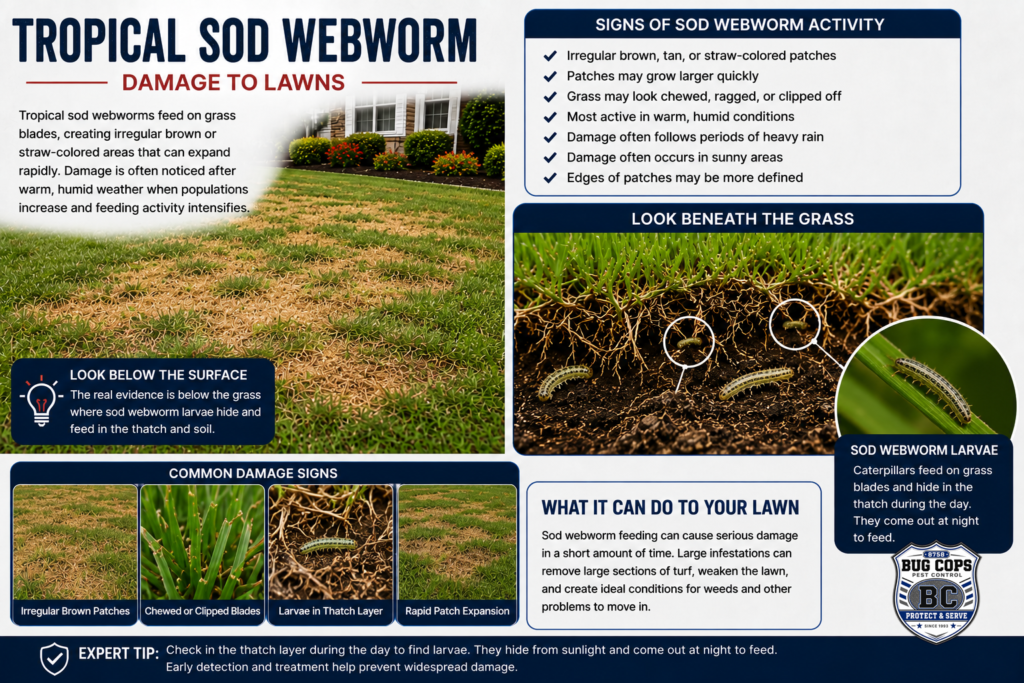
Early damage can be easy to overlook. Caterpillars begin by feeding on grass blades, and as feeding increases, affected turf can develop noticeable yellow or brown areas.
When sod webworms are active, look closely at the grass itself for feeding evidence:
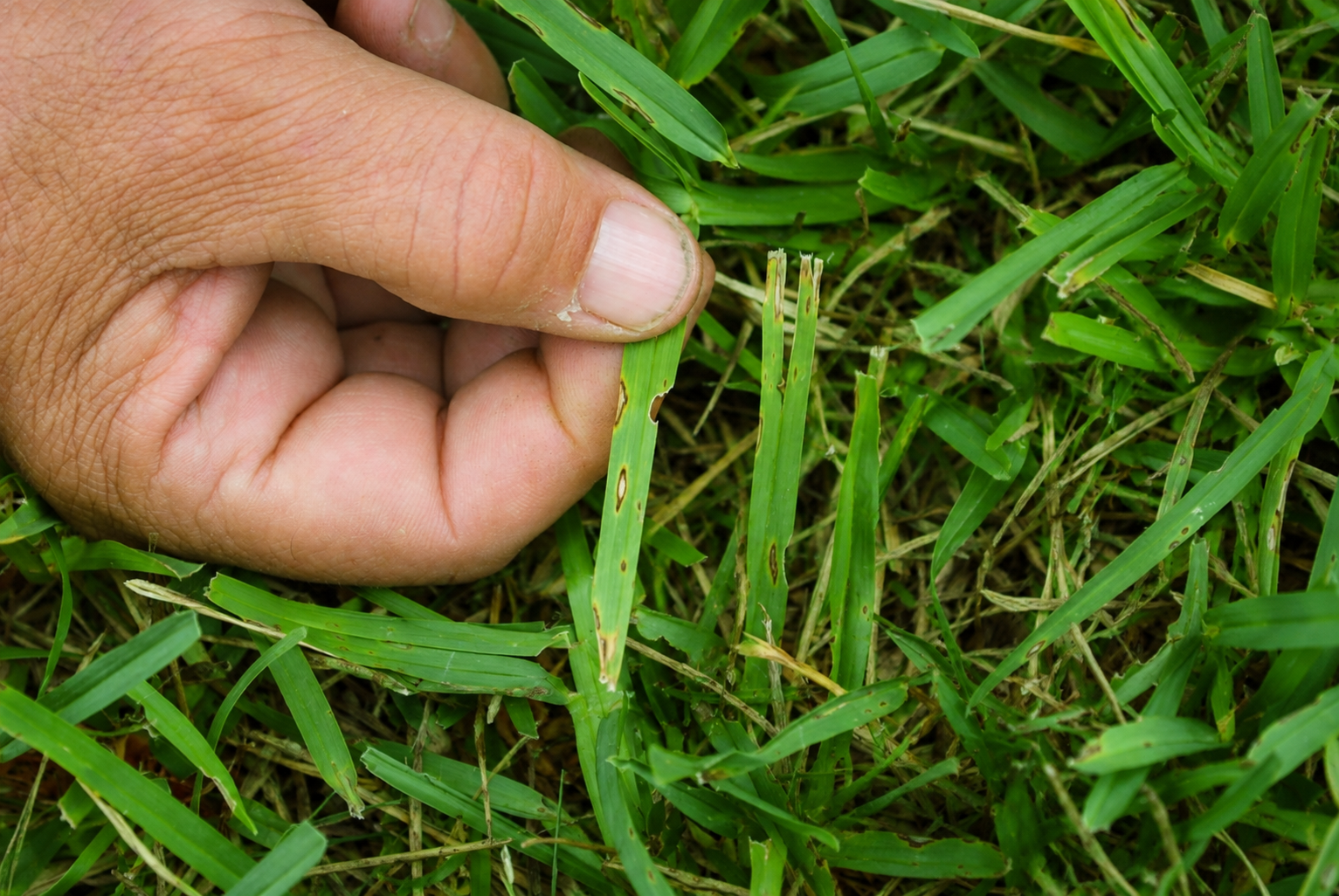
- Grass blades that appear chewed, notched, or shortened
- Small areas of thinning turf that gradually become more noticeable
- Yellow or brown patches as feeding becomes heavier
- Caterpillars or their silk-lined hiding areas down in the thatch
- Small moths flying low over the turf when the lawn is disturbed
Where Should You Look?
Look down inside the thatch and around the base of the grass, especially near areas where blades show obvious chewing.
Because tropical sod webworms tend to feed when it’s cooler and darker, inspecting during the middle of a sunny day may not reveal an active caterpillar even when damage is present.
The feeding pattern on the grass blades can therefore be an important clue that tells you to investigate further.
The right lawn care starts with identifying the problem correctly. Don’t guess. Bug Cops offers free Lawn and Ornamental inspections if you’d like us to take a closer look.

Inspection Note: Seeing Little Moths Over the Lawn? Small moths flying low over the grass can be a clue that sod webworms may be present, but the moths aren’t the stage damaging the turf. The caterpillars are the feeders. That’s why the grass blades and thatch deserve a closer look rather than assuming the flying moth itself is causing the damage.
Not sure this is a tropical sod webworm? Compare sod webworms with chinch bugs, mole crickets, and fall armyworms in our Turf-Damaging Insect Identification Guide. For additional university-based information about identifying and managing insects found in Florida lawns, visit the UF/IFAS Extension lawn insect resources.
Tropical Sod Webworm Identification Guide FAQs
Tropical sod webworm caterpillars may be found down within the turf, thatch, and around the base of the grass. Because they tend to feed when conditions are cooler and darker, they may be easier to find in the evening or at night than during the middle of a sunny day.
Early damage may appear as small areas of thinning turf or grass blades that look chewed, notched, or shortened. As feeding increases, affected areas can become more noticeable and may develop yellow or brown patches.
Young caterpillars are small and can be difficult to spot among the grass and thatch. As they mature, tropical sod webworm larvae can reach roughly ¾ to 1 inch long.
Small tan-to-brown moths flying low over the grass can be a clue that tropical sod webworms may be present. However, the moths are not the stage damaging the turf. The caterpillars are the feeders, so the grass blades and thatch should be examined for additional evidence.
Yes. Fall armyworms also chew grass blades and can produce similar-looking turf damage. Examining the caterpillar itself, the feeding pattern on the grass, and where activity is found can help distinguish tropical sod webworms from other turf pests.
Not Sure What’s Damaging Your Lawn?
Brown spots, thinning turf, and damaged grass don’t always tell the whole story. Bug Cops looks at the damage pattern, turf condition, environmental factors, and evidence of pest activity to help determine what’s actually happening before recommending the appropriate next step.
Protecting & Serving Clay & Putnam Counties Since 1993
The right lawn care starts with identifying the problem correctly. Don’t guess. Bug Cops offers free Lawn and Ornamental inspections if you’d like us to take a closer look.