Southern Chinch Bug Identification Guide
This Southern Chinch Bug Identification Guide will help North Florida homeowners recognize chinch bugs, understand the turf damage they can cause, and know where to look for evidence of activity. The southern chinch bug (Blissus insularis) is one of Florida’s most important turf pests and is particularly associated with St. Augustinegrass. These tiny insects live down in the turf and feed by removing sap from the grass. Large numbers feeding together can cause turf to yellow, turn brown, and eventually die.
Small Insect. Serious Turf Damage.
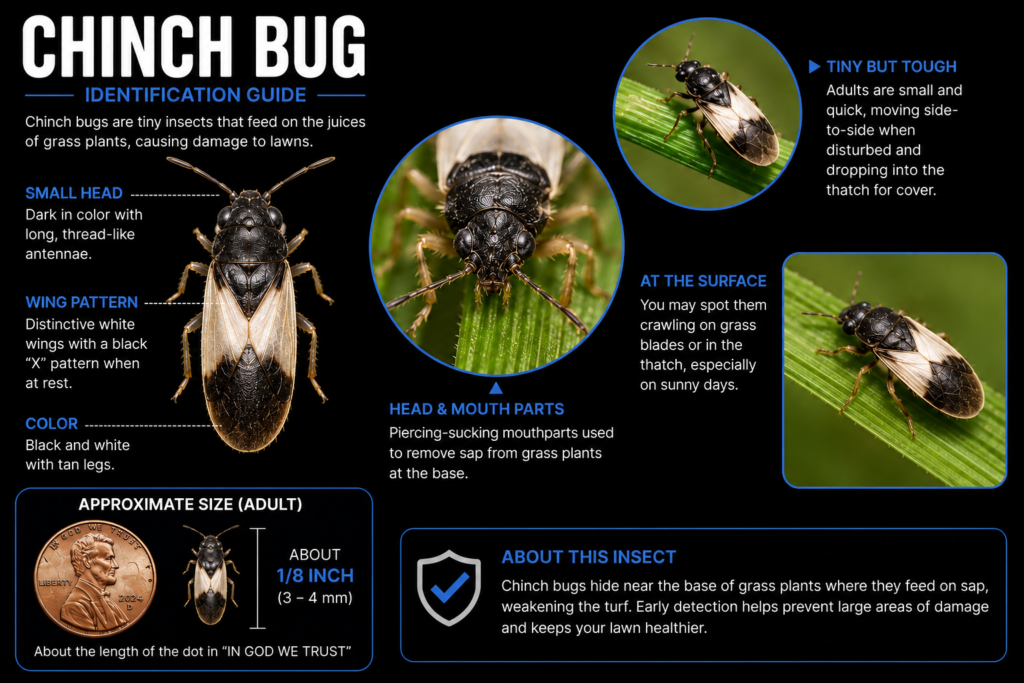
What Does a Chinch Bug Look Like?
Adult southern chinch bugs are tiny—roughly 1/8 inch long. Adults have dark bodies with contrasting white wings, while younger nymphs look quite different. Young nymphs may appear orange or reddish with a light-colored band across the abdomen, becoming darker as they mature.
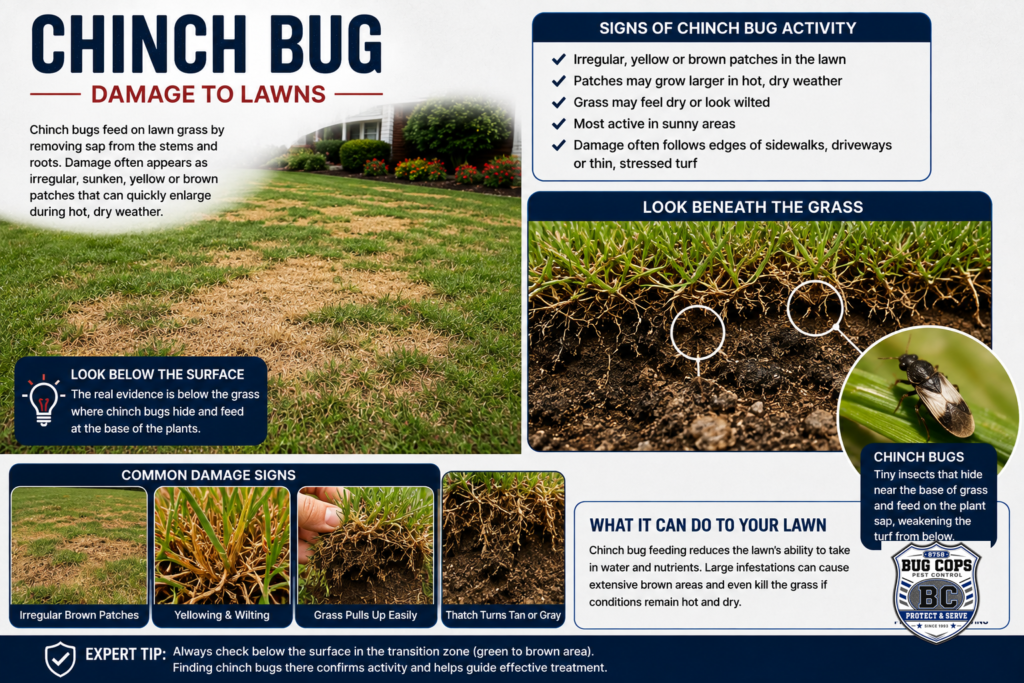
Southern Chinch Bug Damage: What Should You Look For?
Damage often begins as yellow or brown patches and may continue spreading outward as the insects move into neighboring healthy turf.
One of the most useful clues is where the damage begins. Chinch bug injury frequently shows up first in St. Augustinegrass that is already experiencing heat or water stress, including sunny areas and along lawn edges.
When chinch bugs are active, a few clues can help narrow down what may be happening in the lawn:
- Yellowing that progresses to brown or dead turf
- Irregular or expanding damaged areas
- Damage occurring in sunny, hot, or water-stressed portions of the lawn
- Tiny insects present near the border between damaged and healthy grass
Where Should You Look?
Don’t start in the completely dead center of an old brown patch.
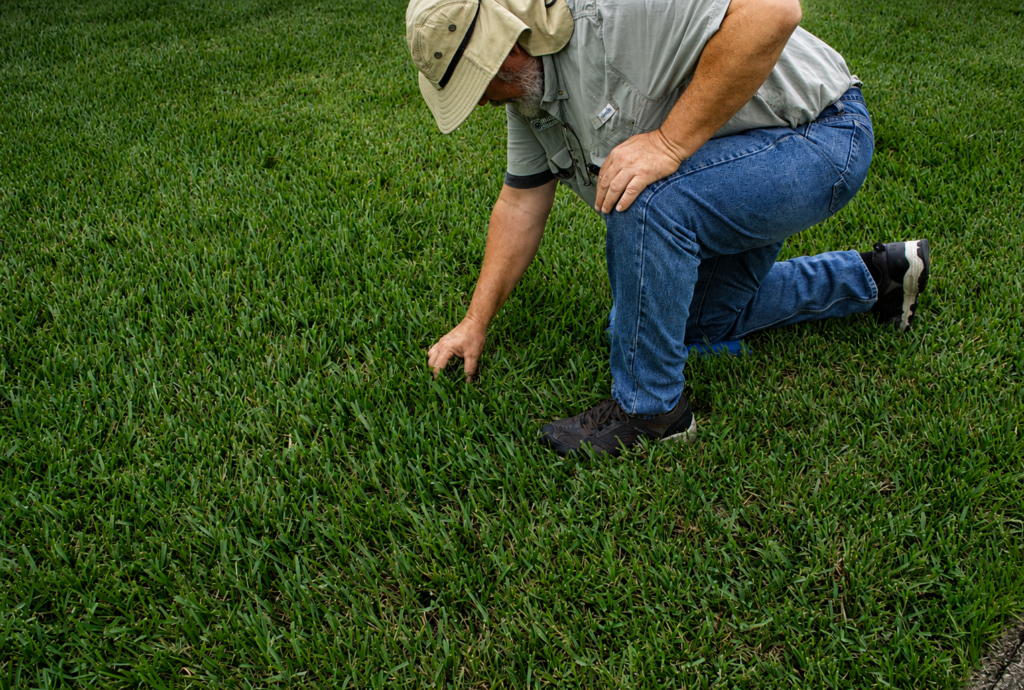
Look along the edge where unhealthy turf meets healthy green turf.
Chinch bugs spend much of their time down around the grass bases, thatch, and upper organic soil layer. When populations become heavy, they may be easier to see moving through the turf.
Bug Cops provides Lawn and Ornamental Care Services throughout Clay and Putnam Counties, with programs built around the conditions we encounter in our local lawns and landscapes.

Identification Note: Chinch Bug or Beneficial Insect? Not every small insect moving through the turf is a pest. Big-eyed bugs can be mistaken for chinch bugs, but they’re beneficial predators that actually feed on chinch bugs. Looking closely at what is present in the lawn matters before deciding whether treatment is needed.
Not sure this is a chinch bug? Compare which bugs with mole crickets, tropical sod web worm, and fall armyworms in our Turf Damaging Insect Identification Guide. For additional university-based information about identifying and managing insects found in Florida lawns, visit the UF/IFAS Extension lawn insect resources.
Southern Chinch Bug Identification Guide FAQs
Chinch bugs are commonly associated with St. Augustinegrass and may be found down near the base of the grass, in the thatch, and around the transition between damaged and healthy turf. Sunny or water-stressed areas can be particularly important places to inspect.
Damage may begin as yellowing turf that progresses to brown or dead areas. The damaged area can continue expanding as chinch bugs move into neighboring healthy grass, which is why the edge of the affected area can provide useful clues.
Adult southern chinch bugs are tiny—roughly 1/8 inch long. Their small size means homeowners may notice the turf damage before they notice the insects themselves.
es. Chinch bug injury and water stress can both produce yellow or brown turf. Looking at irrigation conditions, the pattern of the damage, and whether chinch bugs are actually present can help distinguish between the two.
o. Other small insects live in turf, including beneficial predators such as big-eyed bugs. Identification matters because not every insect found in a damaged lawn is responsible for the damage.
Not Sure What’s Damaging Your Lawn?
Brown spots, thinning turf, and damaged grass don’t always tell the whole story. Bug Cops looks at the damage pattern, turf condition, environmental factors, and evidence of pest activity to help determine what’s actually happening before recommending the appropriate next step.
The right lawn care starts with identifying the problem correctly. Don’t guess. Bug Cops offers free Lawn and Ornamental inspections if you’d like us to take a closer look.