Suspect Spotlight™: Black Widow Spiders in North Florida
Few spiders have a reputation quite like the Black Widow. The glossy black body and familiar red hourglass have made this spider instantly recognizable—even to people who don’t particularly like spiders. And unlike many spider fears, there is a legitimate reason to treat this suspect with respect: widow spiders have medically significant venom.
But medically significant doesn’t mean homeowners need to panic.
Black Widows are generally shy spiders that prefer protected, undisturbed places. Bites typically occur when a spider is accidentally trapped, touched, pinched, or otherwise disturbed rather than because the spider actively seeks out people.
So let’s put the reputation aside and look at the evidence.
Meet the Suspect: The Southern Black Widow
Florida has several widow spiders, including the Southern Black Widow (Latrodectus mactans), Northern Black Widow, Red Widow, and Brown Widow. UF/IFAS identifies widow spiders as the native or established Florida spiders with venom considered medically significant.
For North Florida homeowners, the Southern Black Widow is an important species to recognize.
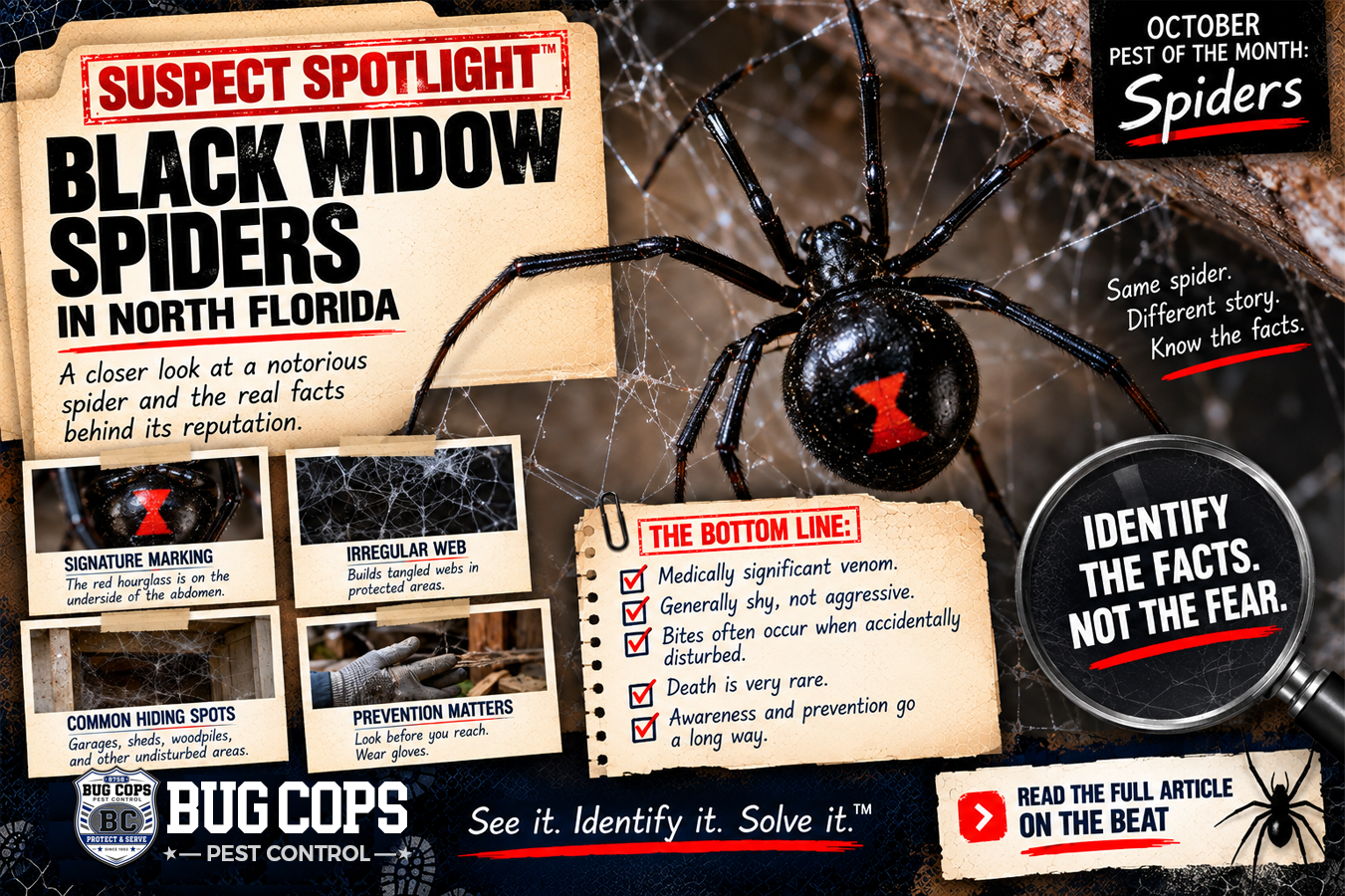
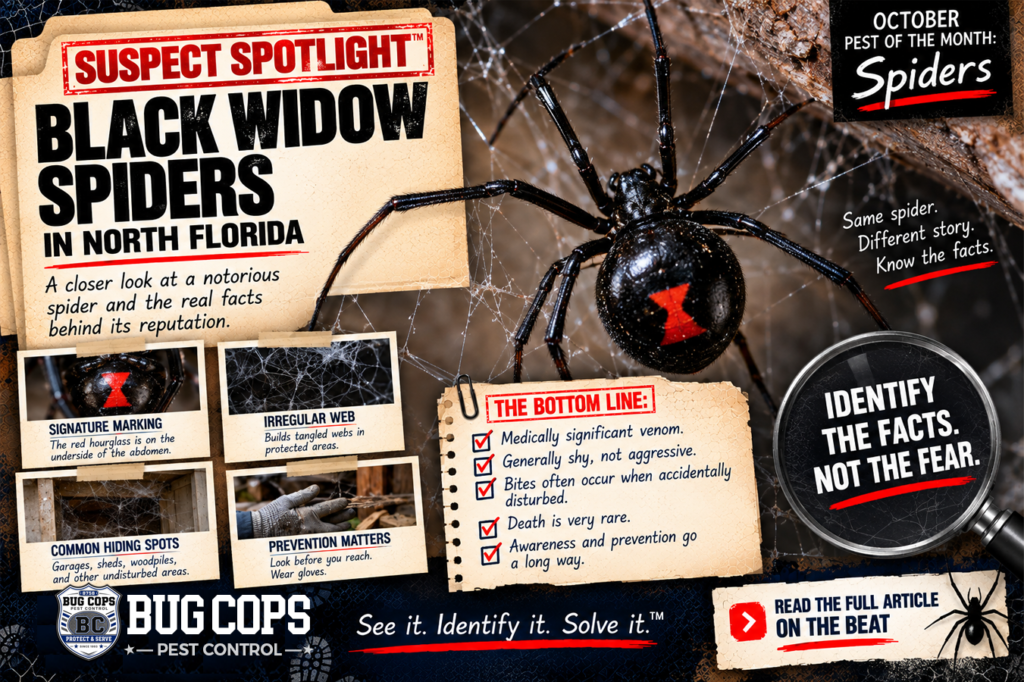
Adult females are typically glossy black with a rounded abdomen. The famous red hourglass marking occurs on the underside of the abdomen, which means it may not always be visible when you’re looking down at the spider.
Young spiders and males can look different, so one marking alone shouldn’t be used to identify every suspected Black Widow.

Identification Note: If you’re unsure about a spider, don’t handle it to get a closer look. A clear photograph taken from a safe distance is much more useful—and much safer.
Where Do Black Widows Hide?
Black Widows prefer locations where their webs can remain relatively undisturbed.
Outdoor Habitats
Places such as wood and rock piles, rodent burrows, and hollow tree stumps can provide sheltered areas. Garages and sheds are also places Black Widows may occur around structures.
Around a Home
It’s worth using care when reaching into or moving things such as woodpiles, stored materials, outdoor equipment, planters, boxes, and items that have remained undisturbed for long periods.
Cobwebs
Their webs also provide a clue. Widow spiders construct irregular, tangled-looking webs rather than the symmetrical orb webs many people picture when they hear the word “spider.”
But remember:
A messy web is evidence—not identification.
Plenty of spiders construct irregular webs.
How Dangerous Is a Black Widow Bite?
Black Widow venom affects the nervous system and a bite can produce significant pain and other symptoms. CDC notes that pain may spread beyond the bite area, including to the chest, abdomen, or elsewhere in the body.
Severe symptoms can occur, which is why a suspected Black Widow bite deserves appropriate medical attention.
At the same time, death from a Black Widow bite is very rare.
Poison Control reports that in a review involving more than 15,000 Black Widow exposures reported to U.S. poison centers, there were no deaths and only 10% resulted in hospital admission.
What Should You Do If You Suspect a Bite?
If you believe a Black Widow has bitten you, don’t rely on a Facebook post, Google search, or pest-control website to decide whether symptoms require medical care.
Poison Control provides free, confidential guidance 24 hours a day at 1-800-222-1222, and its online poison-control service can also provide case-specific guidance.
CDC advises washing the bite area with soap and water, applying a cold damp cloth or ice-filled cloth to reduce swelling, and seeking professional medical attention. If the spider can be identified safely, identification may also help medical professionals.
Don’t attempt to capture a spider if doing so puts you at risk of another bite.
Reducing Accidental Encounters Around the Home
Most prevention isn’t complicated. The important idea is to reduce the chances of putting your hand against a spider you didn’t know was there.
UF/IFAS specifically recommends caution when working around suitable Black Widow habitat and notes that gardening gloves can help prevent bites when working around areas such as woodpiles.
Before moving long-undisturbed materials, take a look first. Wear gloves when handling stored outdoor items or firewood. Keep storage areas organized. Reduce unnecessary clutter in garages and sheds. Check gardening equipment, gloves, or other items that have been sitting unused before grabbing them.
In other words:
Look first. Reach second.
The Black Widow’s Other Side
It’s easy to view a Black Widow only through the lens of its venom.
But it’s still a predator performing the same ecological role as other spiders—capturing insects and other arthropods.
UF/IFAS notes that spiders broadly provide important ecological services by feeding on other invertebrates, including pest insects.
That doesn’t mean a Black Widow living beside a frequently used doorway should simply be ignored.
It means the appropriate response should depend on identification, location and actual risk, rather than fear generated by the spider’s name.
Case File Summary
The Black Widow deserves respect because its venom is medically significant.
However, it is not an aggressive spider roaming North Florida homes looking for someone to bite. Black Widows generally prefer protected, undisturbed locations, and accidental contact is an important factor in preventing bites.
And most importantly, identify the suspect before deciding what the evidence means.
Not Sure Which Spider You Found?
Visit our Spider Identification Guide to compare common spiders found around North Florida homes.
If you have a clear photograph, you can also Send Us a Pest Photo and show Bug Cops what you’re seeing.
When It’s Time to Request Backup
Bug Cops provides spider control services throughout Clay and Putnam Counties. We begin by identifying the type of spider whenever possible and looking at where the activity is occurring, rather than focusing only on the spiders currently visible.
See it. Identify it. Solve it.™
Protecting what matters most.