Palm Tree Care Services in Clay & Putnam Counties
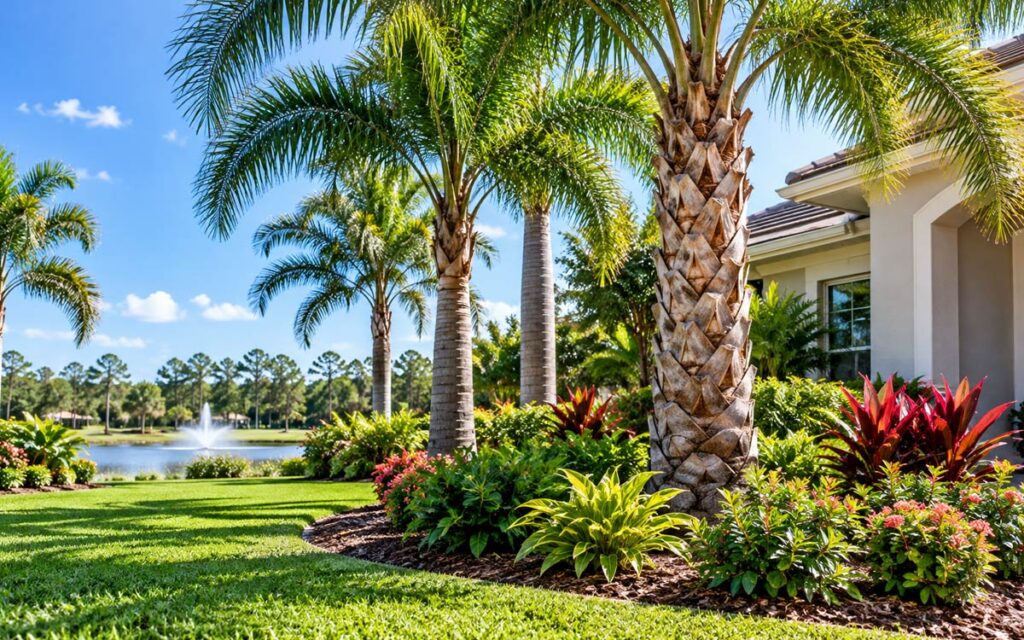
Bug Cops provides professional palm tree care services throughout Clay and Putnam Counties, Florida. Healthy palms depend on proper nutrition, growing conditions, and protection from damaging insects and diseases. Our approach begins with evaluating visible symptoms, identifying potential pest activity, and understanding the conditions affecting each palm’s health and appearance.
North Florida palms can experience nutritional deficiencies, insect damage, discoloration, declining fronds, and environmental stress. Because many of these problems produce similar symptoms, proper evaluation is important before recommending treatment. Bug Cops considers the palm species, visible damage, pest activity, and surrounding conditions when developing an appropriate care plan.
Locally Owned • Family Operated • Serving Clay & Putnam Counties
Understanding Palm Tree Health in North Florida
Palm trees can develop similar symptoms from very different problems. Nutritional deficiencies, insect activity, diseases, improper watering, and environmental stress may all contribute to yellowing fronds, discoloration, or declining growth.
Bug Cops evaluates visible symptoms and growing conditions before recommending palm care services. Our goal is to identify likely causes and develop an appropriate approach rather than applying the same treatment to every palm.

Palm Nutrition & Fertilization
Palm trees have specific nutritional requirements that differ from turfgrass and many landscape plants. Bug Cops evaluates visible deficiency symptoms and recommends appropriate fertilization and micronutrient treatments based on the palm species and growing conditions.

Palm Insect Management
Scale insects, palm weevils, and other pests can affect palm health. Because different insects require different approaches, Bug Cops examines visible damage and pest activity before recommending appropriate management options.

Palm Disease Evaluation
Discoloration, wilting, and declining fronds may indicate disease, nutritional problems, or environmental stress. Bug Cops evaluates visible symptoms and recommends appropriate next steps, including further diagnosis when needed.

Palm Health & Growing Conditions
Drainage, irrigation, soil conditions, and environmental stress can influence palm health. Bug Cops considers these factors when evaluating declining palms and recommending practical care measures for the property.
Signs Your Palm Tree May Need Attention
Palm trees often show visible signs when something is affecting their health. Yellowing fronds, unusual spotting, insect activity, and declining growth may result from nutritional deficiencies, pests, diseases, or environmental stress. Because these symptoms can overlap, identifying the pattern of damage is an important first step before recommending treatment.
Yellowing or Discolored Fronds
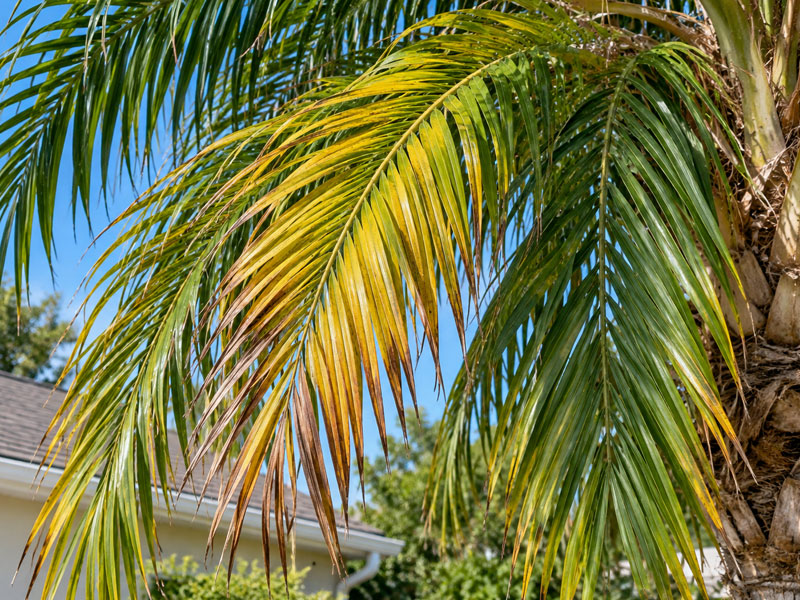
Yellowing or orange discoloration may indicate nutritional deficiencies, environmental stress, or disease. Potassium and magnesium deficiencies often affect older fronds, while some other deficiencies affect newer growth. The pattern and location of discoloration provide important clues.
Brown or Dying Fronds
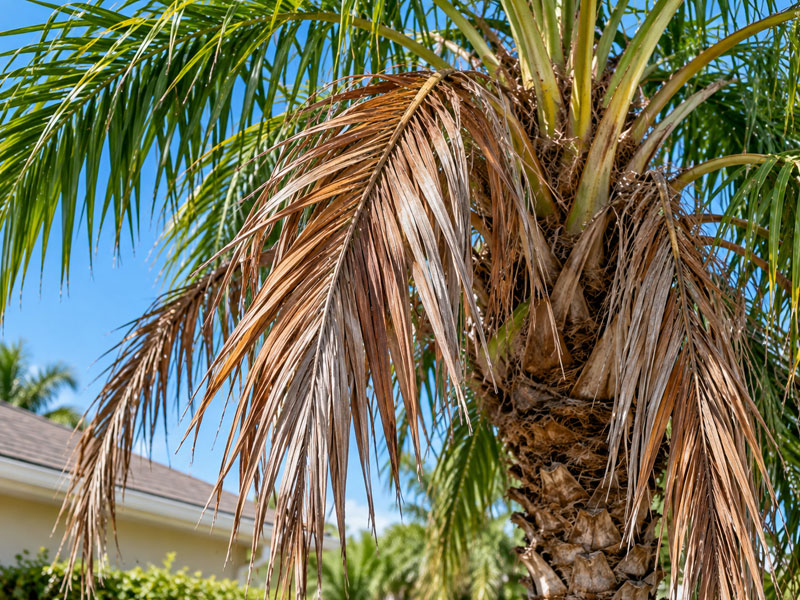
Browning fronds may result from moisture problems, nutrient deficiencies, disease, or natural aging. The number of affected fronds and where symptoms first appear can help narrow down the cause.
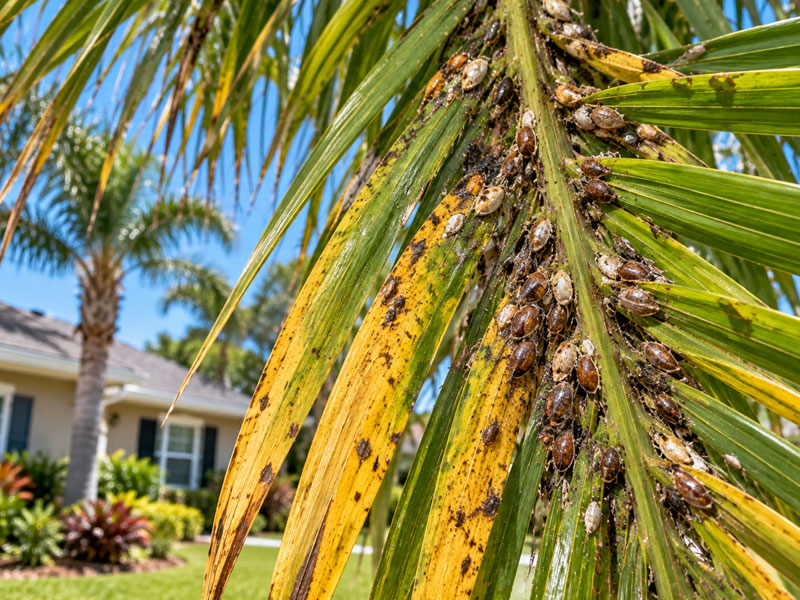
Visible Palm Insect Activity
Scale insects, palm weevils, and other pests may damage palm foliage or growing tissues. Visible insects, feeding damage, or unusual deposits can help identify potential pest activity.
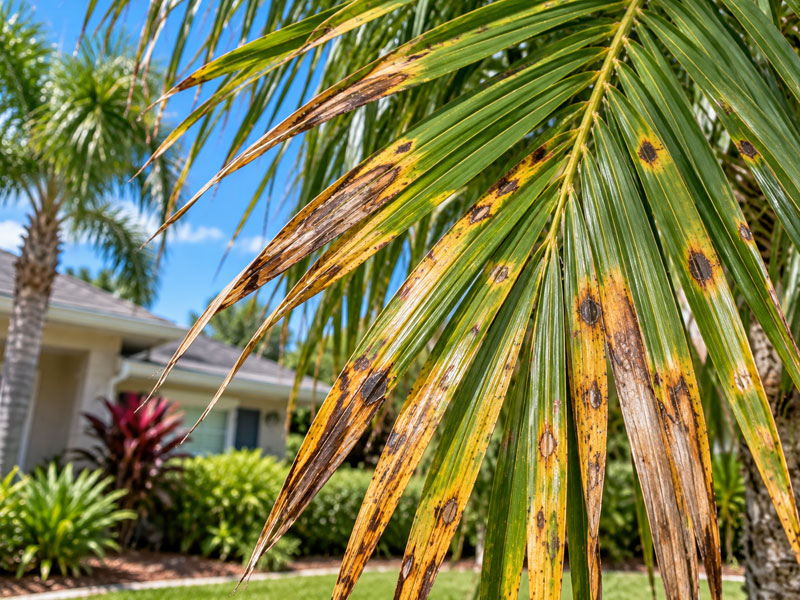
Spots or Lesions on Fronds
Dark spots, yellow or orange markings, and damaged leaflets may result from fungal disease, potassium deficiency, or environmental injury. Because these symptoms can look similar, the appearance and distribution of damage help guide further evaluation.
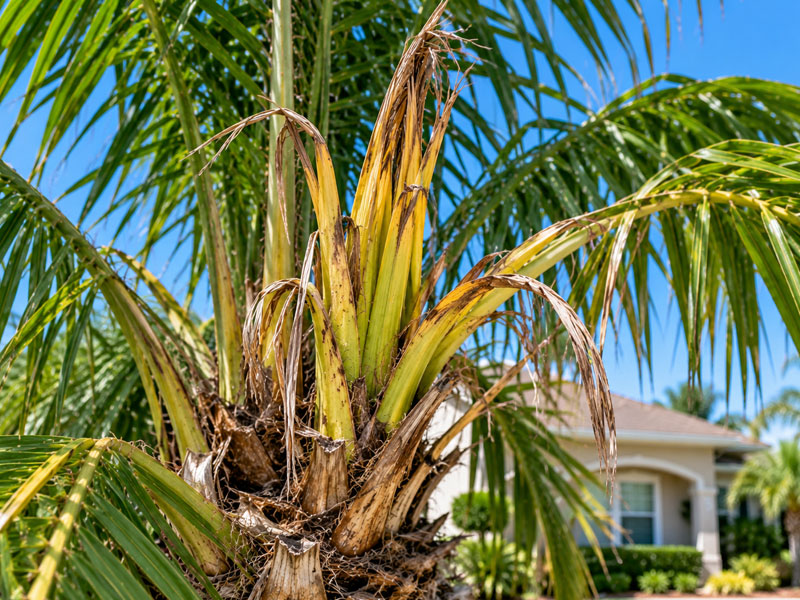
Declining New Growth
Distorted, stunted, or dying new fronds may indicate manganese or boron deficiencies, pest activity, or disease affecting the growing point. Because severe problems can threaten palm survival, damaged emerging growth deserves prompt evaluation.
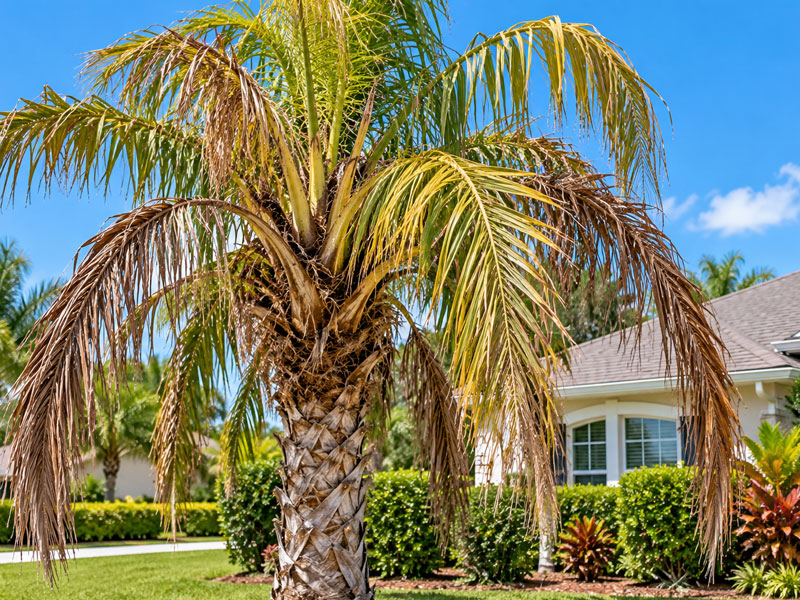
Overall Palm Decline
A thinning canopy, reduced growth, or widespread frond deterioration may indicate several underlying problems. Bug Cops considers visible symptoms, palm species, and growing conditions when recommending next steps.
Understanding Palm Tree Problems
Palm tree problems are not always easy to identify. Nutritional deficiencies, insect damage, diseases, and environmental stress can produce similar symptoms. Understanding the difference between these conditions helps homeowners recognize when a professional evaluation may be needed.
Palm Nutrition & Growing Conditions
Yellowing fronds, unusual discoloration, and declining growth may be associated with nutrient deficiencies, irrigation problems, poor drainage, or environmental stress. The palm species, affected fronds, and surrounding conditions provide important clues when evaluating these symptoms.
Palm Insect & Disease Concerns
Scale insects, palm weevils, and certain diseases can affect palm health. However, symptoms may resemble nutritional deficiencies or environmental damage. Proper evaluation helps determine whether pest management, additional diagnosis, or other corrective measures are appropriate.

Inspection Note: A yellow or brown palm frond does not automatically indicate disease. Bug Cops considers the palm species, symptom patterns, pest activity, and growing conditions before recommending an appropriate care approach. Some problems may require further diagnostic testing.
Palm Tree Problems: Yellow Fronds Aren’t a Diagnosis
Palm trees can develop similar symptoms for very different reasons. Yellowing fronds, brown leaf tips, unusual spotting, and declining growth may result from nutritional deficiencies, insect activity, disease, irrigation problems, or environmental stress.
Water and drainage matter, too. Excess moisture can damage roots and contribute to declining palm health, while prolonged drought can cause stress and discoloration. Soil conditions, irrigation practices, and recent weather may all influence how a palm responds.
Rather than treating the visible symptom alone, Bug Cops evaluates the pattern of damage, which fronds are affected, the palm species, growing conditions, and any evidence of insect activity. These observations help determine whether nutritional treatment, pest management, or additional diagnosis may be appropriate.
The goal isn’t simply to make an application. It’s to understand what the palm needs first.
Palm Tree Care Services FAQs
Yellowing fronds, unusual discoloration, insect activity, or declining growth may indicate that a palm needs attention. However, similar symptoms can result from nutritional deficiencies, disease, irrigation problems, or environmental stress. Bug Cops evaluates visible symptoms and growing conditions before recommending treatment.
Yellowing palm fronds may result from nutrient deficiencies, natural aging, moisture problems, or disease. The location of the affected fronds and the pattern of discoloration provide important clues. Because different problems require different approaches, proper evaluation is recommended before applying fertilizer or other treatments.
Yes. Bug Cops provides palm fertilization and micronutrient treatments based on the palm species, visible symptoms, and growing conditions. Our team evaluates the property before recommending an appropriate nutritional care program.
Yes. Scale insects, palm weevils, and other pests can affect palm health. Some damage foliage, while others may affect important growing tissues. Bug Cops examines visible insect activity and damage before recommending appropriate pest management measures.
No. Bug Cops specializes in lawn and ornamental pest management, fertilization, and plant health services. We do not provide palm trimming, tree removal, or general landscaping services. If a palm requires pruning or removal, we recommend consulting a qualified tree care professional.
Concerned About the Health of Your Palm Trees?
Noticing Changes in Your Palm Trees?
Yellowing fronds, unusual discoloration, visible insects, or declining growth can have several different causes. If you can safely photograph the affected palm, send the image to Bug Cops. Our team can review what you’re seeing and help determine whether a closer inspection is needed.
Need Professional Palm Tree Care?
Healthy palms begin with understanding their specific needs. Bug Cops evaluates visible symptoms, nutritional concerns, pest activity, and growing conditions before recommending appropriate palm tree care services for properties throughout Clay and Putnam Counties.