Scorpion Identification Guide for Clay & Putnam Counties
This Scorpion Identification Guide will help you recognize scorpions found around North Florida homes, understand where they may be hiding, identify signs of activity, and know which features deserve a closer look.
Scorpions are arachnids with a distinctive body shape. They have large front pincers, a segmented body, and an elongated tail that curves upward and ends in a stinger. In addition, scorpions are primarily active at night and usually remain hidden during daylight hours.
Scorpions normally live outdoors beneath boards, debris, bark, stones, and other protected materials. However, they may also wander into homes and buildings, where protected areas such as crawlspaces and attics can provide shelter.
Florida has several scorpion species. Although scorpions can sting when provoked or disturbed, UF/IFAS reports that Florida’s species are not capable of delivering a lethal sting. However, a sting may still cause pain, soreness, or swelling.
Not sure whether you’ve found a scorpion or another arthropod? Take a clear photo and send it to Bug Cops. We’ll help you take a closer look at your suspect.
What Do Scorpions Look Like?
This Scorpion Identification Guide highlights several physical features that can help distinguish scorpions from other arthropods. Scorpions have a recognizable combination of front pincers, eight legs, a segmented body, and an elongated tail ending in a stinger.
Body & Legs
Scorpions are arachnids and have eight walking legs. Their bodies are divided into distinct sections, and a pair of prominent pincers extends from the front of the body.
Tail & Stinger
One of the easiest features to recognize is the long, segmented tail that ends in a stinger. The tail commonly curves upward or over the body when a scorpion is active or disturbed.
Pincers
The front appendages, called pedipalps, end in claw-like pincers. Scorpions use these structures to capture and hold prey and for defense.
Color & Size
Florida scorpions can vary in size and coloration. Therefore, color or size alone should not be used for identification. Body shape, pincers, tail structure, markings, and where the scorpion was found provide stronger clues.

Identification Note: Look at several features together when identifying a scorpion. Eight legs, front pincers, a segmented body, an elongated tail, and a terminal stinger provide stronger identification clues than color or size alone.
Scorpion Identification Guide: Scorpions Found in Florida
This Scorpion Identification Guide covers several scorpion species found in Florida. However, species distribution can vary by region, so the location where a scorpion is found should be considered along with its size, coloration, markings, pincers, and tail.
Hentz Striped Scorpion
Centruroides hentzi
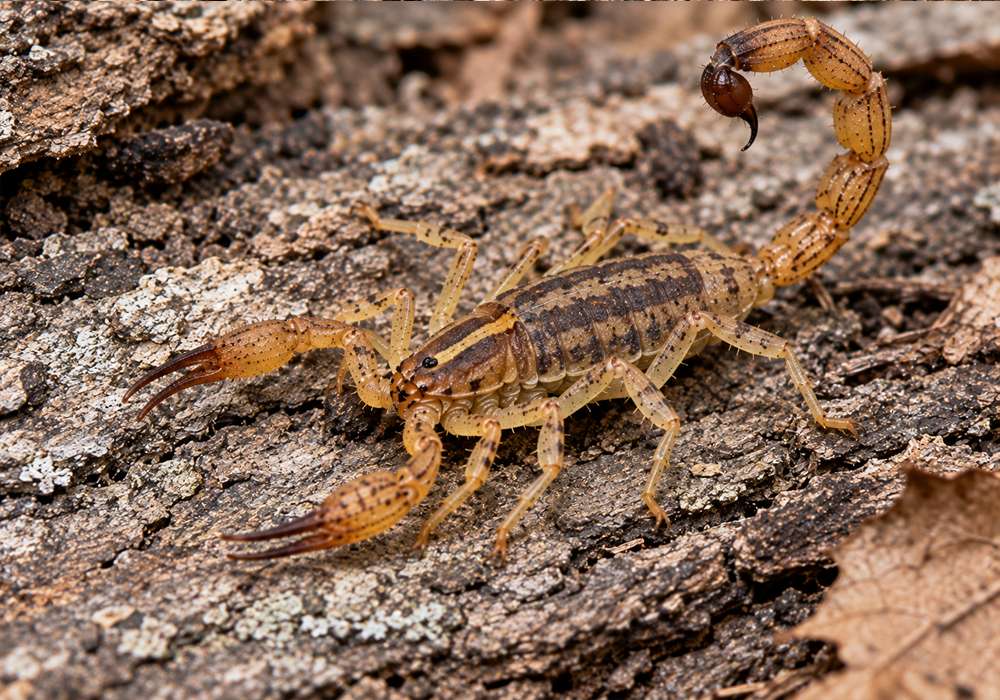
The Hentz striped scorpion is a relatively small Florida scorpion with a slender body, narrow pincers, and a long tail. Its coloration may range from tan to brown, with darker markings that can help create a striped appearance.
This species occurs in Florida and may shelter beneath bark, logs, stones, debris, and other protected outdoor materials. In addition, its small size can allow it to hide in narrow cracks and sheltered spaces.
Identification should rely on several characteristics rather than coloration alone.
Florida Bark Scorpion
Centruroides gracilis
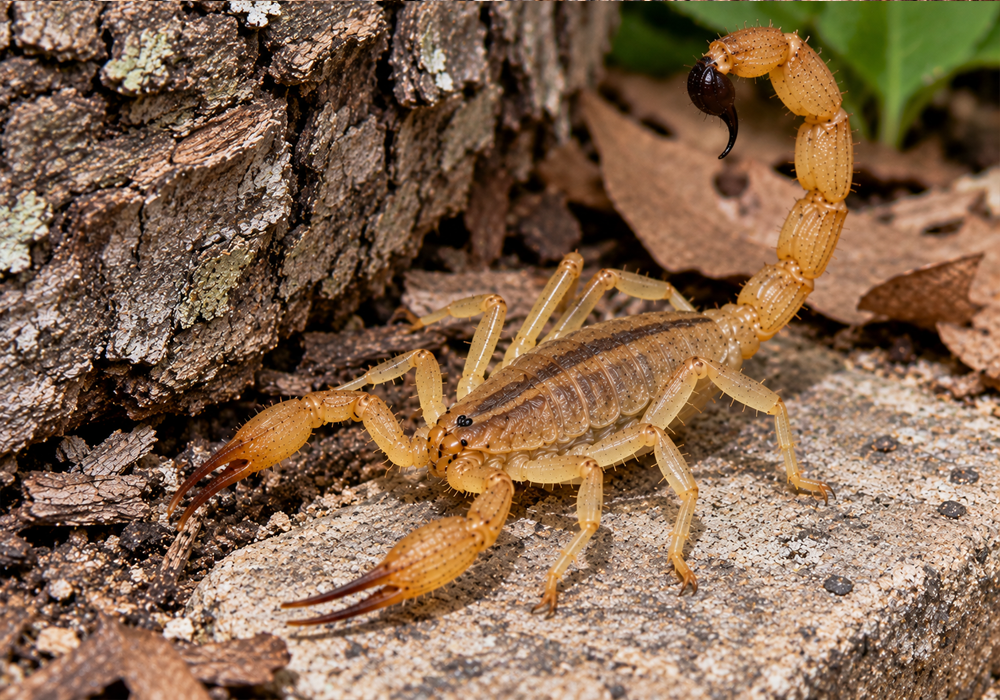
The Florida bark scorpion, also called the slender brown scorpion, is generally larger and darker than the Hentz striped scorpion. It has a slender body, relatively narrow pincers, and a long tail.
This species occurs in Florida and is associated with warm, protected environments. However, appearance can vary, so body proportions, markings, location, and surrounding evidence should all be considered.
Keys Bark Scorpion
Centruroides guanensis
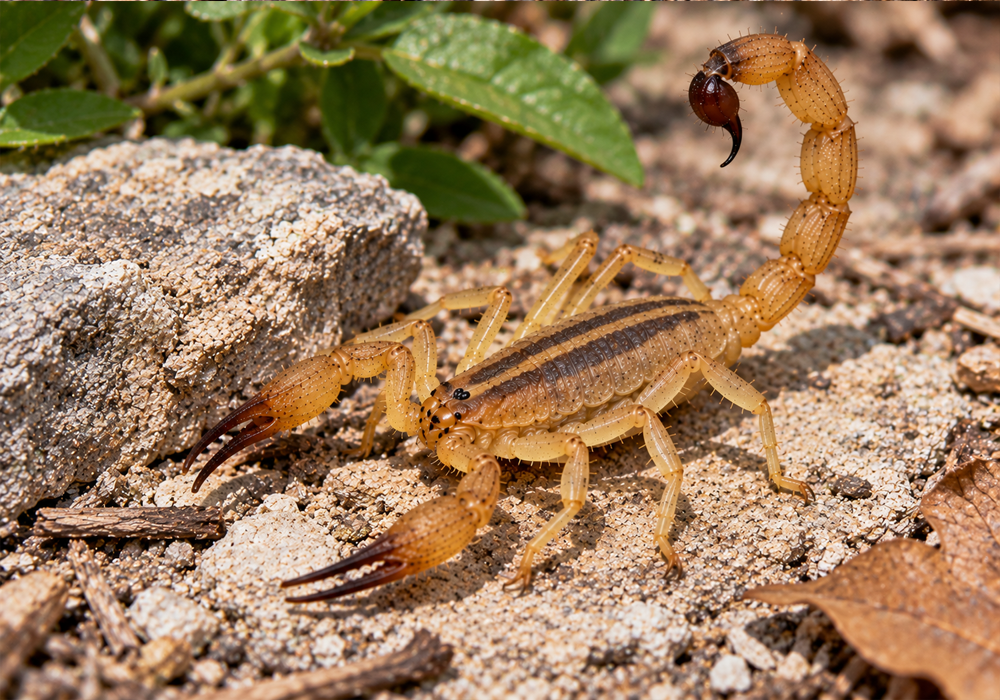
The Keys bark scorpion is another Centruroides species recorded in Florida. It has the elongated body, narrow pincers, and long tail typical of bark scorpions.
Its Florida distribution is associated more strongly with the southern part of the state. Therefore, location is particularly important when considering this species on a North Florida identification guide.
Identification Note: Several Florida scorpions share a slender body, narrow pincers, and an elongated tail. Therefore, don’t identify a scorpion from color alone. Compare body proportions, markings, size, habitat, and where the scorpion was found.
Where Are Scorpions Found Around the Home?
This Scorpion Identification Guide also looks at the protected areas where scorpions may shelter around homes and properties. Because scorpions are primarily nocturnal, they often remain hidden during daylight hours and emerge after dark to hunt.
Under Bark, Logs & Wood
Loose bark, fallen logs, firewood, lumber, and other wood materials can provide dark, protected shelter where scorpions may hide during the day.
Rocks, Boards & Debris
Scorpions may shelter beneath rocks, boards, landscape materials, containers, debris, and other objects that provide protection from light and disturbance.
Mulch & Landscaping
Mulch, leaf litter, dense vegetation, landscape edging, and other sheltered outdoor areas may provide hiding places. In addition, these areas can support insects and other small prey that scorpions feed on.
Around Foundations & Entry Points
Scorpions living near structures may occasionally enter through gaps around doors, foundations, utility penetrations, vents, or other openings. Therefore, sightings near entry areas can provide useful clues about where they may be coming from.
Garages, Storage & Utility Areas
Garages, sheds, storage areas, utility spaces, and similar locations can provide dark hiding places, particularly when boxes, stored materials, or other objects remain undisturbed.
Crawlspaces, Attics & Protected Indoor Areas
Although scorpions normally live outdoors, they may wander into structures. For example, protected areas such as crawlspaces and attics may provide shelter after a scorpion enters a building.
For more information about scorpions and other stinging pests found around Florida homes, visit the UF/IFAS Stinging or Venomous Insects and Related Pests resource.
Identification Note: Where a scorpion is found can provide an important clue. Look at nearby wood, rocks or debris, landscaping, possible entry points, protected storage areas, and whether sightings occur indoors or outdoors when evaluating scorpion activity.
Scorpion Identification Guide: Signs of Activity
This Scorpion Identification Guide also covers signs that may reveal activity even when a scorpion is not immediately visible. Live scorpions, nighttime sightings, shed exoskeletons, activity beneath debris, and scorpions appearing near entry areas can provide useful clues.
Live Scorpion
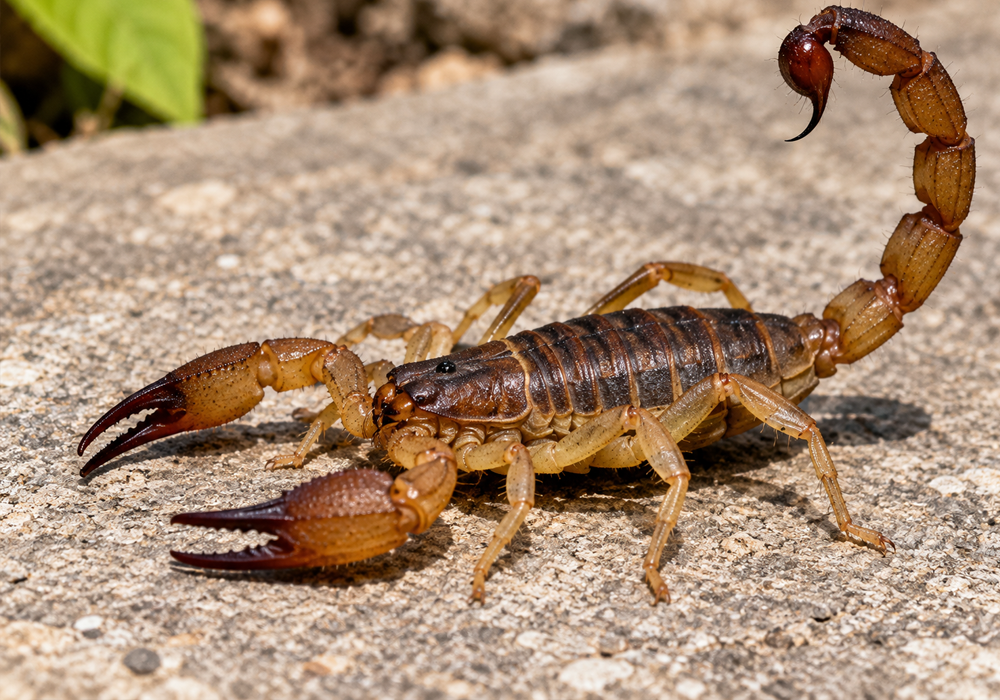
Look for eight legs, prominent front pincers, a segmented body, and an elongated tail ending in a stinger. Where the scorpion was found can provide additional identification clues.
Scorpion Under Debris
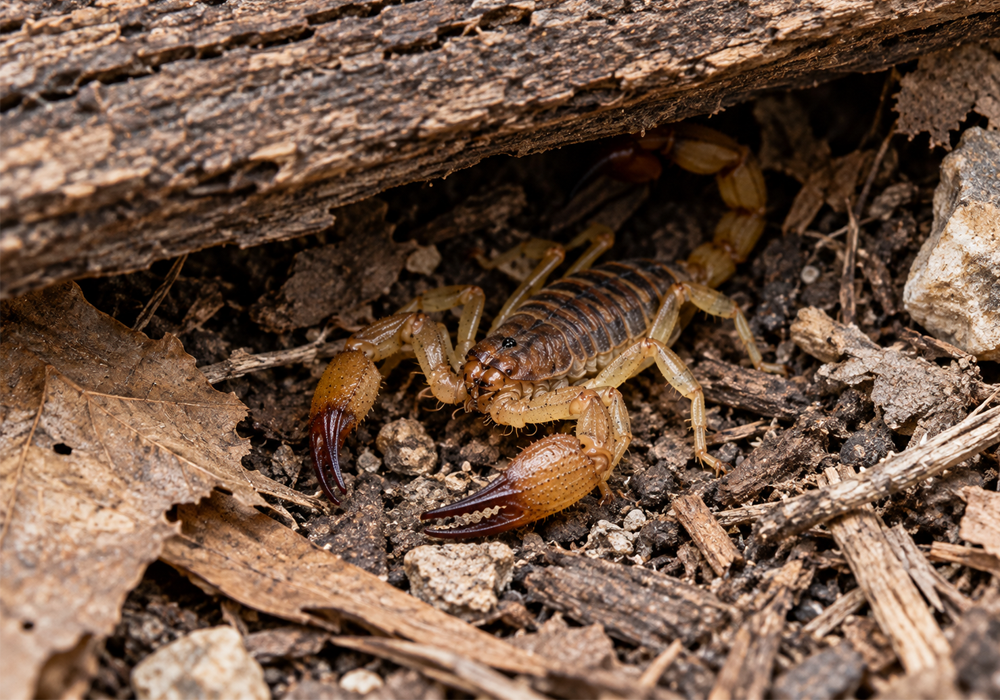
Moving outdoor materials may uncover a scorpion hiding from light and disturbance. For example, firewood, landscape materials, containers, and accumulated debris can create protected spaces.
Nighttime Activity
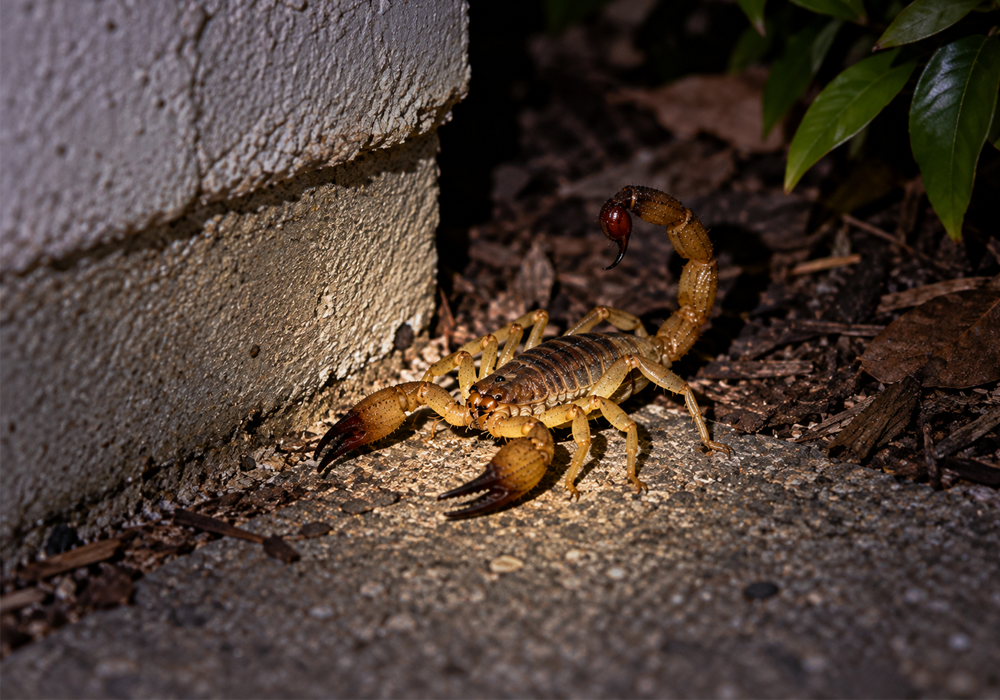
Because scorpions are primarily nocturnal, homeowners may notice them after dark around walls, patios, landscaping, garages, or other areas near shelter and prey.
Shed Exoskeleton
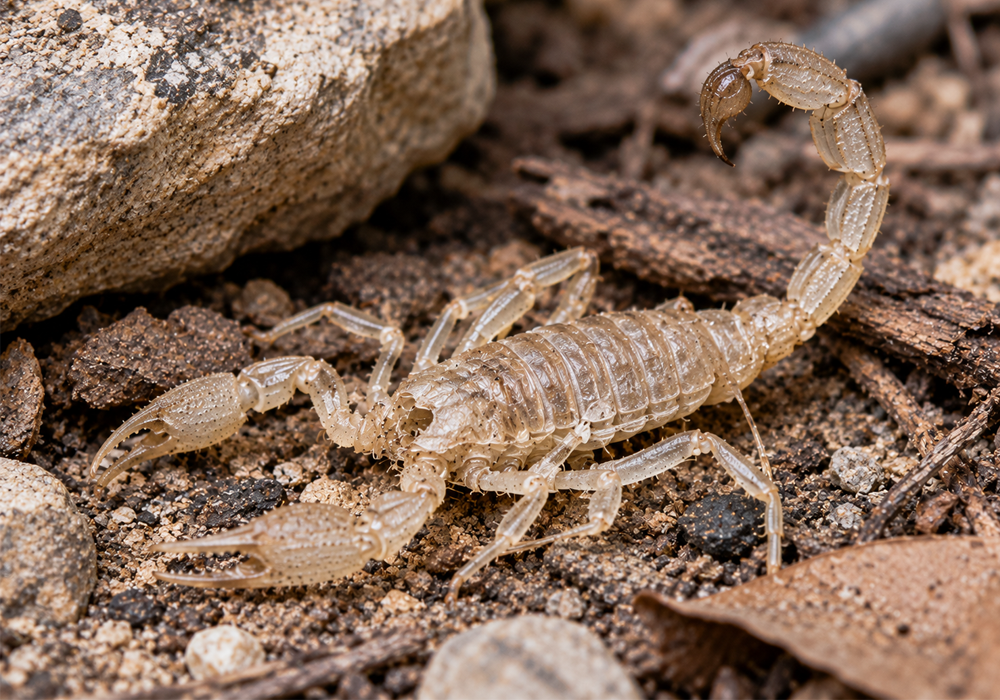
The discarded outer covering can resemble a pale or hollow scorpion. However, a shed exoskeleton alone does not establish how much current activity is present.
Activity Near Entry Points
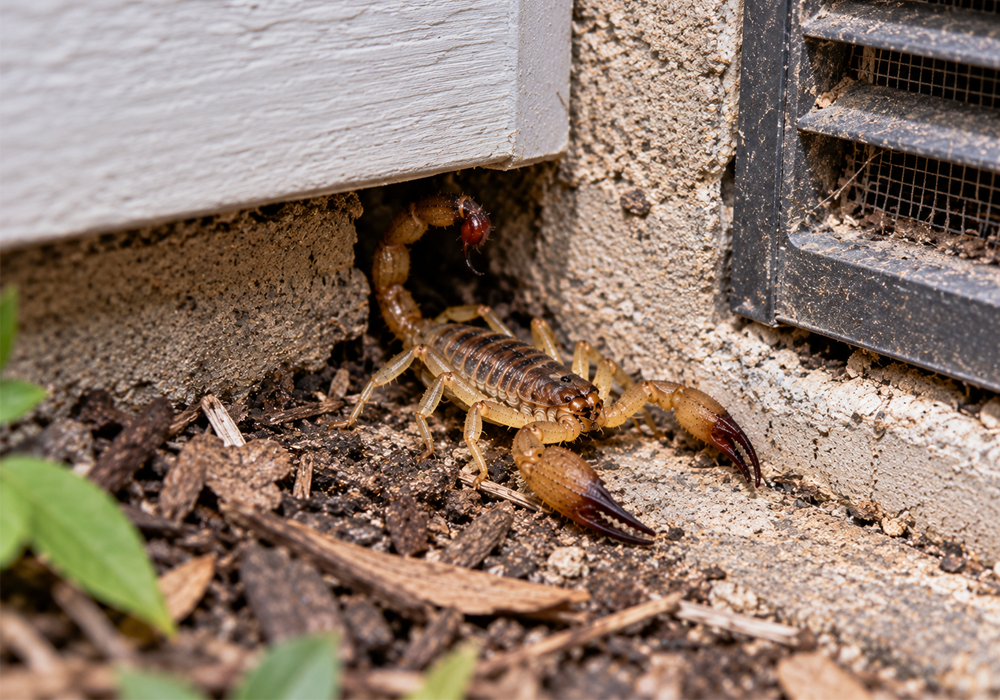
Scorpions living outdoors can occasionally move toward structures. As a result, repeated activity near gaps or openings deserves a closer look at surrounding shelter and possible access points.
Scorpion Wandering Indoors
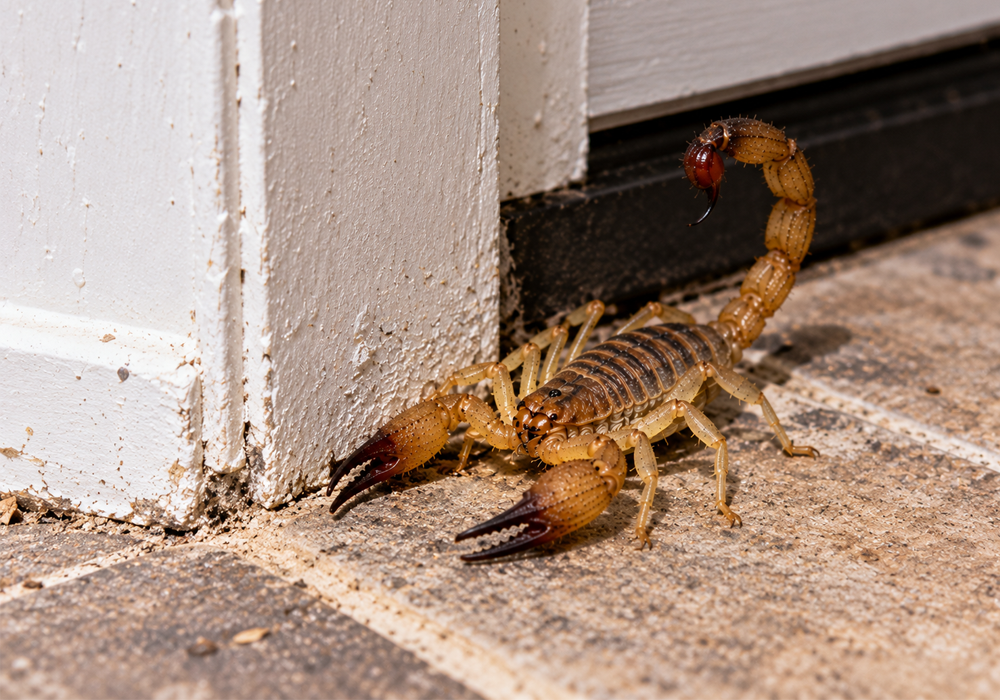
Indoor sightings can occur in garages, storage areas, utility spaces, crawlspaces, attics, or other protected locations. However, finding one scorpion indoors does not automatically establish widespread indoor activity.
Identification Note: Don’t rely on one clue alone. Look for live scorpions, nighttime activity, shed exoskeletons, protected hiding places, possible entry points, and where sightings keep occurring when evaluating scorpion activity.
Why Am I Seeing Scorpions?
This Scorpion Identification Guide explains why scorpions may appear around homes and properties. Scorpions usually show up because they have found protected hiding places, suitable prey, moisture, or easy access to shelter. In addition, landscaping and stored materials can create protected areas where scorpions remain hidden during the day.
Protected Hiding Places Are Available
Scorpions seek dark, sheltered spaces during daylight hours. Bark, rocks, boards, debris, firewood, containers, and stored materials can all provide suitable cover.
Insects & Other Prey Are Nearby
Scorpions are predators that feed on insects, spiders, and other small animals. Therefore, areas that support abundant prey may also provide hunting opportunities for scorpions.
Landscaping Provides Shelter
Mulch, leaf litter, dense vegetation, landscape edging, wood, and other outdoor materials can create protected spaces close to the home.
Moisture Is Available
Although scorpions can tolerate relatively dry conditions, protected areas with moisture may also support the insects and other small prey they hunt.
Entry Points Are Available
Gaps around doors, foundations, vents, utility penetrations, and other openings may allow a scorpion living outdoors to wander into a structure.
Outdoor Conditions Have Changed
Weather, landscaping disturbance, movement of firewood or stored materials, and changes in available shelter can make scorpions more noticeable. As a result, sightings may increase even when the scorpions were already living nearby.
Identification Note: If scorpions keep appearing, look beyond where you see the animal. Hiding places, available prey, landscaping, moisture, possible entry points, and changing outdoor conditions can all influence where scorpion activity occurs.
If you’re unsure which spider you’ve found, send us a pest photo and tell us where you found it.
Scorpion Identification Guide: Identification Clues
This Scorpion Identification Guide compares several features that can help distinguish scorpions found in Florida. However, appearance can overlap among species, so consider body size, coloration, markings, habitat, geographic location, and where the scorpion was found together.
Body Size
Hentz Striped: Generally a smaller, more slender scorpion.
Florida Bark: Typically larger than the Hentz striped scorpion, with an elongated body and tail.
Keys Bark: A slender bark scorpion whose size and proportions may overlap with other Centruroides species.
Color & Markings
Hentz Striped: Tan to brown with darker markings that may create a striped appearance.
Florida Bark: Color can vary from yellowish or reddish brown to darker brown.
Keys Bark: Typically has a lighter body with darker longitudinal markings.
Pincers & Body Shape
Hentz Striped: Slender body with relatively narrow pincers.
Florida Bark: Elongated body with relatively slender pincers and a long tail.
Keys Bark: Also has the narrow pincers, slender body, and elongated tail typical of Centruroides scorpions.
Florida Distribution
Hentz Striped: Occurs in Florida and is an important species to consider when identifying scorpions in the state.
Florida Bark: Occurs in Florida and commonly uses warm, protected environments for shelter.
Keys Bark: More strongly associated with southern Florida, making geographic location especially useful when evaluating this species.
Typical Shelter
Hentz Striped: May shelter beneath bark, logs, stones, debris, and other protected outdoor materials.
Florida Bark: May use bark, protected crevices, stored materials, and sheltered areas around structures.
Keys Bark: May occur in protected outdoor habitats where suitable shelter and prey are available.
Best Identification Approach
Hentz Striped: Compare its smaller size, slender proportions, darker markings, and location.
Florida Bark: Look at overall size, elongated proportions, coloration, and where it was found.
Keys Bark: Consider its markings and body proportions, but give particular attention to geographic location within Florida.
Identification Note: Florida scorpions can share similar body shapes and markings. Therefore, use size, coloration, body proportions, habitat, geographic location, and where the scorpion was foundtogether rather than relying on a single feature.
When Should I Be Concerned About Scorpions?
Seeing an occasional scorpion does not necessarily indicate widespread activity. However, repeated indoor sightings, increasing numbers, activity in multiple areas, frequent encounters near entry points, or scorpions appearing in living spaces can warrant closer attention.
Scorpions Keep Appearing Indoors
Repeated sightings in garages, storage areas, bathrooms, utility spaces, or other indoor locations may indicate that scorpions are regularly entering from nearby outdoor shelter.
Numbers Are Increasing
Finding several scorpions within a short period or noticing more frequent activity can suggest that nearby conditions are providing shelter, prey, or access to the structure.
Activity Is Near Entry Points
Sightings around doors, foundations, vents, utility penetrations, windows, or other openings may help identify areas where scorpions are entering. As a result, these locations deserve a closer inspection.
Scorpions Are Appearing in Living Areas
An occasional scorpion may wander inside. However, repeated sightings in bedrooms, living rooms, kitchens, or other occupied spaces deserve closer attention, particularly when the source of entry is unclear.
Activity Is Occurring in Multiple Areas
Scorpions appearing in different parts of a home or property may indicate that suitable hiding places or entry opportunities exist in more than one location.
Outdoor Activity Is Concentrated Near the Home
Large numbers beneath firewood, bark, rocks, landscape materials, containers, boards, or debris immediately around a structure may increase the chance of scorpions wandering indoors.
Not sure whether the animal you’re seeing is a scorpion? Bug Cops Pest Control offers free home inspections to help identify what you’re dealing with and determine the appropriate next step.

Inspection Note: Recurring scorpion activity can provide important clues. We look at where scorpions are appearing, nearby hiding places and prey, possible entry points, outdoor conditions, and whether activity is isolated or occurring throughout the property.
Scorpion Identification Guide FAQs
Scorpions may occur around homes where protected hiding places and suitable prey are available. Bark, rocks, firewood, landscape materials, debris, and stored items can provide shelter. In addition, gaps around structures may allow scorpions to wander indoors.
Florida scorpions can sting when disturbed or handled. A sting may cause pain, soreness, or swelling. However, UF/IFAS reports that Florida’s scorpion species are not capable of delivering a lethal sting.
Scorpions normally live outdoors but may enter structures through gaps around doors, foundations, vents, utility penetrations, and other openings. Once indoors, they may seek dark, protected areas such as garages, storage spaces, crawlspaces, or attics.
Scorpions are primarily nocturnal. During daylight hours, they commonly remain concealed beneath bark, rocks, boards, debris, or other protected materials. As a result, homeowners are more likely to notice active scorpions after dark.
Start with the overall body shape, including eight legs, front pincers, a segmented body, and a long tail ending in a stinger. Then compare size, coloration, markings, body proportions, habitat, and geographic location because several Florida scorpions can look similar.
Not Sure If You’ve Found a Scorpion?
This Scorpion Identification Guide can help when scorpions are confused with other arthropods. Body shape, front pincers, eight legs, a segmented tail, coloration, markings, and where the animal was found can all provide useful identification clues.
If you’ve found a scorpion or another animal you don’t recognize, take a clear photo and send it to Bug Cops. In addition, we can help you take a closer look at your suspect.
Protecting & Serving Clay and Putnam Counties Since 1993
If scorpion activity keeps returning around your home or property, Bug Cops Pest Control can help identify what you’re seeing and evaluate where activity may be occurring. We can also look for hiding places, possible entry points, nearby prey, and outdoor conditions that may be contributing.
Free home inspections are available if you’d like us to take a closer look.