Fire Ant Control Services in Clay & Putnam Counties
Fire ant control services in Clay & Putnam Counties help homeowners address active colonies around lawns, walkways, play areas, pet areas, and other outdoor spaces. Colonies can establish throughout lawns, landscaping, fields, pavement edges, and other outdoor areas around North Florida properties. Mounds may develop near walkways, play areas, pet areas, mailboxes, gates, and other frequently used spaces. In these areas, fire ant activity can quickly become more than an occasional nuisance.
Treating only the ants visible above ground may not address the colony beneath the soil. A fire ant colony can include workers, brood, queens, and underground chambers extending beyond the visible mound. Understanding where activity occurs helps determine the appropriate approach.
Bug Cops Pest Control provides fire ant control and preventative management for homeowners in Clay and Putnam Counties. We evaluate where colonies are located, how activity is distributed around the property, and which areas matter most before recommending a treatment approach.
Not every mound requires the same approach. We inspect the property, identify the activity, and explain what we find so you can decide how you’d like to proceed.
Not sure the ants you’ve found are fire ants? Visit our Fire Ant Identification Guide to compare mounds, worker characteristics, look-alikes, and real Bug Cops field evidence.
Why Fire Ant Colonies Can Be Difficult to Manage
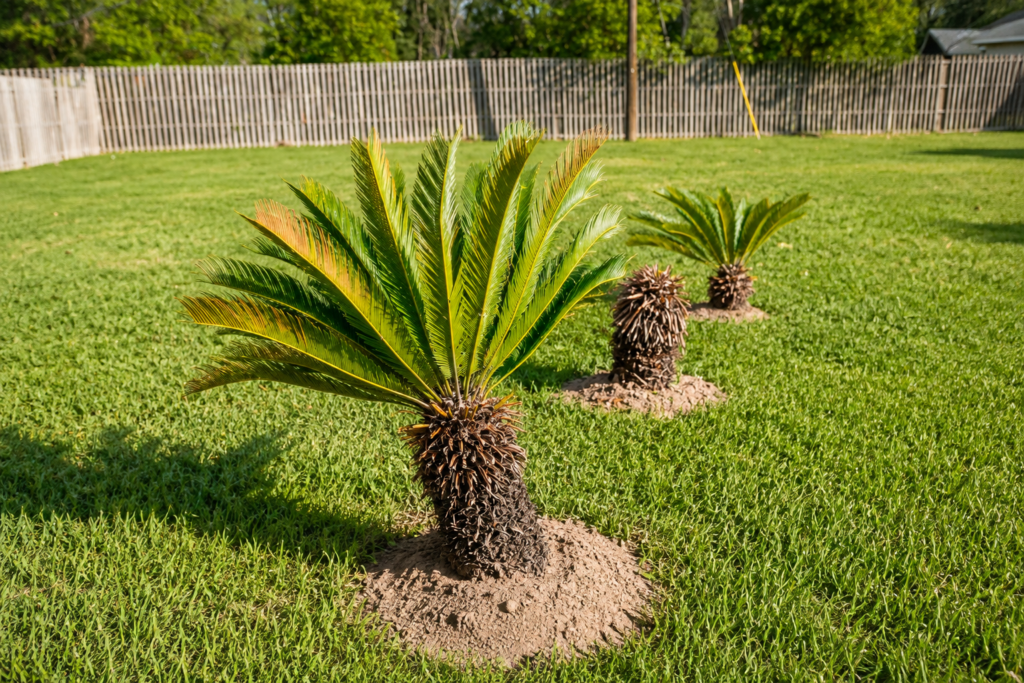
A fire ant colony can include workers, brood, queens, and underground chambers extending beyond the visible mound. Understanding where activity occurs helps determine the appropriate approach.
The Colony Extends Underground
Fire ant colonies can occupy a network of underground chambers and tunnels beyond the soil visible at the surface. Mound size alone doesn’t tell us the size or extent of the colony.
Visible Workers Are Only Part of the Colony
The workers seen foraging or defending a mound are only part of the population. Treating visible ants without addressing the colony may leave queens, brood, and other workers protected below ground.
Activity Can Change or Reappear
Weather, soil conditions, landscaping, and colony activity can change where mounds are visible. A mound may disappear, shift, or reappear nearby, so changes at the surface don’t necessarily tell the whole story.

Inspection Note: We look beyond the most visible mound. Where colonies are located, how activity is distributed across the property, and which areas your family or pets regularly use all help us determine the appropriate treatment approach.
How Bug Cops Approaches Fire Ant Control Services
Fire ant control begins with understanding where colonies are active and how much of the property is affected. We also consider which areas matter most to the homeowner.

We Inspect the Property
Every fire ant service begins with an inspection. We look for active mounds, areas of concentrated activity, and the parts of the property where fire ants are creating the greatest concern.
Then we explain what we found and discuss the available treatment options with the homeowner.

You Choose the Level of Treatment
Some homeowners may only need or want a particular area addressed. In those situations, Bug Cops can provide targeted treatment to active mounds and the surrounding area.
We explain where activity appears most concentrated so the homeowner can make an informed decision about what they would like treated.

Full-Yard Treatment Provides Broader Control
For more comprehensive fire ant management, we recommend treating the entire yard rather than only the visible mounds.
Active mounds receive granular treatment, and the property receives a broadcast application to address fire ant activity beyond the obvious mound locations.
Because treating only individual mounds can be followed by new mound activity appearing nearby, full-yard treatment provides a broader approach to managing colonies across the property.

We Come Back and Check Our Work
Bug Cops performs a quality-control follow-up approximately 30 days after treatment to evaluate the property and see how the fire ant activity has responded.
Our full-yard fire ant treatment is designed as a once-a-year service and is guaranteed for one year.
Two Fire Ant Control Service Options
We’ll explain what we find and what we recommend—but the treatment decision is yours.
Targeted Fire Ant Treatment
For homeowners who want a specific problem area addressed, we can treat active mounds and the surrounding area with granular treatment.
This can be particularly useful when fire ants are interfering with an area where children, pets, or family members regularly spend time.
Full-Yard Fire Ant Treatment
For broader protection, we treat active mounds and broadcast the entire yard to address fire ant activity beyond the colonies that are currently visible.
For homeowners seeking the broadest coverage across the property, this is the approach Bug Cops generally recommends.
Fire Ant Control Services in the Field
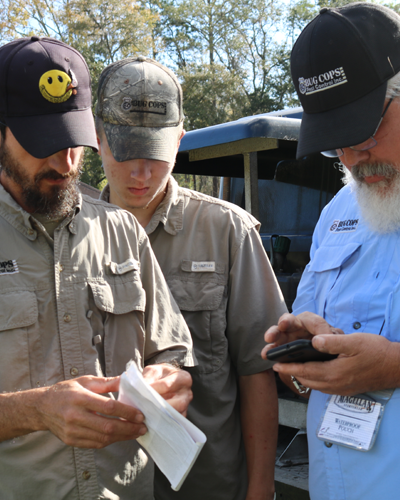
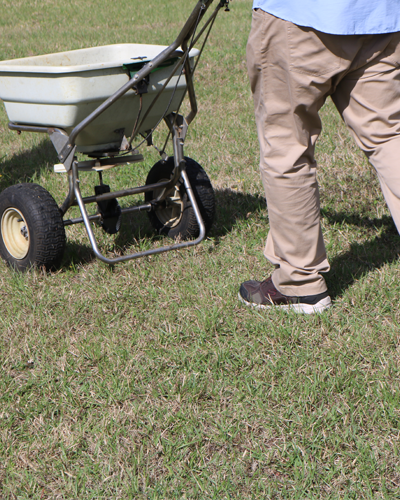
Fire ant treatment involves more than simply applying product to a visible mound. Proper application starts with evaluating the property and determining the appropriate amount of product. Treatment is then applied according to the service plan. These photos show Bug Cops fire ant control services in the field.
Planning the Application
Full-Yard Treatment
Service Notification
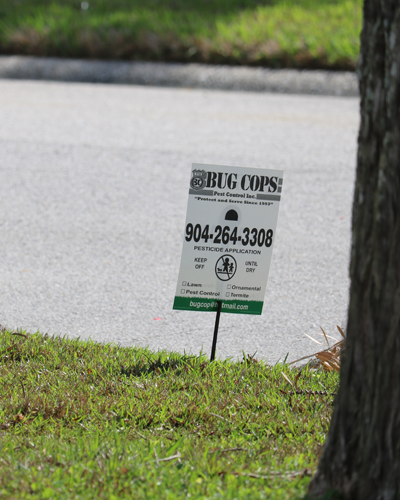
Actual Bug Cops field service photos from North Florida.

Protection Note: We recommend full-yard treatment because visible mounds don’t always represent the full extent of fire ant activity. But if targeted treatment better fits a homeowner’s needs or budget, we’ll address the area that matters most rather than pressure them into a larger service.
What to Expect After Fire Ant Treatment
Fire ant activity doesn’t always disappear immediately after we treat the property. The treatment needs time to work through the colony, and what you notice afterward can depend on the number of colonies, where they’re located, and the treatment option selected.
Activity May Change After Treatment
You may notice changes in worker activity or mound appearance after treatment. Avoid disturbing or relocating treated mound material, since changes at the surface don’t necessarily tell you everything occurring within the colony below ground.
Watch for New or Recurring Mounds
Continue to watch areas where you previously noticed fire ant activity, as well as other parts of the property. If new or recurring mound activity appears, note where you’re seeing it so it can be evaluated during follow-up.
We Follow Up
Bug Cops performs a quality-control follow-up approximately 30 days after treatment to evaluate how the property has responded and check for continuing fire ant activity.
Full-Yard Treatment: Once a Year. Guaranteed for One Year.
Our full-yard fire ant treatment is designed as a once-a-year service and includes a one-year guarantee. If you have concerns about fire ant activity after treatment, contact Bug Cops so we can evaluate what’s happening.
Inspection Note: We don’t consider the job finished simply because the application is complete. The approximately 30-day quality-control follow-up gives us an opportunity to check the property and evaluate how the fire ant activity has responded.
Why Bug Cops for Fire Ant Control Services?
Fire ant control isn’t just about treating a mound. Bug Cops combines inspection, treatment options, follow-up, and annual protection so homeowners understand what we’re doing and why.
We Look Beyond the Mound
Visible mounds are only part of the picture. We consider activity across the property and where fire ants are creating the greatest concern.
Treatment Based on the Property
Not every yard or customer needs the same approach. We explain what we find and recommend an option based on the activity and the areas you want protected.
We Check Our Work
Fire ant control doesn’t end when the treatment is applied. Follow-up helps us evaluate how the property responded and whether additional attention is needed.
Local Experience Since 1993
Bug Cops has served Clay and Putnam Counties for more than 30 years, helping North Florida homeowners protect the outdoor spaces they use every day.
We’ll tell you what we find, explain what we recommend, and let you decide what works best for your property.
Fire Ant Control Services FAQs
Not always. Bug Cops offers both targeted treatment and full-yard treatment. We recommend full-yard treatment for broader fire ant control, but if a homeowner wants or needs a particular area addressed, we can treat active mounds and the surrounding area.
The mounds you can see may not represent all of the fire ant activity around the property. Treating the entire yard provides broader control beyond the currently visible mounds and helps address activity across the property rather than focusing on one location.
Bug Cops’ full-yard fire ant treatment is designed as a once-a-year service and is guaranteed for one year.
Yes. Bug Cops performs a quality-control follow-up approximately 30 days after treatment to evaluate how the property has responded and check for continuing fire ant activity.
We’ll inspect the property and tell you what we find before recommending treatment. You can also visit our Fire Ant Identification Guide to compare mound characteristics, worker appearance, look-alikes, and real Bug Cops field evidence.
Ready to Take Back Your Yard?
Fire ant activity around lawns, walkways, play areas, pet areas, landscaping, and other frequently used spaces doesn’t have to be something you simply work around.
Bug Cops will inspect the property, explain what we find, and recommend an approach based on the activity present. Whether you choose targeted treatment or full-yard fire ant control, you’ll know what we’re treating and why.
Protecting & Serving Clay and Putnam Counties Since 1993
Bug Cops Pest Control provides fire ant control with treatment options, an approximately 30-day quality-control follow-up, and one-year guaranteed protection with our full-yard annual treatment.
Not sure whether you’re dealing with fire ants? Visit our Fire Ant Identification Guide or send us a pest photo and we’ll help identify your suspect.