
Cockroach Identification Guide for Clay & Putnam Counties
This Cockroach Identification Guide will help you identify common cockroaches, recognize signs of activity, understand where they may be hiding, and learn what clues can help distinguish one cockroach from another.
Cockroaches are flattened, fast-moving insects that may be found indoors or outdoors around North Florida homes. Depending on the species, they can range considerably in size, color, markings, preferred habitat, and behavior.
One of the most useful distinctions is whether a cockroach is a species that commonly lives and reproduces indoors or an outdoor species that may occasionally wander inside. Finding one large outdoor cockroach indoors can mean something very different from repeatedly finding small cockroaches or nymphs around a kitchen or bathroom.
Cockroach identification can also be challenging because nymphs look different from adults. Young cockroaches are smaller and wingless, and their markings may change as they mature. Size alone therefore isn’t enough to determine which species you’ve found.
Not sure what kind of cockroach you’ve found or what to do next? Bug Cops can help identify the cockroach and determine the right next step for your home.
What Do Cockroaches Look Like?
Cockroaches are six-legged insects with flattened, oval-shaped bodies and long antennae. Their appearance can vary considerably by species and life stage, but several basic features can help distinguish cockroaches from other household insects.
Cockroaches typically have:
- Six legs
- Very long antennae
- A broad, flattened body
- Spiny legs adapted for rapid movement
- A shield-like pronotum behind the head
- Two small appendages called cerci at the rear of the abdomen
- Wings in many adult species, although not all cockroaches fly
Young cockroaches, called nymphs, are smaller and do not have fully developed wings. Depending on the species, their color and markings may also differ considerably from those of adults.
What Identification Clues Matter?
Size and color alone aren’t enough. Several cockroach species can appear brown, reddish-brown, or dark, and immature cockroaches may look quite different from adults.
Look at several clues together:
Size → Body markings → Wing development → Life stage → Where it was found → Behavior
Repeatedly finding small nymphs indoors can be particularly useful information because nymphs cannot simply fly in from outside and may indicate that cockroaches are developing somewhere nearby.
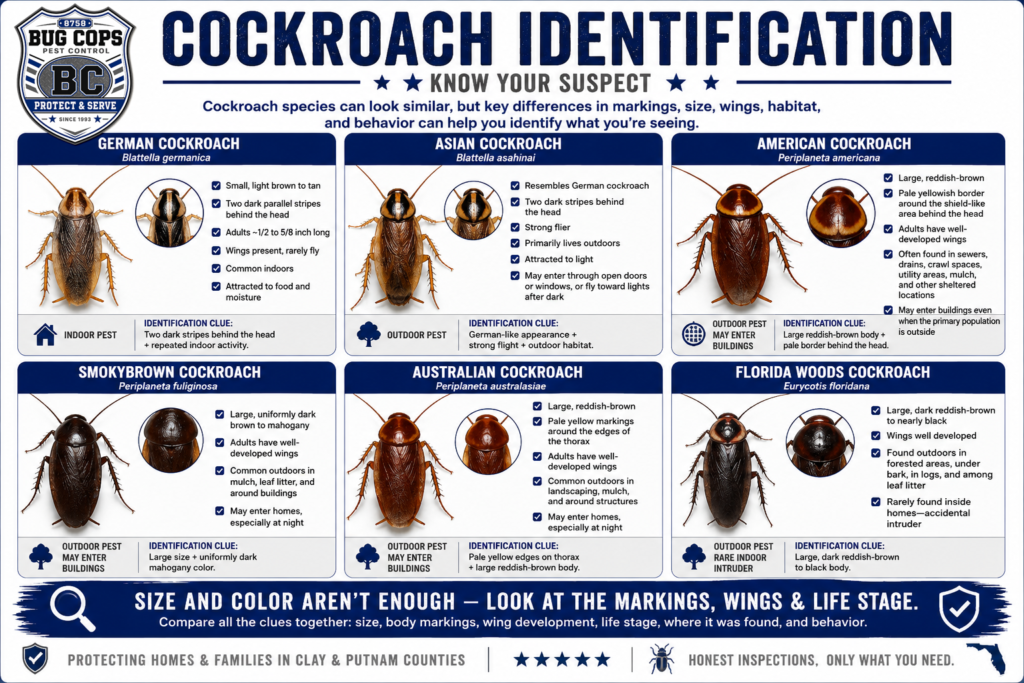
Cockroach identification is strongest when body features are considered together with life stage, markings, size, behavior, and where the insect was found.

Identification Note: Don’t identify a cockroach from size or color alone. Pay attention to body markings, wing development, life stage, where the cockroach was found, and whether adults or nymphs are appearing repeatedly.
Common Cockroaches in North Florida
North Florida is home to several cockroach species that can differ considerably in size, markings, preferred habitat, flight ability, and whether they commonly reproduce indoors. Appearance is useful, but where a cockroach was found and how it behaves can be just as important when narrowing down the species.
German Cockroach
Blattella germanica
German cockroaches are small, light brown to tan cockroaches with two dark parallel stripes behind the head. Adults are roughly 1/2 to 5/8 inch long, and although they have wings, they rarely fly.
Unlike many of Florida’s larger outdoor cockroaches, German cockroaches are strongly associated with indoor environments, particularly kitchens and other warm areas where food and moisture are available. Finding nymphs along with adults indoors is an especially important clue.
Identification clue: Two dark stripes behind the head + repeated indoor activity.
Asian Cockroach
Blattella asahinai
Asian cockroaches closely resemble German cockroaches and also have two dark stripes behind the head, making appearance alone unreliable for separating the two.
Behavior provides an important clue. Asian cockroaches primarily live outdoors, fly readily, and are attracted to light. They may enter homes through open doors and windows or fly toward lights after dark.
Identification clue: German-like appearance + strong flight + outdoor habitat.
American Cockroach
Periplaneta americana
American cockroaches are large, reddish-brown cockroaches with a pale yellowish border around the shield-like area behind the head. Adults have well-developed wings.
They favor warm, moist protected environments and may occur around sewers, drains, crawl spaces, utility areas, mulch, and other sheltered locations. They can enter buildings even when the primary population is outside.
Identification clue: Large reddish-brown body + pale border behind the head.
Smokybrown Cockroach
Periplaneta fuliginosa
Smokybrown cockroaches are large and generally uniform dark mahogany to very dark brown, without the prominent pale markings seen on some similar large cockroaches. Adults have long, developed wings.
They are commonly associated with outdoor areas such as trees, mulch, leaf litter, rooflines, gutters, and other humid protected locations, but may wander or fly indoors.
Identification clue: Large + uniformly dark brown + outdoor/peridomestic habitat.
Australian Cockroach
Periplaneta australasiae
Australian cockroaches are large, reddish-brown cockroaches that can resemble American cockroaches. One useful clue is the presence of distinct pale yellow markings along the outer edges near the base of the wings, in addition to pale coloration around the pronotum.
They are primarily associated with warm outdoor or protected environments and may occur around landscaping, vegetation, greenhouses, mulch, and structures.
Identification clue: Large reddish-brown cockroach + distinctive pale wing-edge markings.
Florida Woods Cockroach
Eurycotis floridana
Florida woods cockroaches are large, dark reddish-brown to nearly black cockroaches with a broad, heavy-bodied appearance. Adults have only short wing pads and cannot fly.
They are primarily outdoor cockroaches associated with leaf litter, rotting logs, tree cavities, mulch, and other damp protected habitats. They may occasionally wander into structures but are very different from the small indoor-breeding German cockroach.
Identification clue: Large, very dark, heavy-bodied cockroach + reduced wings.
Not sure which cockroach you’re dealing with? Bug Cops offers free home inspections to help identify the cockroach and determine the appropriate next step.
Identification Note: Similar-looking cockroaches can behave very differently. Compare markings, size, wing development, flight ability, life stage, where the cockroach was found, and whether adults or nymphs are appearing repeatedly.
Where Are Cockroaches Found Around the Home?
Cockroaches may be found indoors or outdoors depending on the species. The most useful clue is often not simply where one cockroach was seen, but whether the area provides food, moisture, shelter, or suitable conditions for cockroaches to live and reproduce.
Kitchens & Food Areas
Kitchens provide food, moisture, warmth, and protected hiding places. Cockroaches may be found around cabinets, appliances, sinks, pantries, trash areas, and narrow cracks or gaps where food residue and moisture can accumulate.
Bathrooms & Plumbing Areas
Bathrooms, plumbing penetrations, drains, and other damp locations can provide moisture and protected spaces. Repeated activity around sinks, tubs, toilets, or plumbing areas may offer clues about nearby hiding or travel routes.
Behind Appliances & Inside Cabinets
Spaces behind refrigerators, stoves, dishwashers, cabinets, and other fixtures can provide warm, dark, protected harborages. Small indoor species and nymphs may remain hidden in surprisingly narrow cracks during the day.
Crawl Spaces, Drains & Utility Areas
Large cockroach species may occur around crawl spaces, utility rooms, drains, plumbing systems, and other humid protected areas. These locations may also provide routes for outdoor cockroaches to enter a structure.
Mulch, Leaf Litter & Landscaping
Several Florida cockroaches primarily live outdoors. Mulch, leaf litter, trees, logs, dense vegetation, and other damp organic material can provide natural habitat close to homes.
Rooflines, Gutters & Exterior Openings
Outdoor cockroaches may shelter around rooflines, gutters, soffits, tree canopies, exterior walls, or other protected locations and occasionally enter through doors, windows, vents, or structural gaps.
Identification Note: Where a cockroach is found can be as useful as what it looks like. Pay attention to whether activity is concentrated around food and moisture indoors, or whether cockroaches appear to be entering from outdoor habitat or structural openings.
Signs of Cockroach Activity
Cockroaches are often most active during periods of darkness, so physical evidence may be discovered before large numbers of live insects are seen. Droppings, egg cases, shed skins, repeated sightings, and activity from protected hiding places can all provide useful clues.
Live Cockroaches
Repeatedly seeing live cockroaches—particularly during daylight hours or in the same indoor area—can indicate that suitable food, moisture, or hiding conditions are nearby.
Cockroach Droppings
Droppings vary with species and size. Small cockroaches may leave tiny dark specks, while larger cockroaches can produce larger cylindrical droppings. Droppings are often found near harborages or established travel areas.
Egg Cases
Cockroaches produce protective egg cases called oothecae. Their size, color, shape, and where they’re found can vary by species. Finding egg cases indoors can provide important evidence that cockroaches are reproducing nearby.
Shed Skins
Young cockroaches molt as they grow and leave behind shed exoskeletons. Finding shed skins together with nymphs, droppings, or other evidence can strengthen the indication of ongoing activity.
Nymphs Indoors
Repeatedly finding small, wingless cockroach nymphs indoors deserves attention. Nymphs develop near suitable harborages and cannot simply fly indoors from an outdoor location.
Repeated Activity From Cracks or Gaps
Cockroaches repeatedly emerging from beneath cabinets, appliances, wall gaps, plumbing areas, or other protected openings may indicate a nearby harborage or established travel route.
Identification Note: One cockroach may not tell the whole story. Look for multiple types of evidence—especially nymphs, droppings, egg cases, shed skins, and repeated activity from the same protected areas.
Why Am I Seeing Cockroaches?
Cockroaches usually appear around a home because they’ve found food, moisture, shelter, suitable outdoor habitat, or a way inside. What repeated sightings mean can depend heavily on the species and whether adults, nymphs, or both are being found.
Food Is Available
Crumbs, grease, spills, pet food, pantry products, trash, and food residue beneath appliances or cabinets can provide reliable food sources for cockroaches.
Moisture Is Available
Leaks, condensation, sinks, plumbing areas, drains, damp crawl spaces, and other moisture sources can create favorable conditions—particularly when protected hiding places are nearby.
They Have Found Protected Harborage
Cockroaches can hide in cracks, cabinet voids, appliance spaces, wall gaps, plumbing areas, and other narrow protected locations. Their flattened bodies allow them to use surprisingly small spaces.
Outdoor Cockroaches Are Wandering Inside
Large outdoor species may occasionally enter through doors, windows, vents, utility penetrations, or structural gaps. One outdoor cockroach indoors doesn’t necessarily mean the species is reproducing inside the home.
Indoor Cockroaches Are Reproducing Nearby
Repeated sightings of small cockroaches, nymphs, egg cases, or adults and nymphs together can provide stronger evidence that cockroaches are developing in or near an indoor harborage.
Weather or Outdoor Conditions Changed
Heavy rain, heat, dry conditions, landscaping disturbance, or other environmental changes can alter outdoor cockroach activity and sometimes increase the number wandering toward structures.
- Cockroach activity is not a measure of how clean a home is. Even a well-maintained home can provide small amounts of food, moisture, and protected hiding places. An outdoor cockroach may simply wander inside, but if it finds suitable conditions, it may remain.
Identification Note: Recurring cockroach activity means more when you know which cockroach you’re seeing. Consider the species, life stage, location, food and moisture sources, and whether the pattern suggests indoor reproduction or occasional entry from outdoors.
Cockroach Prevention Tips
Cockroach prevention starts with reducing the things that provide food, moisture, shelter, and easy entry into the home. Because some cockroaches reproduce indoors while others primarily live outside, prevention works best when both indoor conditions and exterior habitat are considered.
Keep Food & Crumbs Under Control
Clean up spills and crumbs, store food appropriately, and pay attention to residue beneath appliances, inside cabinets, around pet feeding areas, and other places where small food sources can accumulate.
Address Moisture Sources
Repair leaks when practical and watch for persistent moisture around sinks, plumbing, drains, condensation, bathrooms, and damp structural areas. Reduce standing water where possible.
Reduce Clutter & Hiding Places
Cardboard, paper bags, stored materials, and crowded cabinets can create protected spaces where cockroaches remain hidden. Keeping storage areas reasonably organized can also make activity easier to notice.
Seal Accessible Entry Points
Check gaps around doors, windows, plumbing, utility penetrations, vents, and other structural openings where outdoor cockroaches may enter. Repair screens and accessible gaps when practical.
Manage Outdoor Habitat Near the Home
Pay attention to excessive leaf litter, mulch, wood debris, dense vegetation, and other damp organic material near the structure where outdoor cockroach species may shelter.
Pay Attention to Recurring Activity
Don’t simply remove the cockroaches you see and forget where they were found. Repeated sightings, nymphs, droppings, egg cases, or activity from the same protected area can provide useful clues about the source.
For more information about cockroaches commonly found in and around Florida homes, visit the UF/IFAS Extension guide to cockroach management.
Identification Note: Cockroach prevention isn’t about making a home perfectly sterile. Focus on reducing reliable food and moisture sources, limiting protected hiding places, managing outdoor habitat, and paying attention to recurring evidence.
When Should I Be Concerned About Cockroaches?
Seeing one cockroach doesn’t always mean cockroaches are reproducing inside the home, particularly when a large outdoor species has wandered indoors. Concern increases when sightings become frequent, nymphs or egg cases are found, evidence accumulates, or activity repeatedly occurs in protected indoor areas.
Cockroaches Keep Appearing Indoors
Repeated sightings in the same rooms or areas deserve closer attention. A recurring pattern can indicate that cockroaches have found reliable food, moisture, shelter, or an established indoor harborage nearby.
You Find Cockroach Nymphs
Finding small, wingless nymphs indoors can be an important clue. Nymphs develop near suitable harborages and cannot simply fly indoors from outside, so repeated nymph sightings deserve closer investigation.
You Find Egg Cases
Cockroach egg cases, called oothecae, can provide evidence of reproductive activity. Finding egg cases indoors—particularly together with nymphs or repeated adult sightings—can strengthen the indication that cockroaches are developing nearby.
You Find Droppings or Shed Skins
Repeated accumulations of droppings, shed skins, or other physical evidence around cabinets, appliances, plumbing areas, cracks, or other protected spaces can indicate an established area of activity.
Cockroaches Are Seen During the Day
Cockroaches are generally more active during periods of darkness. Repeated daytime sightings, especially involving indoor-breeding species, can deserve closer investigation when combined with other evidence.
Activity Is Concentrated in Indoor Hiding Areas
Cockroaches repeatedly emerging from behind appliances, beneath cabinets, around plumbing, wall gaps, or other narrow protected spaces may indicate a nearby harborage rather than an occasional outdoor visitor.
Seeing several of these signs around your home? Bug Cops offers free home inspections to help identify the cockroach and determine what the evidence may be telling us.
Identification Note: Don’t judge cockroach activity by one sighting—or by how clean a home appears. Look at the species, life stage, frequency of sightings, physical evidence, and where activity is concentrated to understand the pattern.
Cockroach Identification FAQs
No. Cockroach activity is not a reliable measure of housekeeping. Cockroaches are looking for food, moisture, shelter, and suitable conditions, and even a well-maintained home can provide small amounts of those resources. Outdoor cockroaches may also simply wander inside.
Young cockroaches, called nymphs, are smaller than adults and do not have fully developed wings. Repeatedly finding nymphs indoors can be an important clue because they are developing somewhere nearby rather than simply arriving from outdoors.
They can look remarkably similar, including the two dark stripes behind the head. Behavior helps distinguish them: German cockroaches are strongly associated with indoor environments and rarely fly, while Asian cockroaches primarily live outdoors, fly readily, and are attracted to light.
Not necessarily. Several large Florida cockroach species primarily live outdoors and may occasionally enter a home. One wandering outdoor cockroach is different from repeatedly finding cockroaches, nymphs, egg cases, or other evidence indoors.
Some can. Flight ability varies considerably by species. Asian cockroaches are strong flyers, while German cockroaches rarely fly despite having wings. Several larger outdoor species may also fly or glide, while Florida woods cockroaches have reduced wings and cannot fly.
Not Sure What Kind of Cockroach You’ve Found?
Cockroaches can be difficult to identify because species, life stage, size, markings, and behavior can vary considerably, and some cockroaches look remarkably similar to one another.
Don’t guess. If you’ve found a cockroach you don’t recognize, take a clear photo and send it to Bug Cops. We’ll help you narrow down the species and determine what the evidence may be telling you.
Protecting & Serving Clay & Putnam Counties Since 1993
If cockroach activity keeps returning around your home or you’re finding nymphs, egg cases, droppings, or other evidence, Bug Cops Pest Control can help identify the cockroach, evaluate where activity may be coming from, and determine the appropriate next step.
Free home inspections are available if you’d like us to take a closer look.