
Termite Identification Guide for Clay & Putnam Counties
This Termite Identification Guide will help you recognize termites, identify common signs of termite activity, learn where termites commonly live and travel, and distinguish termite swarmers from winged ants.
Termites are wood-destroying insects that feed on cellulose-containing materials. Much of their activity can remain hidden underground, inside wood, or behind finished surfaces, which means homeowners may notice evidence of termites before they ever see the insects themselves.
In North Florida, one of the most important distinctions is between subterranean termites and drywood termites. Subterranean termites typically maintain a connection with soil or another moisture source and may construct mud tubes to travel above ground. Drywood termites live within the wood they infest and do not require contact with the soil.
Termite activity can reveal itself in several ways, including winged swarmers, discarded wings, mud tubes, damaged wood, or drywood termite pellets. Because the evidence differs depending on the type of termite involved, correct identification is an important first step.
Not sure whether you’ve found termites, winged ants, or termite evidence? Send us a clear photo or have Bug Cops take a closer look.
What Do Termites Look Like?
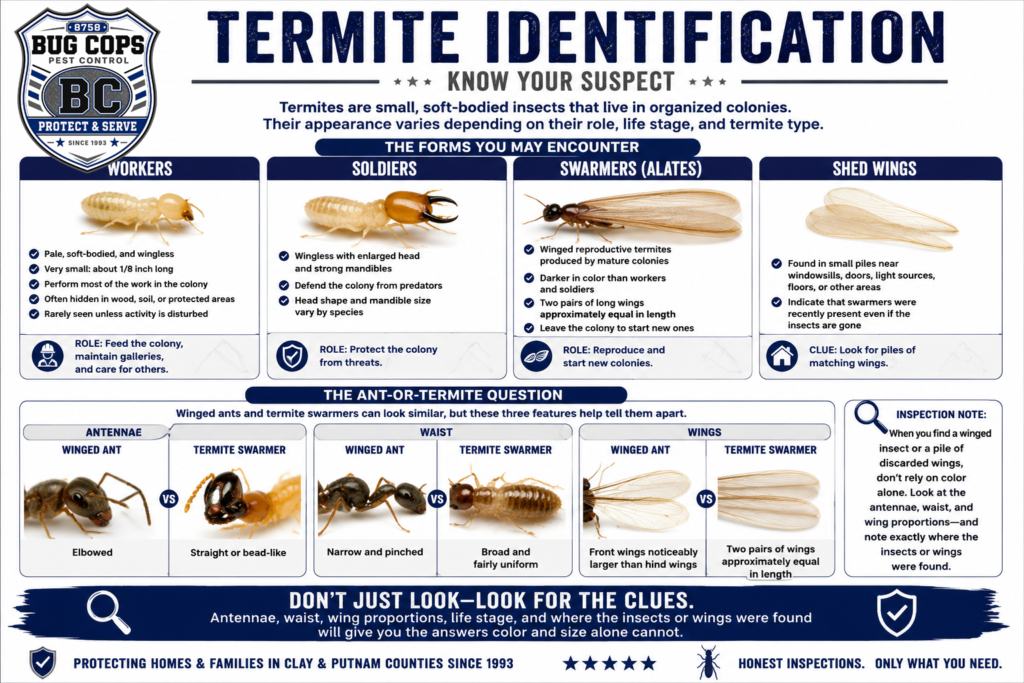
Termites are small, soft-bodied insects that live in organized colonies. Their appearance varies depending on their colony role, life stage, and termite type, so the termites homeowners encounter may not all look alike.
Termite colonies generally contain several forms:
Workers
Workers are typically pale, soft-bodied, and wingless. They perform much of the work within the colony, including feeding and maintaining galleries. Workers usually remain hidden inside soil, wood, or protected areas as they feed and maintain the colony. Homeowners rarely see workers unless something disturbs their activity.
Soldiers
Soldiers are also wingless but have a more distinctive head and enlarged mandibles used to defend the colony. Their appearance can vary among termite species, making soldier characteristics useful for professional identification.
Swarmers
Swarmers, also called alates, are the winged reproductive members of a termite colony. Established colonies produce them to leave and form new colonies. Unlike pale workers and soldiers, swarmers generally have darker bodies and two pairs of long wings that are approximately equal in length.
Shed Wings
After swarming, reproductive termites shed their wings. Small piles of similar-sized wings around windowsills, doors, light sources, floors, or other areas can therefore be an important clue even when the insects themselves are no longer present.
The Ant-or-Termite Question
Winged ants and termite swarmers can look similar at a quick glance, but three features provide useful clues:
Antennae
Winged ant → elbowed
Termite swarmer → straight or bead-like
Waist
Winged ant → narrow and pinched
Termite swarmer → broad and fairly uniform
Wings
Winged ant → front wings noticeably larger than hind wings
Termite swarmer → two pairs of wings approximately equal in length
Termite swarmers have straight antennae, a broad waist, and two pairs of similarly sized wings. Winged ants have elbowed antennae, a narrow waist, and unequal wing lengths.

Inspection Note: When you find a winged insect or a pile of discarded wings, don’t rely on color alone. Look at the antennae, waist, and wing proportions—and record the exact location of the insects or wings.
Common Termites in North Florida
North Florida homes may encounter more than one type of termite, and the differences aren’t always obvious to a homeowner. Where the colony lives, how termites reach the wood, the evidence they leave behind, and the appearance of soldiers or swarmers can all help narrow down the type of termite present.
Eastern Subterranean Termite
Reticulitermes flavipes
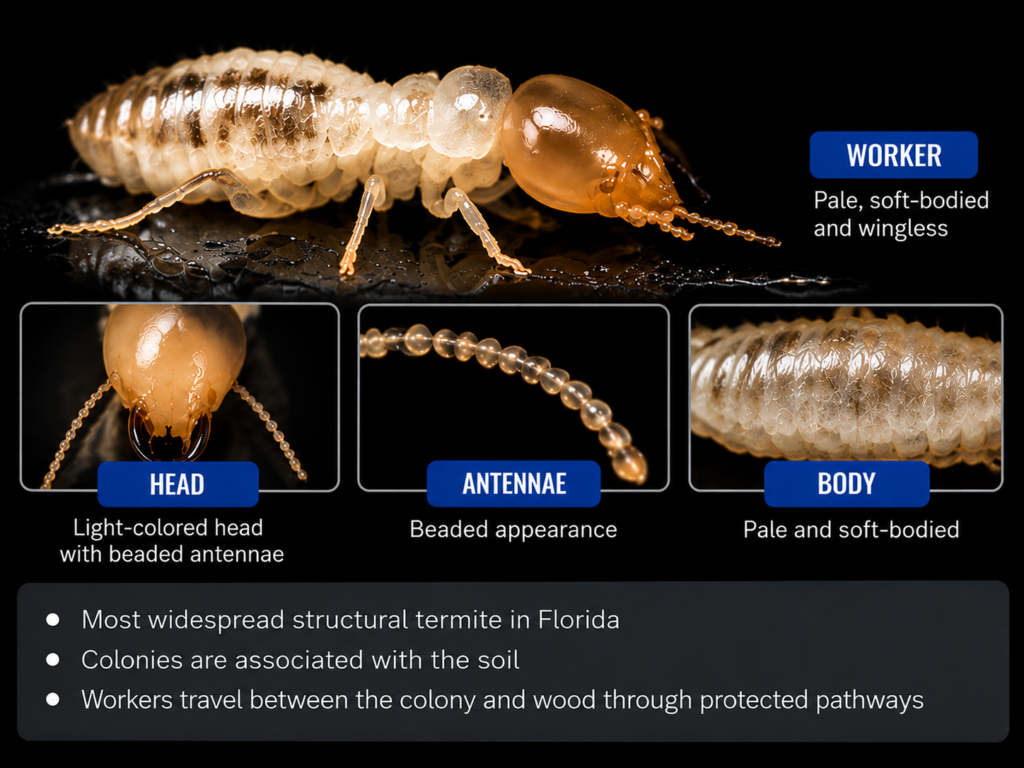
Eastern subterranean termites are among the most widespread structural termites in Florida. Their colonies are associated with the soil, and workers travel between the colony and wood through protected pathways.
Homeowners are more likely to recognize their evidence than identify an individual worker. Important clues include mud tubes, swarmers or discarded wings, and wood damage associated with soil or moisture.
Evidence clue: Mud tubes connecting soil or structural areas to a wood source.
Formosan Subterranean Termite
Coptotermes formosanus
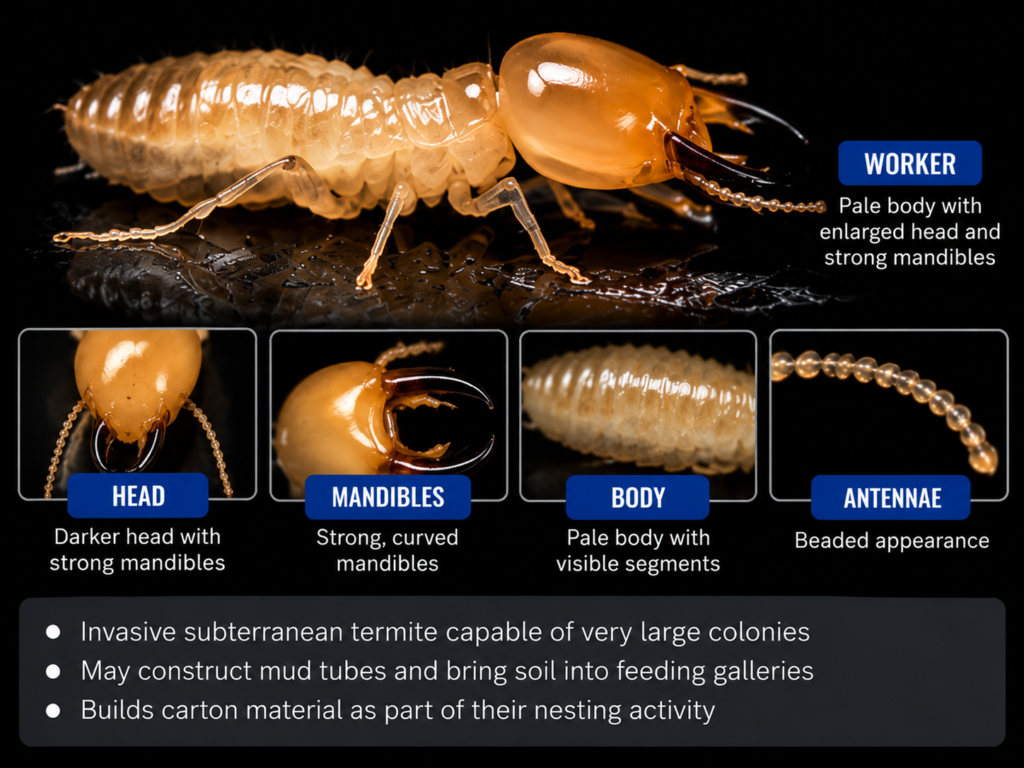
Formosan subterranean termites are an invasive subterranean species capable of developing very large colonies. Like other subterranean termites, they may construct mud tubes while traveling between protected areas and food sources.
They may also bring soil into feeding galleries and construct carton material, a mixture associated with their nesting activity. Because their evidence can resemble that of other subterranean termites, species-level identification may require examining soldiers or swarmers.
Evidence clue: Subterranean-type mud tubes and wood galleries that may contain soil or carton material.
Drywood Termites
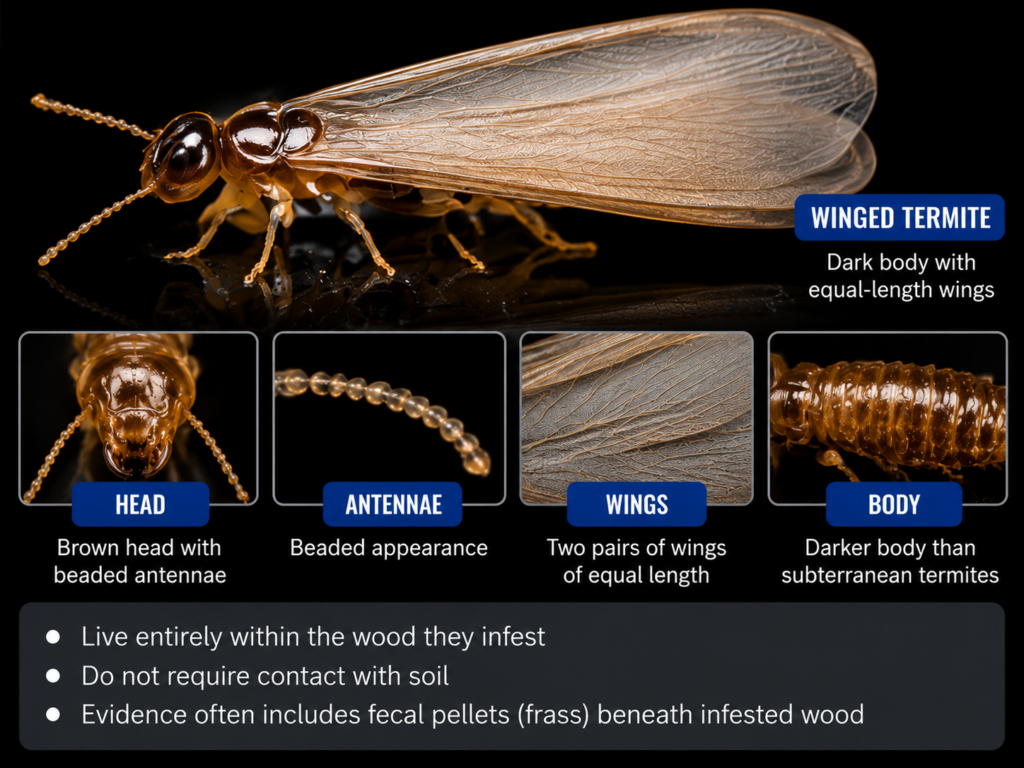
Several drywood termite species occur in Florida. Unlike subterranean termites, drywood termite colonies live entirely within the wood they infest and don’t require contact with soil.
One of their most recognizable clues is fecal pellets, often called frass. These hard, tiny pellets may accumulate beneath infested wood after being pushed through small kick-out holes. Homeowners sometimes mistake the piles for sawdust or sand.
Evidence clue: Small piles of hard, grain-like termite pellets beneath infested wood.
Inspection Note: You may never see the termites responsible for the activity. Mud tubes, discarded wings, termite pellets, damaged wood, and the location of the evidence can tell a homeowner more than seeing a worker termite by itself.
Where Is Termite Activity Found Around the Home?
Termites can remain hidden while feeding or traveling, so homeowners often discover evidence where wood, soil, moisture, and structural materials come together. The type of termite involved—subterranean or drywood—can also determine where evidence appears.
Foundation & Soil Contact Areas
Subterranean termites live in or maintain connections with the soil. Look for activity around foundations, piers, plumbing penetrations, expansion joints, and other areas where termites can travel from the soil toward structural wood.
Crawl Spaces & Under Structures
Crawl spaces can provide protected conditions where wood, moisture, and soil are close together. Mud tubes, damaged wood, or termite activity around supports and structural members may be easier to detect in these areas.
Door & Window Frames
Wood trim, frames, sills, and nearby structural materials can sometimes show termite evidence. Swarmers often move toward light, so homeowners may find them or their discarded wings around windows and doors.
Attics, Rooflines & Wood Framing
Drywood termites can infest wood without maintaining soil contact. Rafters, roof framing, fascia, trim, and other structural wood may therefore contain hidden activity even when there is no visible connection to the ground.
Decks, Porches & Exterior Wood
Wooden steps, decks, porches, posts, landscape timbers, and other exterior wood can provide termite food sources—particularly where wood is close to soil or exposed to persistent moisture.
Furniture & Other Wood Items
Drywood termites may also infest furniture, cabinets, doors, trim, and other wood products. Small pellet piles or kick-out holes can sometimes provide the first visible clue.
Inspection Note: Don’t limit a termite inspection to places where you’ve actually seen insects. Look at where wood, soil, moisture, and protected structural spaces come together—and pay attention to evidence such as mud tubes, discarded wings, pellets, and damaged wood.
Signs of Termite Activity
Termites often remain hidden inside soil, wood, or structural spaces, so the first sign of activity may be the evidence they leave behind rather than the insects themselves. Knowing what to look for can help homeowners recognize when termite activity deserves a closer inspection.
Mud Tubes
Subterranean termites may construct narrow tubes from soil, wood particles, and other material that provide protected travel between the colony and a food source. Look for mud tubes along foundations, piers, walls, plumbing penetrations, and structural supports.
Winged Termites or Swarmers
Established termite colonies produce winged reproductive termites called swarmers. Finding numerous swarmers indoors or emerging from the same structural area deserves closer inspection.
Discarded Wings
After swarming, termites shed their wings. Small piles of similar-sized wings may collect around windowsills, doors, floors, light sources, or other areas even after the swarmers themselves have disappeared.
Damaged or Hollowed Wood
Termite feeding can occur inside wood while the outer surface remains relatively intact. Damaged wood may contain internal galleries or feel different when inspected, but visible surface damage alone may not reveal the full extent of activity.
Drywood Termite Pellets
Drywood termites push hard fecal pellets from their galleries through small kick-out holes. These tiny, grain-like pellets can accumulate beneath infested wood and may resemble sawdust, sand, or ordinary debris.
Swarmers Emerging From Wood or Structures
Pay close attention to winged termites emerging directly from trim, walls, wood, window frames, or other structural areas. Their emergence from a specific location can point to nearby termite activity.
Inspection Note: The termite itself may never be visible. Mud tubes, discarded wings, pellets, damaged wood, and where swarmers emerge can provide some of the strongest clues that termite activity may be present.
Why Am I Seeing Termites?
Termite activity around a home usually means the property offers access to wood, cellulose, moisture, soil, or protected conditions that termites can use. Because colonies may remain hidden for long periods, visible activity can sometimes seem to appear suddenly.
A Subterranean Colony Is Nearby
Subterranean termite colonies live in the soil and workers may travel through the ground or protected mud tubes to reach wood in or around a structure. The colony itself may be located some distance from where evidence becomes visible.
Wood Is Accessible From the Soil
Wooden structural components, posts, steps, siding, landscape timbers, or other cellulose materials located close to or in contact with soil can provide termites with easier access to a food source.
Moisture Is Creating Favorable Conditions
Leaks, drainage problems, damp crawl spaces, plumbing issues, or persistently moist wood can create conditions favorable for some termite activity. Moisture doesn’t cause termites, but it can make certain areas more suitable for them.
Drywood Termites Arrived in Wood
Drywood termites live entirely within the wood they infest and don’t require contact with soil. Furniture, lumber, wood products, and other infested wooden items can carry drywood termites from one location to another.
A Colony Has Reached Swarming Stage
Established termite colonies may eventually produce winged reproductive termites. A sudden appearance of swarmers doesn’t necessarily mean termites just arrived—it may provide the first visible evidence of a colony that has remained hidden.
Termite Activity Can Remain Hidden
Termites can feed within wood, wall voids, structural spaces, and other concealed locations for long periods. Mud tubes, pellets, swarmers, discarded wings, or visible damage may provide the first clues that hidden termite activity has already affected the structure.
Inspection Note: Termites rarely appear because of one simple condition. Consider soil access, wood placement, moisture, hidden structural spaces, and the type of termite evidence you’ve found when trying to understand where activity may be coming from.
Termite Prevention Tips
Termite prevention focuses on reducing conditions that can make it easier for termites to reach or remain around a structure. Paying attention to soil-to-wood contact, moisture, drainage, structural gaps, exterior wood, and routine inspections can help homeowners recognize and reduce potential termite conditions.
Reduce Wood-to-Soil Contact
When practical, avoid direct contact between soil and wooden structural components, siding, steps, posts, or other wood around the home. Wood touching soil can provide subterranean termites with concealed access to a food source.
Address Moisture & Drainage Problems
Repair plumbing leaks and other persistent moisture problems when practical. Keep gutters, downspouts, and drainage functioning properly so water isn’t repeatedly collecting near foundations or structural wood.
Keep Mulch & Landscaping in Check
Avoid allowing excessive mulch, soil, or landscape materials to build up against siding or other structural areas. Keeping foundation edges reasonably visible can also make mud tubes and other termite evidence easier to notice.
Store Firewood Away From the Structure
Keep firewood, scrap lumber, cardboard, and other cellulose materials away from the home’s foundation when practical. Avoid allowing stored wood to create hidden contact between the soil and structure.
Pay Attention During Repairs & Renovations
When replacing damaged wood, opening walls, repairing porches, or working around structural areas, watch for mud tubes, galleries, pellets, discarded wings, or other suspicious evidence that may otherwise remain concealed.
Schedule Regular Termite Inspections
Because termite activity can remain hidden, periodic professional inspections can help identify evidence, conducive conditions, or areas that deserve closer attention before obvious damage becomes visible.
Learn more about protecting Florida homes from termites through the Florida Department of Agriculture and Consumer Services (FDACS).
Inspection Note: Termite prevention isn’t about eliminating every piece of wood or moisture around a property. Focus on reducing concealed access, correcting persistent moisture conditions, keeping structural areas visible when practical, and watching for termite evidence over time.
Want a professional set of eyes on your home? Bug Cops offers free home inspections for homeowners in Clay and Putnam Counties.
When Should I Be Concerned About Termites?
Finding one suspicious piece of wood or a single wing doesn’t always confirm active termites, but certain evidence deserves prompt attention. Mud tubes, termite swarmers, piles of discarded wings, termite pellets, structural wood damage, or recurring evidence can indicate that a closer inspection is warranted.
You Find Mud Tubes
Mud tubes along foundations, walls, piers, plumbing areas, or structural wood can be evidence of subterranean termite activity. Avoid relying on whether a tube looks fresh or old to determine the status of the colony.
Termite Swarmers Appear Indoors
Numerous termite swarmers appearing indoors—particularly from the same wall, window, trim, or structural area—deserve closer inspection. A visible swarm may provide the first obvious evidence of termite activity that has remained hidden.
You Find Piles of Discarded Wings
Small piles of similar-sized wings around windowsills, doors, floors, or light sources can indicate that termite swarmers were recently present even if the insects themselves have disappeared.
Found one of these signs around your home? Bug Cops offers free home inspections to help determine whether termite activity may be present.
You Discover Termite Pellets
Repeated piles of hard, grain-like pellets beneath wood may indicate drywood termite activity. Look at where the pellets are accumulating and whether small kick-out openings are present nearby.
Wood Shows Unexplained Damage
Wood that appears hollowed, internally damaged, blistered, weakened, or otherwise unusual deserves closer investigation—particularly when other termite evidence is present nearby.
Evidence Keeps Reappearing
If mud tubes, pellets, wings, swarmers, or other termite evidence keeps appearing in the same area, take it seriously—even if someone previously cleaned away the visible material.
Inspection Note: Don’t wait until you can see a termite to take termite evidence seriously. Document what you found, note exactly where it appeared, and avoid disturbing the area so a professional can inspect the evidence in place.
Termite Identification Guide FAQs
Look at three main features: antennae, waist, and wings. Winged ants have elbowed antennae, a narrow waist, and front wings that are larger than their hind wings. Termite swarmers have straighter antennae, a broad waist, and two pairs of wings that are approximately equal in length.
Discarded wings can indicate that termite swarmers were recently present, but the wings alone may not tell you where the colony is located. Where the wings were found, how many are present, and whether other termite evidence is nearby can provide useful identification clues.
Subterranean termites are associated with the soil and may construct mud tubes to travel between protected areas and wood. Drywood termites live within the wood they infest and don’t require soil contact. Drywood termite pellets, or frass, can be an important clue.
Yes. Termite activity can remain hidden in soil, wood, wall voids, and other protected areas. Homeowners may discover mud tubes, discarded wings, pellets, swarmers, or damaged wood before ever seeing workers or soldiers.
Not necessarily. Wood damage shows that termite activity has occurred, but the appearance of damaged wood alone may not determine whether termites are currently active. The surrounding evidence and a proper inspection can help determine the appropriate next step.
Not Sure If It’s a Termite?
Termites can be difficult to identify because much of their activity remains hidden. Homeowners often notice swarmers, discarded wings, mud tubes, pellets, or damaged wood before they ever see the termites themselves.
Don’t guess. If you’ve found a suspicious insect or evidence around your home, take a clear photo and send it to Bug Cops. We’ll help you determine whether you may be dealing with termites—or something else.
Protecting & Serving Clay & Putnam Counties Since 1993
If you’ve discovered termite evidence or are concerned about possible termite activity, Bug Cops Pest Control can inspect the area, evaluate the evidence, and help determine the appropriate next step.
Free home inspections are available if you’d like us to take a closer look.