
Ant Identification Guide for Clay & Putnam Counties
This Ant Identification Guide will help you identify common ants, recognize signs of ant activity, understand where they may be nesting, and learn what clues can help distinguish one ant from another.
Ants are among the most common pests found around North Florida homes. They may appear in kitchens, bathrooms, wall voids, lawns, landscaping, patios, driveways, and many other areas where they can find food, moisture, or suitable nesting sites.
Not every ant around a home behaves the same way. Some ants form trails indoors while others remain primarily outside. Some nest in soil, others use existing spaces inside structures, and certain species can bite or sting when disturbed. Correct identification can be important because the location of the nest, colony behavior, and appropriate management approach can vary considerably by species.
Size and color alone aren’t always enough to identify an ant. Body shape, number of waist nodes, antennae, worker size, trails, nesting location, and behavior can all provide useful identification information.
Not sure what kind of ant you’ve found? Take a clear photo and send it to Bug Cops. We’ll help you identify your tiny marching suspect.
What Do Ants Look Like?
Ants are six-legged insects with three main body sections: the head, thorax, and abdomen. Although ant species vary greatly in size and color, they share several basic features that can help distinguish them from other small insects.
Ants typically have:
- Six legs
- Two elbowed antennae
- A narrow waist between the thorax and abdomen
- One or two visible waist nodes, depending on the species
- Strong mandibles used for carrying, feeding, and defense
- Three distinct body sections
One of the most useful identification features is the ant’s waist, or petiole. Some ants have one visible node between the thorax and abdomen, while others have two. The shape and visibility of these nodes can help narrow down which type of ant you’ve found.
Size can also be misleading. Workers within some ant species are similar in size, while other colonies may contain workers of noticeably different sizes. Color alone isn’t enough either—several unrelated ants may appear brown, black, reddish, yellowish, or combinations of those colors.
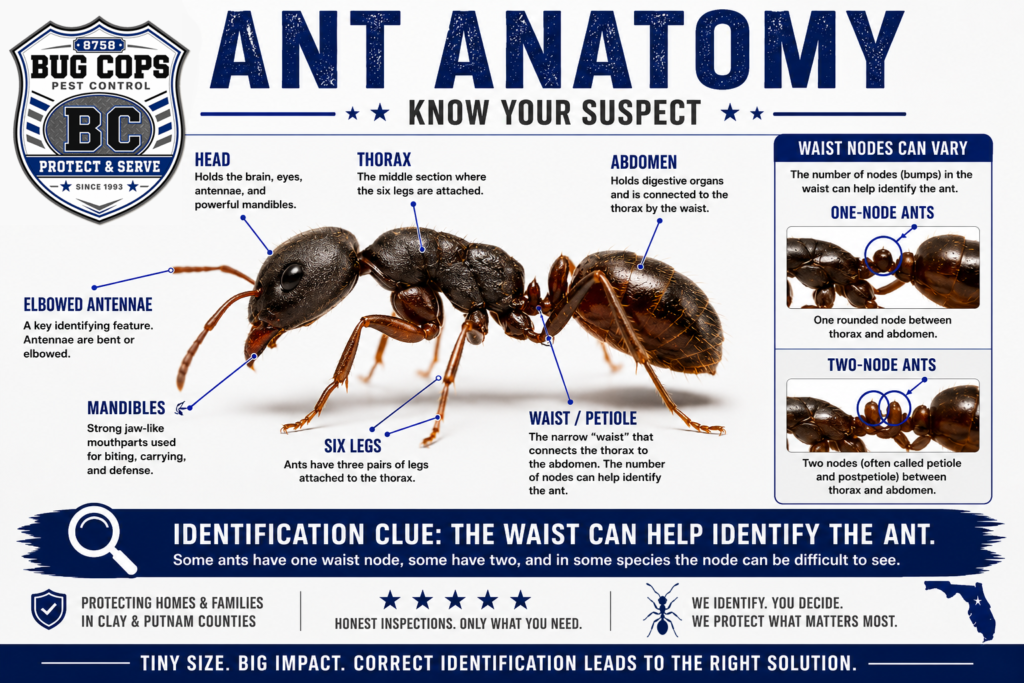

Identification Note: Don’t identify an ant from color or size alone. Look at the antennae, waist nodes, worker size, nesting location, trails, and behavior together for stronger identification clues.
Common Ants in North Florida
North Florida is home to many ant species, and they can differ greatly in size, color, worker appearance, nesting habits, trails, and behavior. Some are primarily outdoor ants, while others readily move indoors in search of food, moisture, or shelter. Knowing which ant you’re dealing with can help explain where the colony may be located and why activity is occurring.
Florida Carpenter Ant
Camponotus floridanus
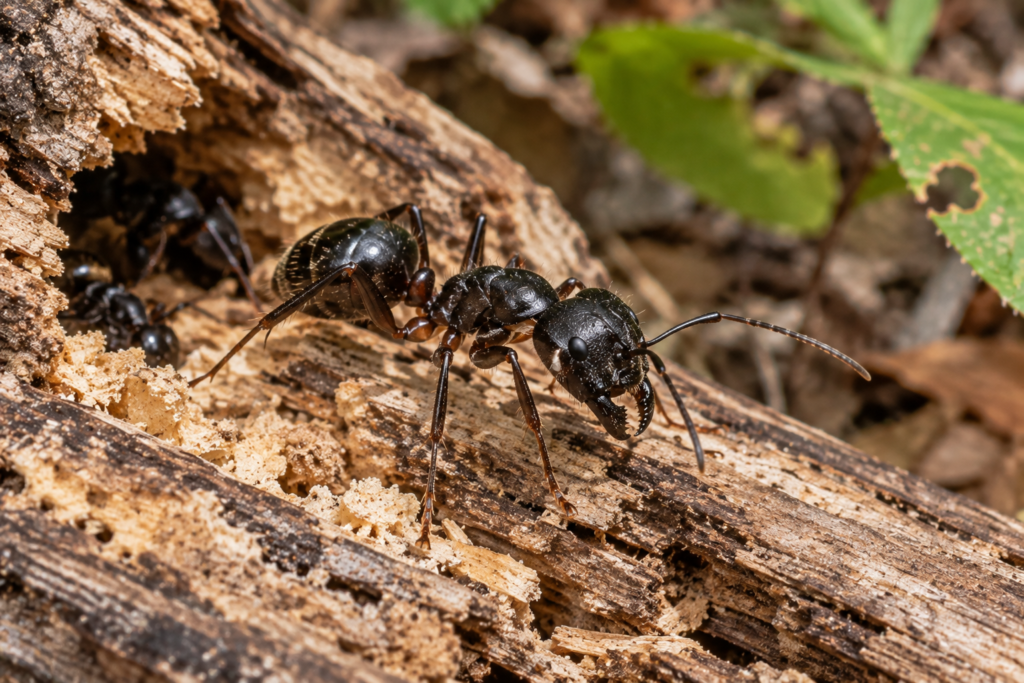
Florida carpenter ants are among the larger ants homeowners may encounter. Workers typically have a rusty-orange to reddish-brown head and thorax with a darker abdomen, and worker size can vary noticeably within the same colony.
They have one waist node and may nest in wood, wall voids, tree cavities, mulch, logs, and other protected spaces. Unlike termites, carpenter ants do not eat wood, but they may excavate existing wood to create nesting galleries.
Ghost Ant
Tapinoma melanocephalum
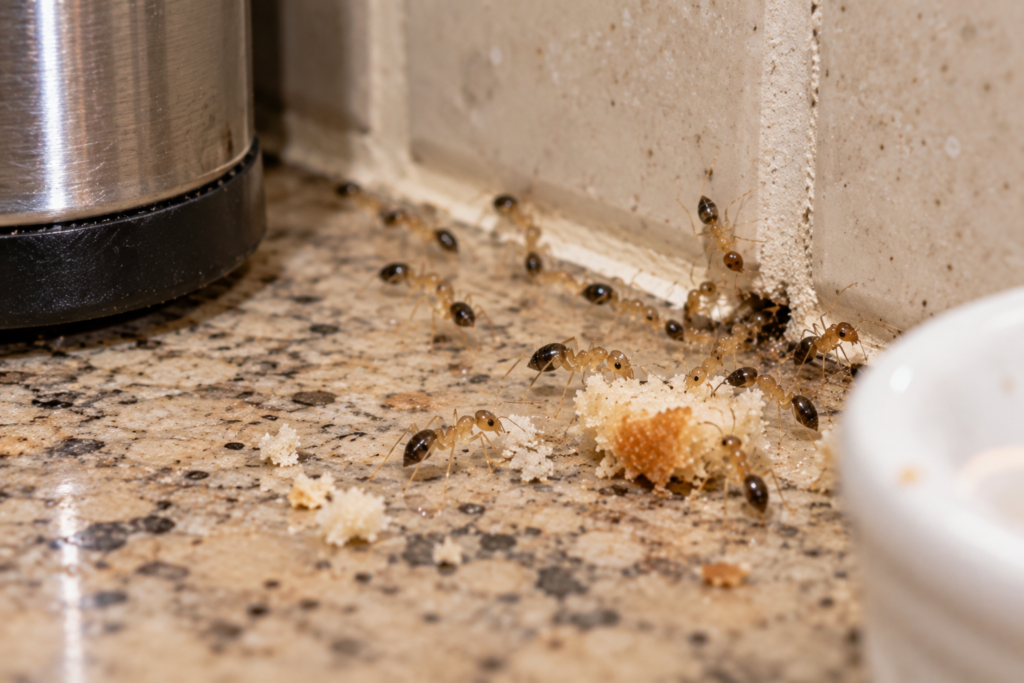
Ghost ants are extremely small and have a distinctive two-tone appearance. The head and thorax are dark, while the abdomen and legs are very pale and can appear almost translucent.
They are often associated with moisture and indoor foraging, particularly around kitchens, bathrooms, sinks, and other areas where water or food is available. Their tiny size allows them to use very small cracks and entry points.
Bigheaded Ant
Pheidole megacephala
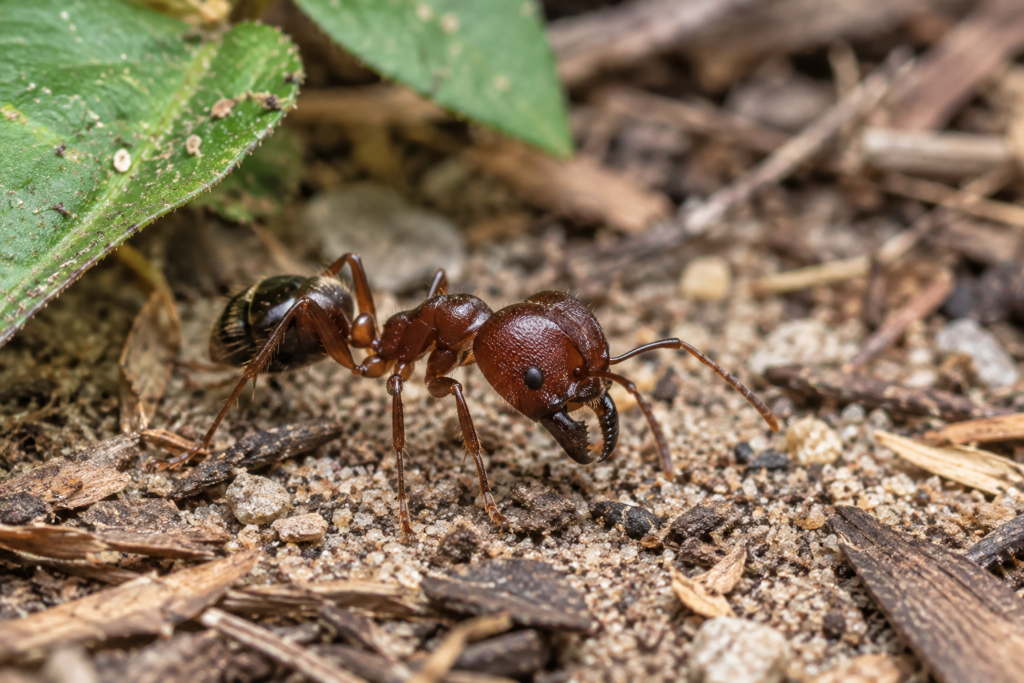
Bigheaded ant colonies contain workers of different sizes. The most recognizable are the major workers, which have disproportionately large heads compared with their bodies.
These ants commonly nest in soil and may be found around lawns, foundations, sidewalks, patios, landscaping, and structures. Large colonies can form noticeable trails and may displace other ant species nearby.
Red Imported Fire Ant
Solenopsis invicta
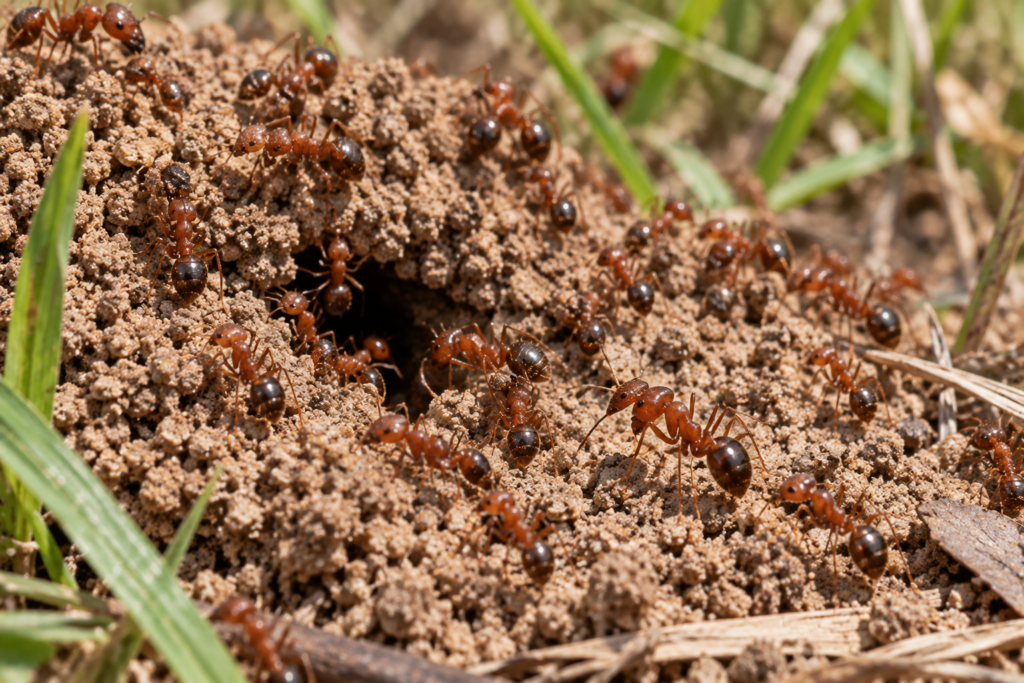
Red imported fire ants are reddish-brown ants with workers that vary in size. They have two waist nodes and are best known for building soil mounds and aggressively defending their colonies when disturbed.
They are common in sunny lawns, fields, roadsides, landscaped areas, and disturbed soil. Fire ants can sting repeatedly, so active mounds should be approached cautiously.
Longhorn Crazy Ant
Paratrechina longicornis
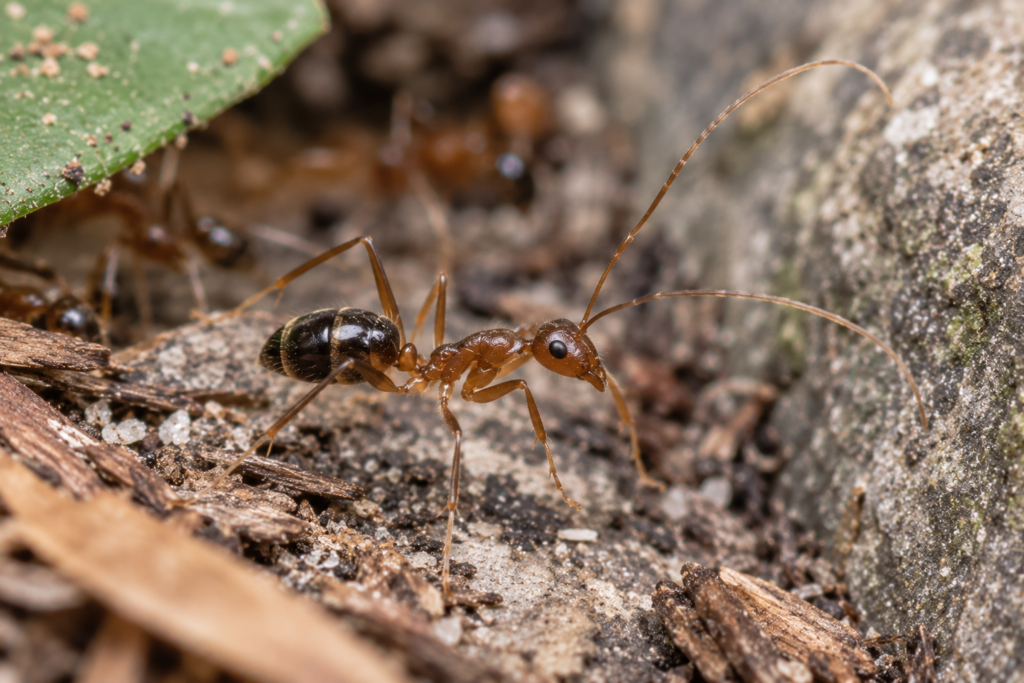
Longhorn crazy ants are slender, dark ants with very long legs and unusually long antennae. Their name comes from their rapid, erratic movement rather than the organized trails seen with many other ants.
They may nest indoors or outdoors and can be found around buildings, landscaping, wall voids, potted plants, and other protected areas. Their long legs and fast, irregular movement are useful field clues.
Pharaoh Ant
Monomorium pharaonis
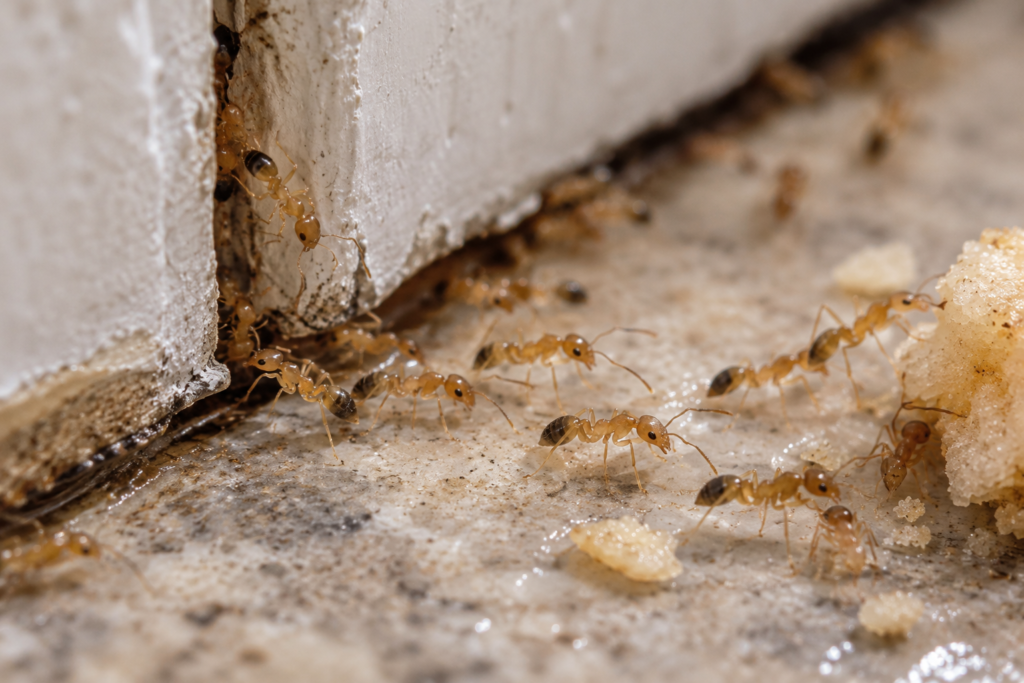
Pharaoh ants are tiny, generally yellowish to light brown, with a darker abdomen that may be visible when viewed closely. Their small size allows them to move through extremely narrow cracks and spaces inside structures.
They are strongly associated with indoor environments and may forage around kitchens, bathrooms, wall voids, cabinets, and other warm protected areas. Colonies can contain many queens and may spread into multiple nesting sites.
Identification Note: Ant identification is strongest when several clues agree. Compare worker size, color pattern, waist nodes, antennae, trails, nesting location, and behavior rather than relying on a single feature.
Where Are Ants Found Around the Home?
Ants may nest indoors or outdoors depending on the species, but workers often travel away from the colony while searching for food, moisture, and suitable nesting conditions. Following where ants are coming from—and where they’re going—can provide useful clues about where activity may be originating.
Kitchens & Food Areas
Ants may forage around countertops, cabinets, pantries, appliances, trash areas, and anywhere food or crumbs are available. Trails may disappear beneath cabinets, behind appliances, or into small cracks and gaps.
Bathrooms & Moisture Areas
Sinks, tubs, showers, plumbing areas, and other damp locations can attract ants searching for water. Repeated activity around moisture may provide an important clue about nearby nesting or foraging areas.
Wall Voids & Structural Spaces
Some ants may use wall voids, gaps around windows and doors, utility penetrations, attic spaces, or other protected areas within a structure. Workers may appear from very small openings even when the colony itself isn’t visible.
Lawns & Soil
Many ant species nest directly in soil. Colonies may occur in lawns, along property edges, around disturbed ground, or beneath objects resting on the soil. Fire ant mounds are especially noticeable, although not every ground-nesting ant produces an obvious mound.
Landscaping, Mulch & Trees
Mulch beds, shrubs, tree cavities, roots, logs, landscape timbers, and other protected outdoor areas can provide nesting sites. Ants originating outside may eventually forage toward or enter nearby structures.
Patios, Driveways & Foundations
Ants may nest or travel beneath pavers, concrete edges, expansion joints, sidewalks, patios, and along foundations. Small piles of displaced soil or established trails entering cracks can sometimes help reveal activity.
For more information about ants commonly found in and around Florida homes, visit the UF/IFAS Extension guide to household ants.
Identification Note: When you see an ant trail, don’t look only at where the ants are gathering. Follow the trail in both directions—the food or moisture source may be at one end while the nesting or entry area is somewhere else.
Signs of Ant Activity
Ant activity isn’t always limited to seeing a few workers on a countertop. Trails, nesting material, soil disturbance, winged ants, and repeated activity in the same location can all provide clues about where ants may be coming from.
Established Ant Trails
A steady line of ants traveling along walls, counters, baseboards, foundations, patios, or landscaping can indicate an established route between a colony and a food or moisture source.
Ants Appearing From Cracks or Gaps
Workers repeatedly emerging from beneath baseboards, around windows, plumbing penetrations, cabinets, wall gaps, or other small openings may indicate a nearby entry point or protected nesting area.
Soil, Mounds or Excavated Material
Some ground-nesting ants create visible mounds or disturbed soil. Other ants may leave small piles of soil, debris, or excavated material near cracks, pavement edges, wood, or nesting openings.
Winged Ants or Swarmers
Winged reproductive ants may appear seasonally when established colonies produce new queens and males. Finding numerous winged ants indoors can deserve closer inspection because the source may be nearby.
Activity Around Food or Moisture
Repeated ant activity around sinks, pet food, pantries, trash areas, appliances, bathrooms, or other food and moisture sources can indicate an established foraging route rather than a single wandering ant.
Workers of Different Sizes
Some species—including carpenter ants and fire ants—may have noticeably different-sized workers within the same colony. Seeing large and small ants traveling together can therefore be an identification clue rather than evidence of several different species.
Identification Note: Don’t focus only on how many ants you see. Where they’re traveling, where they disappear, whether worker sizes vary, and what physical evidence is near the trail can provide better clues about the colony.
Why Am I Seeing Ants?
Ants usually appear around a home because they’ve found something useful nearby. Food, moisture, nesting conditions, weather changes, and established outdoor colonies can all lead workers to forage inside or around a structure.
They Found a Food Source
Crumbs, spills, pet food, grease, sweets, pantry items, trash, and other food sources can attract foraging ants. Once workers locate food, they may establish a trail that brings additional ants to the same area.
They’re Looking for Moisture
Ant activity around sinks, bathrooms, plumbing, damp wood, condensation, or other moisture sources may increase when colonies are searching for water.
A Colony Is Nesting Nearby
The ants you see may be workers traveling from a colony located inside a wall void, beneath soil, in landscaping, within wood, or somewhere else nearby. The visible ants may represent only a small portion of the colony.
Weather Has Changed Their Activity
Heavy rain, dry conditions, heat, cold snaps, or other environmental changes can alter ant foraging and nesting behavior. Activity may suddenly become noticeable when ants move or begin searching for better conditions.
Outdoor Ants Found a Way Inside
Ants nesting in lawns, mulch, trees, patios, or along foundations may discover small openings around doors, windows, plumbing, utility lines, or structural gaps that allow workers to forage indoors.
The Colony Has Become Established
Repeated trails or activity returning to the same location can indicate that ants have an established food, moisture, or nesting resource nearby. Removing only the workers you can see may not address where the activity originates.
Identification Note: If ants keep returning, ask what they’re finding—not just how they’re getting inside. Food, moisture, shelter, and a nearby colony can all contribute to recurring activity.
Ant Prevention Tips
Ant prevention starts with reducing the things that encourage ants to forage or nest around a home. Paying attention to food, moisture, entry points, landscaping, and recurring trails can make the property less attractive and make new activity easier to notice.
Keep Food & Crumbs Under Control
Clean up spills and crumbs, store food in appropriate containers, and pay attention to areas beneath appliances, inside cabinets, around pet feeding areas, and near trash where small food sources can accumulate.
Address Moisture Sources
Repair leaks when practical and watch for persistent moisture around sinks, plumbing, bathrooms, condensation, and damp structural areas. Water can be just as important to foraging ants as food.
Seal Small Entry Points
Check gaps around doors, windows, plumbing, utility penetrations, and other openings where ants may enter. Sealing accessible cracks and gaps can help reduce indoor foraging routes.
Manage Vegetation Near the Home
Trim vegetation that contacts the structure when practical, and pay attention to mulch, shrubs, tree limbs, and landscape materials immediately adjacent to foundations. These areas can provide ant habitat and travel routes.
Manage Trash & Outdoor Food Sources
Rinse recyclable containers, keep trash areas reasonably clean, and avoid allowing food residue to accumulate around garbage cans or outdoor eating areas where ants can establish reliable food sources.
Pay Attention to Recurring Trails
If ants repeatedly follow the same route, note where the trail begins, where it ends, and where workers disappear into cracks or landscaping. That information can be valuable when identifying the source of activity.

Protection Note: Ant prevention works best when you reduce what attracts them while watching where activity originates. Food, moisture, entry points, vegetation, and established outdoor colonies should all be considered together.
When Should I Be Concerned About Ants?
Finding a few ants doesn’t always mean a large colony is established inside the home, but certain patterns deserve a closer look. Recurring trails, large numbers indoors, winged ants, activity from structural areas, or ants that sting can provide important clues about what may be happening nearby.
Ants Keep Returning
If ants repeatedly appear in the same location after the visible workers are gone, there may be an established food, moisture, entry, or nesting source nearby.
Large Numbers Are Appearing Indoors
A few wandering workers may be scouts, but steady trails or increasing numbers of ants indoors can indicate an established foraging route or a colony located in or near the structure.
Winged Ants Are Found Indoors
Winged ants are reproductive members of an established colony. Finding numerous winged ants emerging indoors—particularly from the same area—can indicate that a colony is nearby. Winged ants are also commonly confused with termite swarmers, so correct identification is important.
Carpenter Ant Activity Is Suspected
Florida carpenter ants may forage indoors or use existing voids and softened or decayed materials for nesting. Repeated carpenter ant activity, winged ants emerging indoors, or ants entering and leaving the same structural opening deserves closer inspection.
Fire Ant Mounds Are Near Used Areas
Fire ant colonies around lawns, walkways, play areas, pet areas, or other frequently used spaces deserve caution. When a mound is disturbed, numerous workers may rapidly emerge and sting.
Activity Is Coming From a Wall or Structural Area
Ants repeatedly disappearing into or emerging from wall gaps, baseboards, window frames, plumbing penetrations, or other structural openings may indicate a protected nesting or travel area that isn’t visible from the room.
Not sure whether you’re seeing winged ants or termite swarmers? Bug Cops Pest Control offers free home inspections to help identify what you’re dealing with and determine the appropriate next step.

Inspection Note: Recurring ant activity is more informative than one wandering ant. We look at where ants emerge, where they disappear, whether winged ants are present, and whether the same activity keeps returning.
Ant Identification Guide FAQs
Removing the ants you can see may eliminate the current workers without addressing the colony or what attracted them. Food, moisture, an established trail, or a nearby nesting site may continue bringing workers back to the same area.
Some ant species naturally have workers of different sizes. Carpenter ants, fire ants, and bigheaded ants are examples where noticeable worker-size differences can be useful identification clues.
No. Carpenter ants do not eat wood. They may excavate wood or use existing cavities to create nesting galleries, while termites actually consume cellulose-containing materials. Correct identification is important because the two pests behave very differently.
No. Both ants and termites produce winged reproductive forms, which is why they’re commonly confused. Winged ants have elbowed antennae and a narrow waist, while termite swarmers have different body and antenna characteristics. If you’re unsure which you’ve found, a professional inspection can help identify the insect.
Not necessarily. Ants nesting outdoors may travel considerable distances while foraging and enter through small gaps. However, repeated activity from the same structural opening or numerous winged ants emerging indoors can warrant a closer inspection.
Not Sure What Kind of Ant You’ve Found?
Ants can be surprisingly difficult to identify because size, color, worker appearance, and behavior can vary considerably between species.
Don’t guess. If you’ve found ants you don’t recognize, take a clear photo and send it to Bug Cops Pest Control. We’ll help you determine which tiny marching suspect may be on patrol around your home.
Protecting & Serving Clay and Putnam Counties Since 1993
If ant activity keeps returning around your home or property, Bug Cops Pest Control can help identify the ants, evaluate where activity may be coming from, and determine the appropriate next step.
Free home inspections are available if you’d like us to take a closer look.