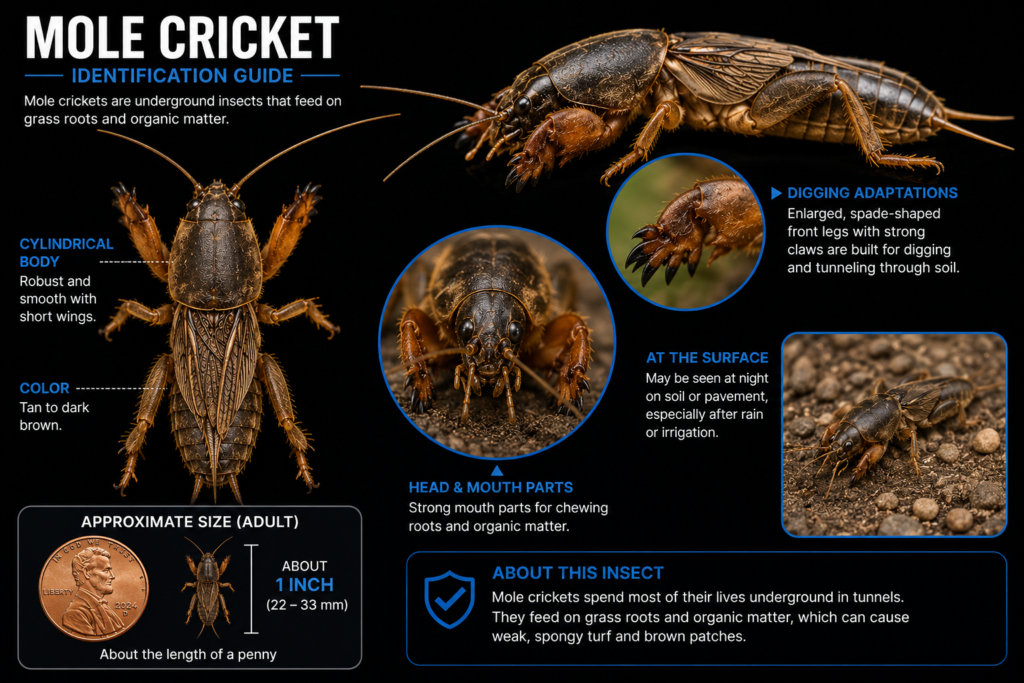
Mole Cricket Identification Guide
This Mole Cricket Identification Guide will help North Florida homeowners recognize mole crickets, understand the turf damage they can cause, and know where to look for evidence of activity. Unlike pests that primarily damage grass blades, mole crickets can disturb the roots and soil around the turf, causing grass to thin, weaken, or die.
If you’re seeing thinning, damaged, or declining turf, Bug Cops can help determine whether mole crickets or another lawn problem may be responsible.
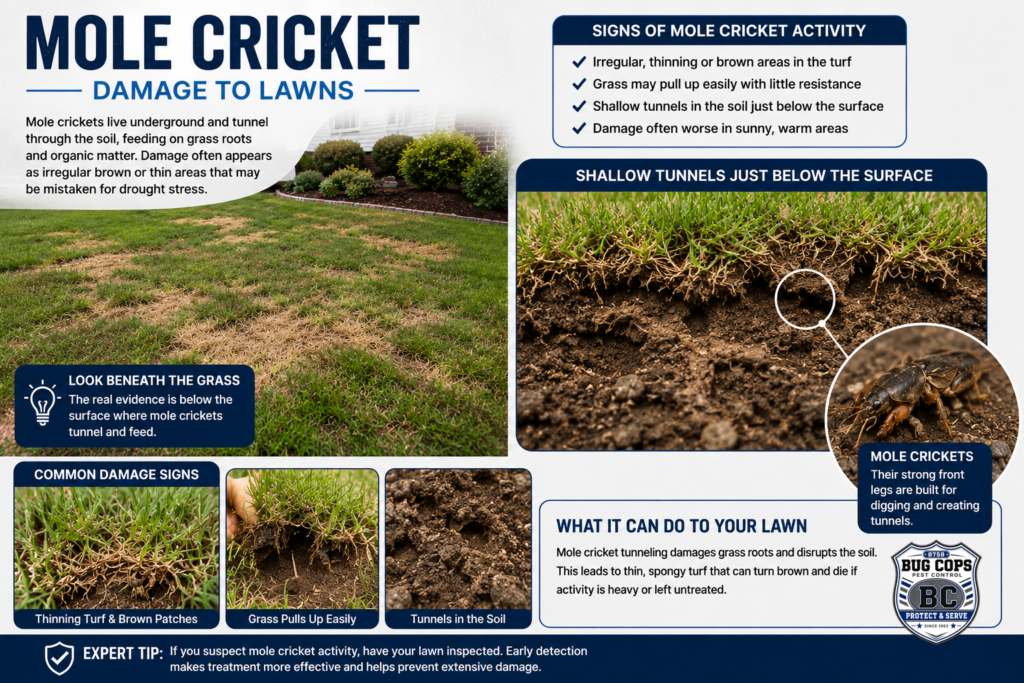
Mole Cricket Damage From Below the Surface
Mole crickets spend much of their lives in the soil, where their tunneling and feeding can damage turf from below. Their enlarged, shovel-like front legs are built for digging, allowing them to move through the soil just beneath the grass.
What Does a Mole Cricket Look Like?
Mole crickets are unusual-looking insects with cylindrical bodies, long antennae, and large front legs adapted for digging. Adults are generally about 1 inch long, although size varies by species and life stage.
Young mole crickets, called nymphs, resemble smaller adults but do not yet have fully developed wings.
What Does Mole Cricket Damage Look Like?
Mole cricket damage may appear as thinning, yellowing, or brown areas of turf, but what’s happening underneath the grass can provide some of the best clues.
When mole crickets are active, look beyond the color of the turf for signs that the soil itself has been disturbed:
- Raised or loosened areas of soil
- Small tunnels or ridges running just beneath the turf
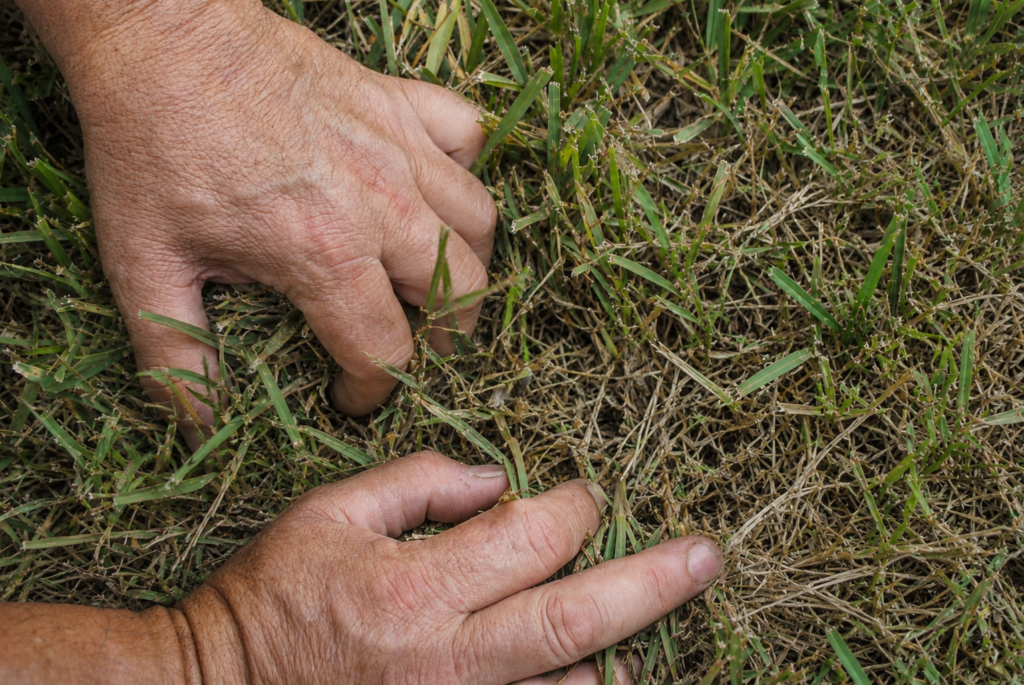
- Grass that feels unusually loose or poorly rooted
- Thinning or irregular patches of declining turf
- Areas that appear drought-stressed even when moisture is available
Where Should You Look for Mole Crickets?
Pay particular attention to areas where the turf is thinning and the soil appears disturbed. Mole crickets spend much of their time underground, so seeing the insect itself isn’t always the first clue. Tunneling near the soil surface can loosen turf and interfere with its root system. Their activity can also change with season, soil moisture, temperature, and life stage, so the evidence may not look exactly the same throughout the year.
Bug Cops provides Lawn and Ornamental Care Services throughout Clay and Putnam Counties, with programs built around the conditions we encounter in our local lawns and landscapes.

Identification Note: Is Something Moving Under the Turf? When declining grass is accompanied by loose soil, shallow tunneling, or turf that no longer seems firmly rooted, it’s worth looking below the surface. Mole cricket damage isn’t only about what the insect eats—their tunneling itself can disrupt the soil and roots. Finding that physical evidence can help distinguish mole cricket activity from other lawn problems that produce similar brown or thinning areas.
Not sure this is a mole cricket? Compare mole crickets with southern chinch bugs, tropical sod webworms and fall armyworms in our Turf Damaging Insect Identification Guide. For additional university-based information about identifying and managing insects found in Florida lawns, visit the UF/IFAS Extension lawn insect resources.
Mole Cricket Identification Guide FAQs
Mole crickets spend much of their time below the surface in the soil and root zone. Areas with thinning turf, loose soil, shallow tunneling, or poorly rooted grass can be useful places to investigate for activity.
Mole cricket damage may appear as thinning, yellowing, or irregular brown areas. Because mole crickets tunnel beneath the turf, disturbed soil, shallow ridges, and grass that feels loose or poorly rooted can provide important clues.
Adult mole crickets are generally about 1 inch long, although size varies by species and life stage. Their enlarged, shovel-like front legs are one of their most distinctive identification features.
Both mole cricket activity and water stress can cause turf to thin, weaken, or turn brown. Looking below the surface for disturbed soil, tunneling, root damage, and actual insect activity can help distinguish mole cricket damage from an irrigation or environmental problem.
Yes. Mole crickets spend much of their lives underground, so homeowners may notice declining turf before seeing the insects themselves. Their tunneling and disturbance of the soil and roots may provide better clues than simply looking for an adult mole cricket.
Not Sure What’s Damaging Your Lawn?
Brown spots, thinning turf, and damaged grass don’t always tell the whole story. Bug Cops looks at the damage pattern, turf condition, environmental factors, and evidence of pest activity to help determine what’s actually happening before recommending the appropriate next step.
Protecting & Serving Clay & Putnam Counties Since 1993
The right lawn care starts with identifying the problem correctly. Don’t guess. Bug Cops offers free Lawn and Ornamental inspections if you’d like us to take a closer look.