Turf-Damaging Insect Identification Guide
This Turf-Damaging Insect Identification Guide will help North Florida homeowners recognize four common lawn pests—chinch bugs, mole crickets, sod webworms, and fall armyworms—and understand the clues they can leave behind.
Brown, yellow, or thinning areas in a lawn don’t automatically mean insects are responsible. Drought stress, irrigation problems, disease, soil conditions, and other issues can sometimes create symptoms that look very similar to insect damage.
That’s why identifying the cause matters. Chinch bugs, mole crickets, sod webworms, and fall armyworms damage turf in different ways, and knowing where to look and what evidence to look for can help separate an insect problem from another lawn condition.
In this guide, we’ll look at each pest individually, including what it looks like, how it damages turf, where activity may appear, and some of the clues that can help with identification.
Meet the Turf-Damaging Insects
Several insects can damage North Florida lawns, but they don’t all feed the same way or leave the same clues behind. Knowing what to look for can help distinguish insect activity from other conditions that may cause similar-looking turf damage.
Southern Chinch Bug
Small sap-feeding insects particularly associated with St. Augustinegrass. Damage commonly appears as yellowing or browning turf, often first noticed in sunny, water-stressed areas and along sidewalks or buildings.
Mole Cricket
A soil-dwelling pest that can damage turf through feeding and tunneling. Turf may become thin, develop dead patches, have little root mass, or even look drought-stressed despite adequate irrigation.
Tropical Sod Webworm
The damaging stage is the caterpillar, which feeds primarily at night and hides in thatch during the day. Early feeding can be subtle; heavier feeding can produce yellow or brown patches and noticeably chewed grass blades.
Fall Armyworm
A turf-feeding caterpillar that can damage lawns quickly when populations are high. Fall armyworms chew grass blades and may cause thinning, browning, or bare areas that can seem to spread across the lawn. Mature larvae can often be recognized by the pale, inverted “Y” marking on the head.
Similar Damage Doesn’t Mean the Same Pest
Chinch bugs, mole crickets, sod webworms, and fall armyworms can all leave a lawn looking thin, yellow, or brown, but the way they damage turf is very different. Some feed on grass blades, some feed near the base of the plant, and others disturb the roots and soil below the surface. That’s why identifying the insect and the evidence it leaves behind matters before deciding what the lawn needs.
Explore the individual guides: Southern Chinch Bug Identification Guide · Mole Cricket Identification Guide · Tropical Sod Webworm Identification Guide · Fall Armyworm Identification Guide
Lawn Pest Inspection in the Field
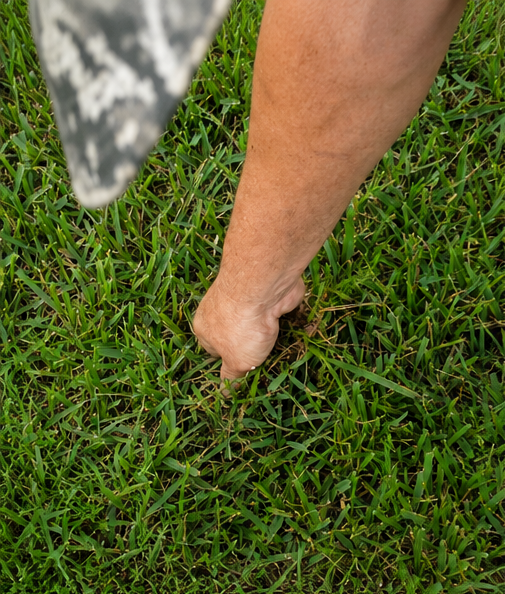
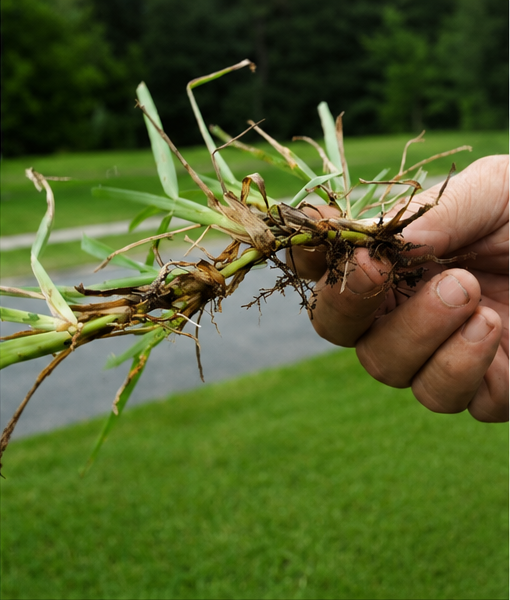
A lawn inspection involves more than looking at the color of the grass. We may pull back the turf, examine the roots and thatch, and look closely at individual grass blades for feeding damage, insects, disease symptoms, or other clues. Each layer of the lawn can tell us something different, and putting those observations together helps determine what may actually be causing the problem.
Pulling Up the Turf
Examining Roots and Thatch
Inspecting the Grass Blades
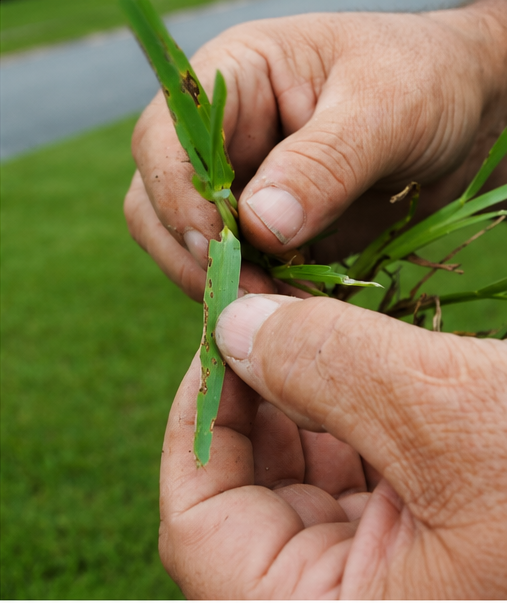

Inspection Note: Don’t diagnose the lawn by color alone. Brown turf tells us where to start looking—it doesn’t tell us the cause. The pattern of damage, turf species, environmental conditions, and evidence of insect activity all help determine what’s actually happening.
Same Brown Lawn. Different Clues.
Brown or thinning turf can look similar at first glance, even when the insects responsible are very different. Comparing how the turf is being damaged, what evidence is present, and where that evidence is found can help point the investigation in the right direction.
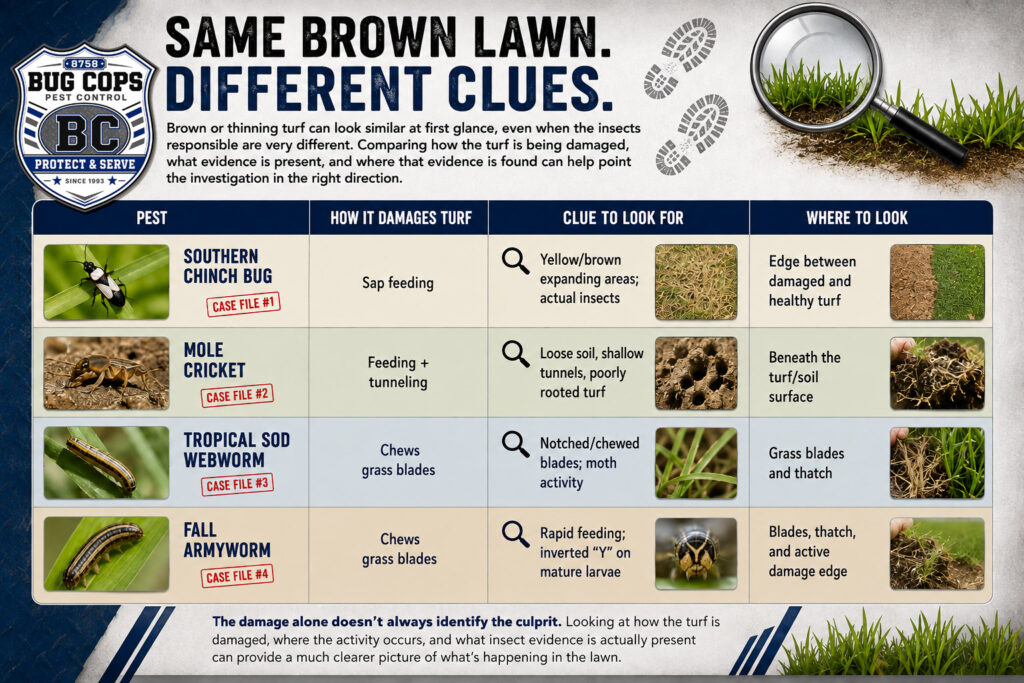
The damage alone doesn’t always identify the culprit. Looking at how the turf is damaged, where the activity occurs, and what insect evidence is actually present can provide a much clearer picture of what’s happening in the lawn.
When It May Not Be an Insect Problem
Not every brown, yellow, or thinning area in a lawn is caused by a turf pest. Environmental conditions, lawn care practices, and other problems can create symptoms that resemble insect damage, which is why looking at the whole picture matters.
Too Much or Too Little Water
Irrigation coverage, drought stress, poor drainage, or persistently wet soil can affect turf health.
Disease
Some turf diseases can produce yellow, brown, thinning, or irregular patches that resemble insect injury
Nutrient Problems
Deficiencies or improper fertility can affect color, growth, and overall turf strength.
Soil Conditions
Compaction, poor drainage, root-zone problems, or other soil conditions can weaken turf.
Environmental Stress
Excessive heat, shade, traffic, seasonal changes, and other stresses can affect how a lawn looks and performs.
Mowing Practices
Cutting turf too short or repeatedly scalping areas can stress the grass and create damaged-looking patches.
Inspection Note: What Changed Before the Lawn Changed? When investigating turf damage, what’s happening around the damaged area can be just as important as what’s happening in it. Irrigation coverage, drainage, sunlight, mowing, recent weather, and changes around the property can all provide clues. Finding insects is evidence; simply finding brown grass isn’t.
Turf-Damaging Insect Identification Guide FAQs
No. Brown, yellow, or thinning turf can result from insect activity, but irrigation problems, drought stress, disease, soil conditions, nutrient issues, mowing practices, and other environmental stresses can produce similar symptoms. The pattern of damage and evidence found during an inspection help narrow down the cause.
Southern chinch bugs, mole crickets, tropical sod webworms, and fall armyworms are among the turf-damaging insects homeowners may encounter. Each damages turf differently, which is why identifying the pest present is important before deciding what the lawn needs.
Different turf pests spend their time in different places. Mole crickets may be below the soil surface, sod webworm caterpillars can hide in the thatch during the day, and chinch bugs may be concentrated near the base of the grass. Where and when you look can make a difference.
Yes. Tropical sod webworms and fall armyworms both chew grass blades, while several other lawn problems can also create thinning or brown areas. Looking at the type of feeding damage, where activity occurs, and the insect itself can help distinguish one problem from another.
Start with an inspection rather than assuming brown turf needs an insect treatment. Look at the damaged area, surrounding turf, grass blades, thatch, roots, soil conditions, and irrigation coverage for clues. If the cause still isn’t clear, Bug Cops can inspect the property and help determine what’s actually happening.
For additional university-based information about identifying and managing insects found in Florida lawns, visit the UF/IFAS Extension lawn insect resources.
Not Sure What’s Damaging Your Lawn?
Brown spots, thinning turf, and damaged grass don’t always tell the whole story. Bug Cops looks at the damage pattern, turf condition, environmental factors, and evidence of pest activity to help determine what’s actually happening before recommending the appropriate next step.
The right lawn care starts with identifying the problem correctly. Don’t guess. Bug Cops offers free Lawn and Ornamental inspections if you’d like us to take a closer look.