
Fire Ant Identification Guide for Clay & Putnam Counties
This Fire Ant Identification Guide will help you recognize fire ants, identify common signs of activity, understand where colonies may be found, and learn what clues can help distinguish fire ants from other ants around your property.
Fire ants commonly live in lawns, landscapes, fields, roadsides, and other open areas throughout Florida. Their colonies can become especially noticeable when mounds appear in turf or disturbed soil, but not every active colony produces an obvious mound at all times.
One useful identification clue is the appearance of the workers. Fire ant workers can vary noticeably in size within the same colony and are generally reddish-brown, with darker coloration toward the abdomen. However, color alone should not be used to identify a fire ant because several other ants can appear reddish or brown.
Fire ants also aggressively defend their colonies when disturbed. Workers may rapidly emerge from a mound or nesting area and sting repeatedly, so avoid disturbing a suspected colony just to see what comes out.
Not sure whether the ants or mound you’ve found are fire ants? Take a clear photo and send it to Bug Cops. We’ll help you identify the ants.
Concerned about fire ant activity around your property? Bug Cops offers free home inspections for homeowners in Clay and Putnam Counties.
What Do Fire Ants Look Like?
Fire ants are small to medium-sized ants with six legs, elbowed antennae, a narrow waist, and two waist nodes. One of their most useful identification features is that workers within the same colony can vary noticeably in size.
Fire ants typically have:
- Six legs
- Two elbowed antennae
- Two waist nodes
- A narrow waist between the thorax and abdomen
- Reddish-brown coloration with a darker abdomen
- Workers of noticeably different sizes within the same colony
- Strong mandibles and a stinger
Individual workers can be difficult to identify from appearance alone, particularly when they’re very small. Color can also vary, so a reddish-brown ant should not automatically be identified as a fire ant.
Worker Size Is an Important Clue
A fire ant colony contains workers of different sizes. You may see small workers and much larger workers traveling or defending the same colony, even though they belong to the same species.
That size variation is useful because homeowners sometimes assume they’re seeing several different kinds of ants when they’re actually looking at different-sized workers from one fire ant colony.
Look at several clues together:
Worker size → Waist nodes → Color pattern → Mound/nesting location → Behavior
And behavior can be particularly informative. When a fire ant colony is disturbed, numerous workers may rapidly emerge and defend the nesting area. Don’t intentionally disturb a suspected mound simply to test this behavior.
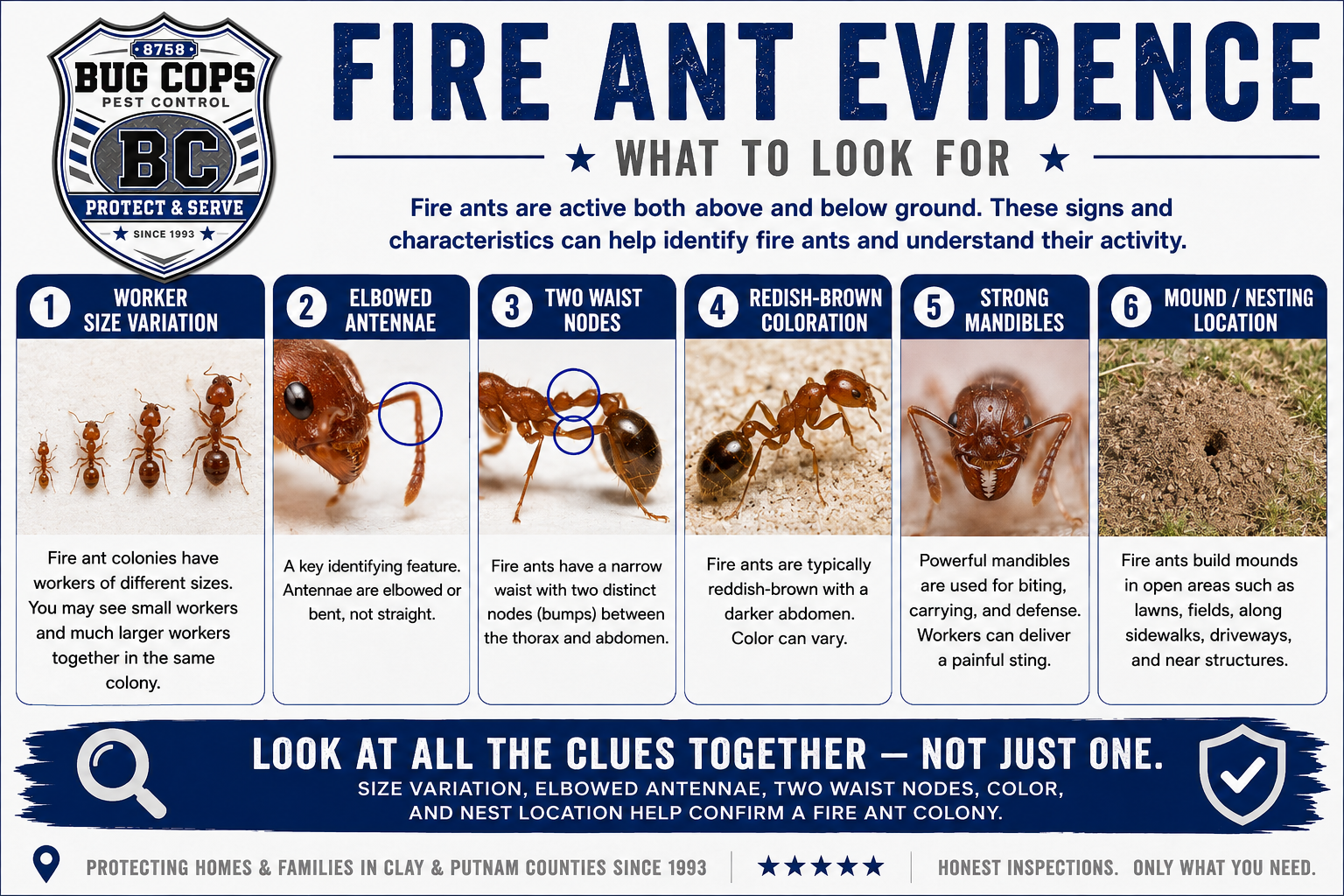
Fire ants have elbowed antennae, two waist nodes, and workers that can vary noticeably in size. Identification is strongest when those features are considered together with nesting location and behavior.

Identification Note: Don’t identify a fire ant from color alone. Compare worker sizes, waist nodes, nesting location, mound characteristics, and behavior—and avoid disturbing a suspected colony simply to see how the ants respond.
Fire Ants — Or Something Else?
Native Fire Ant
Solenopsis geminata
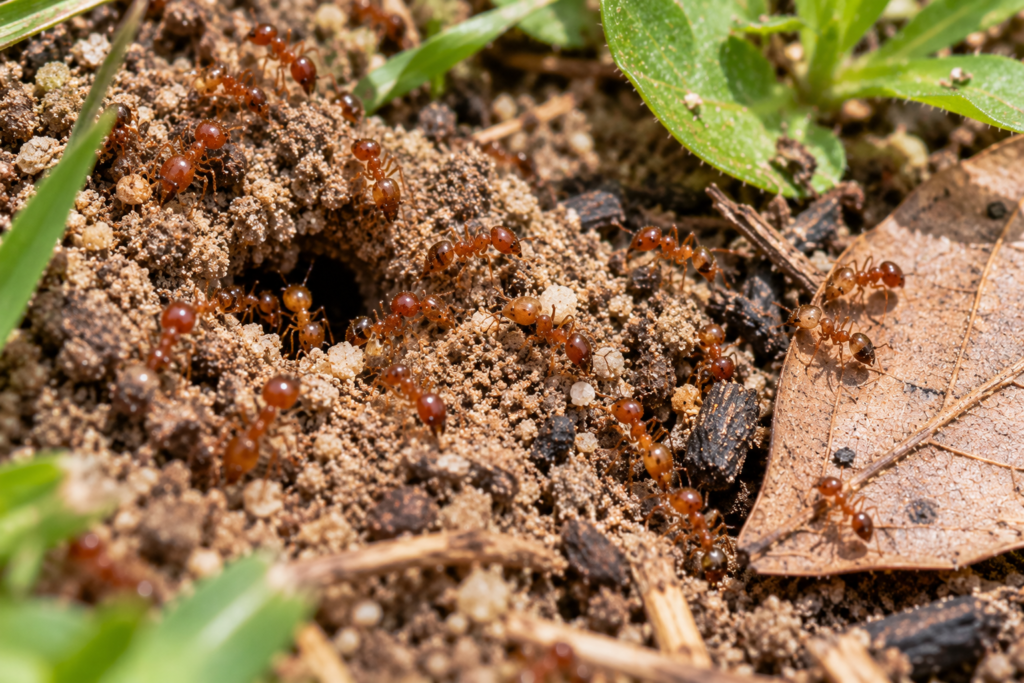
Native fire ants can be difficult to distinguish from red imported fire ants at a quick glance. Workers may range from reddish-brown to darker coloration, and different-sized workers can occur within the same colony.
Their nests may occur in soil and disturbed areas, but mound appearance can differ. Native fire ant nests may appear more irregular or crater-like rather than forming the typical raised mound commonly associated with imported fire ants.
Identification clue: Similar coloration + different-sized workers + two waist nodes, but mound characteristics may provide another clue.
Bigheaded Ant
Pheidole megacephala
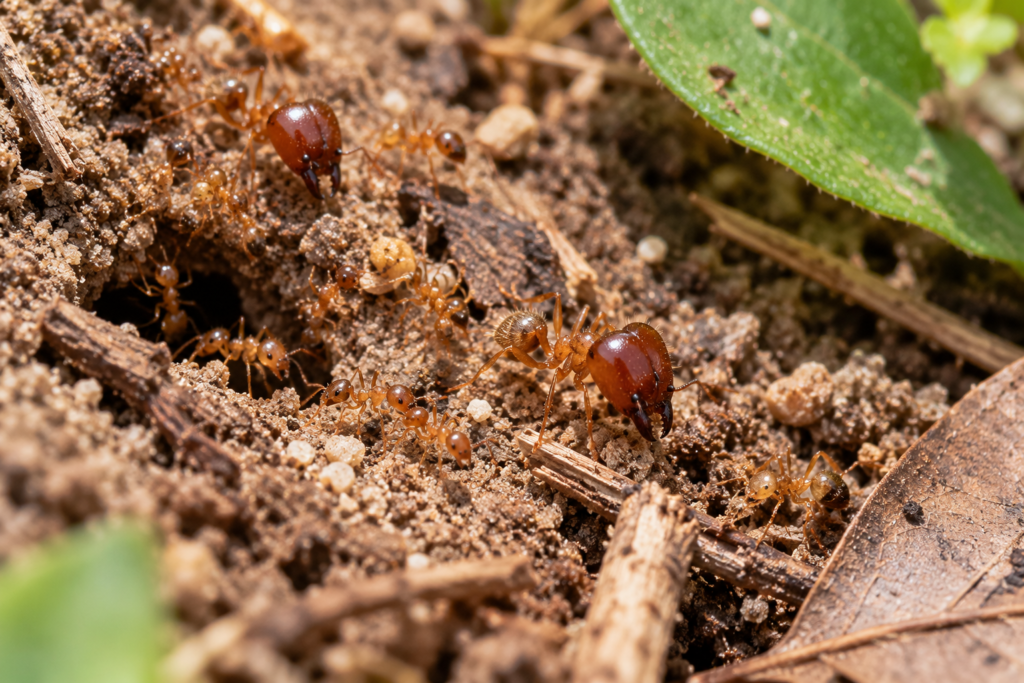
Bigheaded ants are small, ground-nesting ants whose soil activity can sometimes be mistaken for fire ant activity. Their colonies contain different worker forms, including distinctive major workers with disproportionately large heads.
They may form trails and nest around lawns, foundations, pavement edges, landscaping, and other disturbed areas. Unlike fire ants, the presence of those unusually large-headed workers provides a very useful visual clue.
Identification clue: Look for the colony’s unmistakable large-headed major workers.
Little Fire Ant
Wasmannia auropunctata

Little fire ants are extremely small, generally golden to light reddish-brown ants that can deliver a noticeable sting despite their tiny size. Their small size alone makes them quite different from the range of worker sizes typically seen in red imported fire ant colonies.
They may occur in protected, moist environments and around vegetation rather than producing the large, obvious soil mounds homeowners commonly associate with imported fire ants.
Identification clue: Extremely tiny size + golden-brown coloration + painful sting, without the typical large raised fire-ant mound.
For more information about identifying ants commonly found in Florida, visit the UF/IFAS Extension guide to Florida pest ants.
Field Note: A reddish or brown ant near disturbed soil isn’t automatically a red imported fire ant. Worker size, waist nodes, mound characteristics, head shape, nesting location, and behavior can all provide useful clues.
Identification Note: Fire ant identification can be difficult from appearance alone. Consider the ants and the nest together, and don’t intentionally disturb a suspected colony simply to test whether the workers sting.
Where Are Fire Ants Found Around the Home?
Fire ants are primarily ground-nesting ants and tend to establish colonies where soil conditions, sunlight, moisture, and access to food are suitable. Mounds may be obvious in some locations, while other colonies can be much less noticeable.
Lawns & Open Turf
Fire ant colonies are commonly found in sunny lawns and other open grassy areas. Mounds may become especially noticeable after rain or when soil has recently been disturbed.
Along Driveways & Sidewalks
Colonies may develop beside driveways, sidewalks, curbs, patios, and pavement edges, where soil provides protected nesting space close to warm, open areas.
Landscaping & Garden Areas
Fire ants may nest around flower beds, landscape borders, shrubs, mulch, gardens, and other maintained areas. Mounds can sometimes blend into loose or recently worked soil.
Around Utility Equipment
Fire ants may establish colonies near utility boxes, irrigation equipment, air-conditioning units, meters, and other outdoor equipment. Activity around electrical or mechanical equipment should be approached cautiously rather than disturbed.
Fields & Disturbed Soil
Pastures, fields, roadsides, vacant areas, construction zones, and other disturbed ground can provide suitable habitat. Fire ants can establish colonies quickly where soil has been moved or vegetation disrupted.
Near Frequently Used Outdoor Areas
Mounds may occur near walkways, mailboxes, play areas, pet areas, gates, sheds, and other places people regularly use. Their location can be particularly important because accidental disturbance increases the chance of contact with defensive workers.
Identification Note: Don’t judge fire ant activity only by the size of a visible mound. Look at where soil disturbance and worker activity are occurring, especially around frequently used areas, landscaping, pavement edges, and outdoor equipment.
Signs of Fire Ant Activity
Fire ant activity may be noticeable from the nest itself, the workers around it, or changes in activity after weather or soil disturbance. Mounds, different-sized workers, foraging activity, defensive behavior, and winged ants can all provide useful clues.
Raised Soil Mounds
Fire ant colonies commonly produce mounds of loose soil in lawns, fields, and other open areas. Mounds can vary considerably in size and may become more noticeable after rain or changes in soil conditions.
Workers of Different Sizes
Fire ant colonies contain workers that can vary noticeably in size. Seeing small and larger reddish-brown workers associated with the same nesting area can provide a useful identification clue.
Active Foraging Workers
Workers may travel away from the nest while searching for food. Activity can occur around lawns, pavement edges, landscaping, pet areas, trash areas, or other locations where food resources are available.
Rapid Defensive Activity
When a colony is accidentally disturbed, numerous workers may quickly emerge and defend the nesting area. Don’t intentionally disturb a suspected mound to test this behavior.
New or Reappearing Mounds
Mounds may become visible in new locations or reappear after soil disturbance, rainfall, mowing, landscaping, or other changes around the property. Visible mound activity can change even while the colony remains present.
Winged Fire Ants
Established colonies may produce winged reproductive ants, particularly during favorable seasonal conditions. Winged ants should be identified carefully because several ant species produce swarmers.
Real Fire Ant Evidence
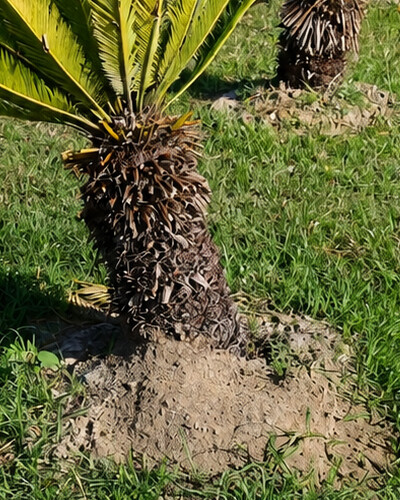
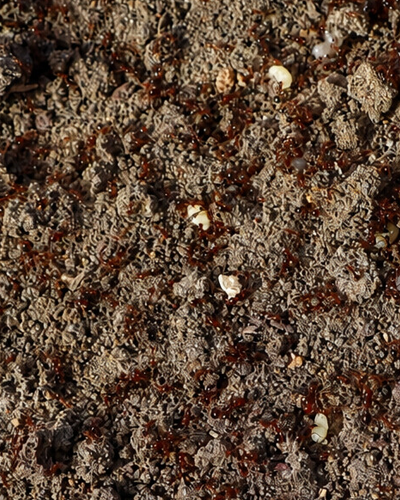
Fire ant colonies can reveal themselves through mounds, worker activity, and evidence hidden beneath the soil. These photos show actual fire ant activity documented by Bug Cops during field inspections.
Active Fire Ant Mound
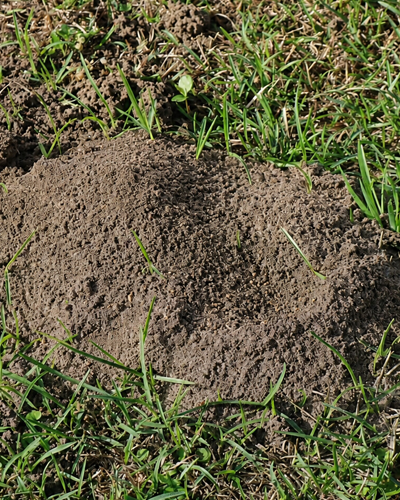
Active Mound in Landscape
Fire Ant Brood
Photos from the Bug Cops field evidence collection.
Identification Note: Fire ant evidence is strongest when several clues occur together. Consider mound characteristics, worker-size variation, activity around the nest, and where the colony is located rather than relying on color alone.
Why Am I Seeing Fire Ants?
Fire ants establish colonies where they find suitable soil, moisture, warmth, food, and open nesting conditions. Activity around a property can change over time as colonies grow, weather changes, or new areas become suitable for nesting.
Landscaping or Soil Was Disturbed
Construction, gardening, irrigation work, mowing, landscaping, or moving soil can alter nesting conditions and make existing colonies more noticeable—or create suitable areas for colonies to establish.
A Colony Has Become Established
A visible mound represents only part of the colony. Workers, brood, queens, and underground chambers can extend below and around the visible soil, so mound size alone doesn’t reveal everything happening beneath the surface.
Fire Ants Have Spread Into a New Area
Winged reproductive ants can establish new colonies after mating flights, and colonies may also expand or relocate as conditions change. New fire ant activity can therefore appear in parts of a property that previously had no obvious mound.
The Property Provides Suitable Soil
Lawns, landscaped areas, disturbed ground, pavement edges, and other areas with accessible soil can provide suitable places for fire ants to establish colonies.
Food Is Available Nearby
Fire ants are opportunistic feeders. Workers may forage for insects, other small animals, sugary materials, food scraps, pet food, and other available resources around a property.
Weather Has Changed Their Activity
Rainfall, heat, dry periods, and seasonal conditions can influence where fire ants forage and how visible their mounds become. A mound that suddenly appears may represent activity that was less noticeable before.
Identification Note: A new mound doesn’t necessarily mean fire ants arrived overnight. Weather, soil disturbance, colony growth, and changes in mound visibility can make established activity suddenly easier to notice.
Fire Ant Prevention & Property Awareness
Fire ant management is less about guaranteeing that colonies will never appear and more about recognizing new activity early, keeping important areas easier to inspect, and paying attention to places where people and pets regularly spend time.
Watch for New Mounds
Periodically look over lawns and other open areas for new soil mounds or changes in existing mounds. Activity may become more noticeable after rainfall, mowing, landscaping, or other soil disturbance.
Keep Frequently Used Areas Visible
Pay particular attention around walkways, play areas, pet areas, mailboxes, gates, patios, and other places people regularly use. Keeping these areas reasonably visible can make new mound activity easier to notice.
Pay Attention After Rain or Soil Disturbance
Rainfall, irrigation, construction, gardening, and landscaping can make fire ant activity more noticeable. Check recently disturbed areas rather than assuming a new mound means the colony arrived overnight.
Check Landscaping & Property Edges
Inspect around landscape beds, pavement edges, curbs, mulch, garden areas, and transitions between turf and other surfaces, where colonies may establish without immediately drawing attention.
Be Careful Around Outdoor Equipment
Watch for fire ant activity around utility boxes, irrigation equipment, air-conditioning units, meters, and other outdoor equipment. Avoid disturbing suspected colonies around electrical or mechanical equipment.
Act on Recurring Activity
If mounds repeatedly appear in the same area or fire ant activity continues around frequently used parts of the property, document where you’re finding it. Recurring activity can provide useful information about where colonies are concentrated.
Finding fire ant mounds around your property? Bug Cops Pest Control can help control existing fire ant activity and provide preventative management to help reduce future colony activity around your home.
Identification Note: Fire ant awareness starts with knowing where activity matters most. Watch frequently used areas, note where mounds appear or reappear, and pay attention to changes after rain, landscaping, or soil disturbance.
When Should I Be Concerned About Fire Ants?
Finding a fire ant mound doesn’t always mean immediate danger, but where the colony is located, how much activity is present, whether mounds keep appearing, and how likely people or pets are to disturb the area can all affect how concerning the activity may be.
Mounds Are Near Walkways or Entrances
Colonies near sidewalks, driveways, gates, doorways, mailboxes, or other frequently traveled areas increase the chance that someone may accidentally step on or disturb the nesting area.
Fire Ants Are Near Play or Pet Areas
Mounds or active workers around play equipment, yards used by children, pet areas, kennels, or other regularly occupied spaces deserve particular attention because accidental contact is more likely.
Mounds Keep Appearing
Repeated mound activity around the same part of the property can indicate persistent fire ant activity even when individual mounds change location or become less visible.
Activity Is Around Outdoor Equipment
Fire ants around electrical boxes, irrigation equipment, air-conditioning units, meters, or other mechanical equipment deserve caution. Avoid disturbing colonies in or around equipment that could present an additional hazard.
Someone Is Being Stung Repeatedly
Repeated stings around a particular area can indicate that a colony is close to a place people regularly walk, work, garden, or spend time outdoors. The location of those encounters can help identify where activity is concentrated.
Multiple Colonies Are Present
Several active mounds across a lawn, landscape, field, or other property area can indicate more widespread fire ant activity rather than one isolated colony.
Concerned about fire ants around areas your family or pets regularly use? Bug Cops offers free home inspections to help evaluate the activity and determine the appropriate next step.
Identification Note: Fire ant concern is about more than mound size. Pay attention to where colonies are located, how often activity returns, whether multiple colonies are present, and how likely people or pets are to come into contact with them.
Fire Ant Identification FAQs
A mound can provide useful clues, but mound appearance alone cannot confirm fire ants. Look at the ants themselves, worker-size variation, nesting location, and activity around the colony. Fire ant mounds can also vary in size and visibility depending on soil and weather conditions.
Fire ant colonies naturally contain workers of different sizes. Small and larger workers can belong to the same colony, so seeing noticeably different-sized ants together does not necessarily mean several ant species are present.
Not necessarily. Fire ant mounds may not have a prominent central entrance like people sometimes expect. Workers can use openings around or away from the visible mound, and mound appearance can change with weather and soil conditions.
Rain and changing soil conditions can make mound-building activity more noticeable. A newly visible mound doesn’t necessarily mean the colony just arrived—existing activity may simply have become easier to see.
No. Other ants can be reddish or brown, and more than one ant species can sting. Color and sting behavior alone aren’t enough for confident identification. Worker size, waist nodes, mound characteristics, nesting location, and other clues should be considered together.
Not Sure If It’s a Fire Ant?
Fire ants can be difficult to identify because color, worker size, mound appearance, and behavior can overlap with other ant species found around North Florida properties.
Don’t guess. If you’ve found suspicious ants or a mound you don’t recognize, take a clear photo and send it to Bug Cops. We’ll help determine whether the ants may be fire ants—or something else.
Protecting & Serving Clay and Putnam Counties Since 1993
If fire ant mounds keep appearing around your property or activity is concentrated near walkways, play areas, pet areas, landscaping, or other frequently used spaces, Bug Cops Pest Control can evaluate the activity and determine the appropriate next step.