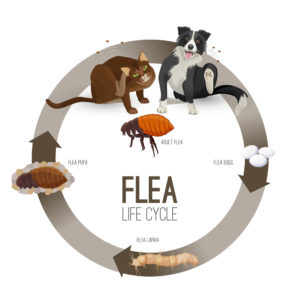
Fleas are usually dismissed easily as harmless parasites. After all, they aren't like ticks which are famous for Lyme disease in humans as well as dogs. It just seems that fleas aren't all that harmful to us. The number of cases reportedly in America caused from fleas are very minimal. However, they are tiny blood suckers that can are pathogens to carry diseases. Fleas can transmit diseases and parasites that infect animals and to humans. It is important to know about the different possible of health risk to you and your pets.
Flea Allergies and Infections
Flea saliva can cause skin irritation to family pets and to humans. In pets, they can cause a serious allergic reaction and with the intense of scratching can lead to skin infections. For humans, signs of flea-related skin allergies are scabs, bumps, redness, and itchiness.
Fleas and Parasites
Tapeworms are parasites that have found their home in the intestines of dogs, cats, and humans. While very uncommon in humans, it is possible that children can accidentally swallow an infected adult flea if playing in an flea infested area. For dogs and cats, they can consume an infected adult flea when they groom themselves.
Diseases Transmitted by Fleas
Cat Scratch Disease. The bacteria, Bartonella henselae, is very common in household cats. According to CDC, about 40% of felines, especially kittens, at some point. Many cats do not get sick while other cats completely recover after running a high fever for a couple of days. CDC does recommend taking your family feline to the veterinarian if they shows signs of lethargic, vomiting, swollen lymph nodes, and loss of appetite. Cats can pass this to humans, if scratched deep enough or by licking an open wound or areas around scabs.
Murine Typus. This is a rare bacterial disease caused by Rickettsia typhi and is transmitted by flea, tick, or mite bites. Scratching the bite opens the skin and allows the bacteria to enter into the bloodstream. Its not the actual bite that causes the bacterial infection but the feces when it comes into contact with wounds. The most common symptoms of typus is a rash, chills, fever, headache, nausea, vomiting, diarrhea, and dry cough.
Tularemia. This is caused by the Francisella tularensis bacteria and is known as "Rabbit Fever". It has the potential to be a fatal bacterial disease of rabbits and rodents. It can be transmitted to humans and other animals including domestic dogs and cats. It can be transmitted by a bite from a tick, flea, mites, mosquitos, or a deerfly that has been in contact with infected animal tissue. Although this is not a disease that naturally occurs in humans, we can still get sick from it. This is a rare infectious disease that attacks your skin, lungs, and eyes. Tularemia is worldwide but seems to be more prominent in the rural areas. This bacteria can live in water, soil, and dead animals.
Plague. An infectious disease caused by an infected flea with the Yersinia pestis bacteria. This is the same bacteria that killed over 25 million in the 14th Century; more popularly known as the "Black Plaque". This plaque is still active, with over 200+ recorded cases in America last year alone. Today, it is a rare occurrence and can be treated easily with common antibiotics, if caught early enough. The signs usually show up within seven days of being bitten. The pneumonic plaque has shortness of breath, cough, and chest pains. The septicemic form has the tissue of the infected area turn black and die. The bubonic form has swollen lymph nodes. For more information about the plaque that is transmitted by fleas: Centers for Disease Control and Prevention.
Bug Cops Pest Control does not need to use "scare tactics" in selling services. Our goal is to protect our community of potential pest-related diseases and parasites that can do you harm. We believe the best way of doing that is informing others of the dangers of pesky pests.
Your local veterinarian will be able to treat your family pet for any flea borne disease or parasite.

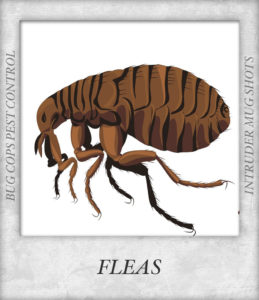 The most common domestic flea is the Cat flea (Ctenocephalides felis). The domesticated cat is their favorite host. However, they are not prejudice against other mammals. They will feed on dogs, rodents, raccoons, squirrels, and skunks.