
Termite Identification Guide for Clay & Putnam Counties
Termites can remain concealed while feeding on wood and other cellulose materials. Identifying the termite—or recognizing evidence such as shelter tubes, damaged wood, swarmers, or discarded wings—can help determine whether a structure may require a professional inspection.
Common Termite Suspects in Our Area
Florida properties may encounter several kinds of termites with different nesting habits, moisture requirements, and patterns of activity. Recognizing the suspect and where the evidence appears provides useful clues, but a professional inspection may be necessary for reliable identification.
Native Subterranean Termites
Native subterranean termites live in colonies in the soil and travel to wood through concealed pathways or earthen shelter tubes. Eastern and southeastern subterranean termites may attack structural wood near the ground and can remain hidden behind walls, flooring, or other building materials.
Formosan Subterranean Termites
Formosan subterranean termites are an invasive subterranean species capable of forming very large colonies. They commonly travel from the soil through shelter tubes but may also establish aboveground nesting material when a reliable moisture source is available. Professional identification is important because their activity can resemble that of native subterranean termites.
Drywood Termites
Drywood termites establish colonies entirely inside suitable wood and do not require contact with the soil. Evidence may include small piles of hard, pellet-like droppings, tiny kick-out holes, discarded wings, or damaged wood. Because colonies remain concealed within the wood, locating all areas of activity can be difficult.
How to Tell Termite Swarmers from Winged Ants
Termite swarmers and winged ants are frequently mistaken for one another. The antennae, waist, and relative lengths of the wings provide helpful clues, although close examination may be necessary for a reliable identification.
Termite Swarmers
- Straight, bead-like antennae
- Broad body without a pinched waist
- Two pairs of wings approximately equal in length
- Wings may extend well beyond the body
- Frequently leave discarded wings near windows, doors, or other light sources
Winged Ants
- Bent or elbowed antennae
- Narrow, visibly pinched waist
- Front wings noticeably longer than the rear wings
- Body shape usually shows three distinct sections
- May emerge from colonies indoors or outdoors
Swarmers are reproductive members of established colonies. Finding them indoors—or discovering piles of discarded wings—deserves further investigation. Bug Cops Pest Control can examine the evidence and help determine whether the suspects are termites or winged ants.
Why Proper Termite Identification Matters
Termite groups differ in where they establish colonies, how they enter structures, the evidence they leave behind, and the treatment methods used to address them. Identifying the termite—and determining where its activity originates—is essential when selecting an appropriate approach.
Different Habitats
Subterranean termites maintain a connection to the soil or another dependable moisture source and may travel through earthen shelter tubes. Drywood termites establish colonies entirely within suitable wood and require no contact with the ground.
Different Evidence
Subterranean activity may produce shelter tubes, concealed wood damage, or swarmers emerging near the structure. Drywood termites commonly leave hard fecal pellets, small kick-out holes, discarded wings, or damage concealed inside wood.
Different Approaches
A treatment designed for subterranean termites may not address a drywood termite colony concealed inside structural wood or furniture. The species, location, extent of activity, and construction of the property all influence the recommended approach.
Bug Cops Pest Control examines the visible evidence, surrounding conditions, and accessible areas of the structure before recommending a treatment plan. The objective is to identify the activity accurately and address the colony—not simply remove the evidence currently visible.
Signs Termite Activity May Be Nearby
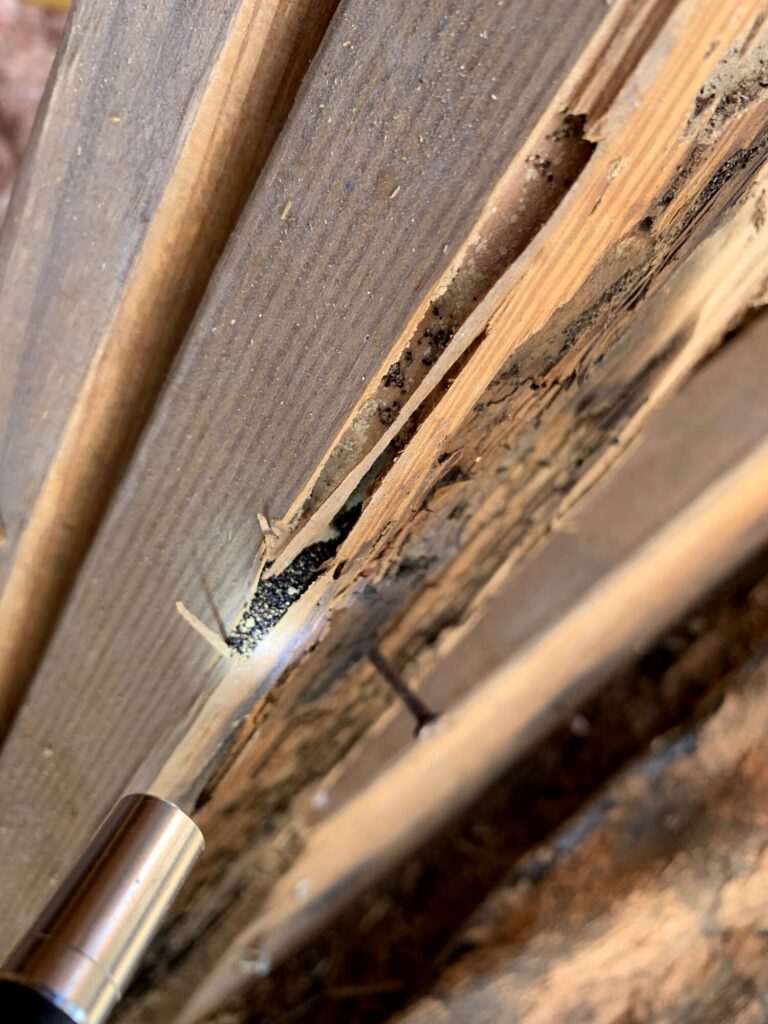
Termites often remain concealed, but the evidence they leave behind may reveal activity. One sign alone may not confirm an active infestation; however, repeated or concentrated evidence deserves professional investigation.
- Earthen shelter tubes along foundations, piers, walls, or framing
- Wood that appears blistered, hollow, weakened, or easily punctured
- Termite swarmers emerging indoors or close to the structure
- Piles of discarded wings near windows, doors, or lights
- Hard, pellet-like droppings accumulating beneath wood
- Small holes where drywood termites expel pellets
- Damage concealed beneath paint, flooring, trim, or wall coverings
- Moisture problems or wood positioned close to the soil
Termite Activity Found During an Inspection
What This Evidence Can Reveal
- A possible concealed travel route
- Activity entering through a small structural opening
- Moisture or soil conditions supporting termite movement
- An area requiring closer inspection
- A potential connection between the soil and structure
Termites can travel through extremely small concealed openings. During this inspection, Chief Bob located suspected activity within a foundation crack and documented a termite emerging from the area. Field observations like this help establish where the activity may be entering or traveling before a treatment approach is recommended.

Clues That Can Help Identify Termite Activity
When requesting an identification, photographs of the evidence and its location can be as useful as a close-up of the insect. Avoid disturbing damaged wood, shelter tubes, or concentrated activity simply to obtain a photograph.
What to Notice
- Where the activity or damage was discovered
- Earthen shelter tubes or mud-like material
- Soft, blistered, hollow, or easily punctured wood
- Small holes or pellet-like droppings beneath wood
- Discarded wings near windows, doors, or lights
- Whether the insects emerged from soil or wood
- Moisture, leaks, or wood positioned near the soil
- The approximate size and color of the insects
Helpful Photographs
- A close view of the insects when safely possible
- Any shelter tubes, droppings, wings, or damaged wood
- The opening from which the insects emerged
- A wider view showing the evidence’s location
- Nearby foundation, framing, flooring, or trim
- Any visible moisture or water-damaged material
- An undamaged object nearby for safe size comparison
- Multiple angles taken without disturbing the activity
Clear photographs may help Bug Cops evaluate the evidence, but termite species and the extent of an infestation cannot always be determined from images alone. A professional inspection may be recommended before treatment options are discussed.
Termite Identification FAQs
Not Sure Whether It’s Termite Activity?
Send Bug Cops Pest Control clear photographs of the insects, discarded wings, shelter tubes, droppings, damaged wood, and the surrounding area. We may be able to help evaluate the evidence and let you know whether an on-site termite inspection is recommended.