
Stinging Insect Control in Clay & Putnam Counties
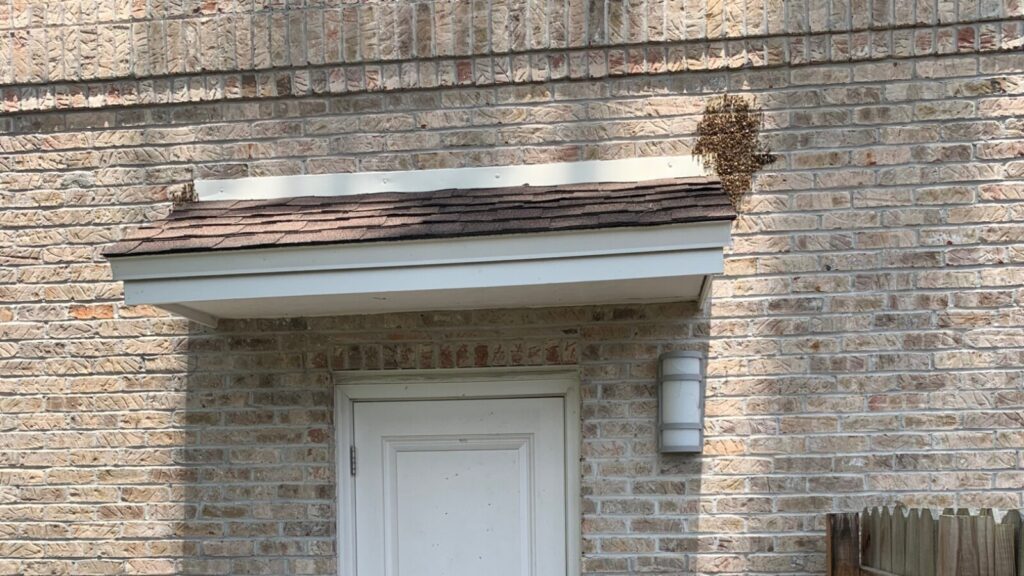
Bees, wasps, hornets, yellow jackets, and other stinging insects can become a serious concern when they build nests near doors, rooflines, walkways, or frequently used outdoor areas. Bug Cops evaluates the activity, identifies the likely nesting location, and recommends an appropriate approach for properties throughout Clay and Putnam Counties.
Why Stinging Insects Require Careful Attention
Bees, wasps, hornets, and yellow jackets may build nests in wall openings, rooflines, soffits, sheds, trees, and other areas around a property. When a nest is located near an entrance, walkway, play area, or frequently used outdoor space, the risk of painful stings increases.
Attempting to disturb or remove an active nest without the proper protective equipment can cause the insects to defend it aggressively. Bug Cops evaluates the activity, identifies the likely nesting location, and determines an appropriate approach based on the insect and its surroundings.
Stinging Insects We Commonly Handle
Different stinging insects have different nesting habits and levels of defensiveness. Proper identification helps determine where the nest may be located and how the activity should be addressed.
Bees
Bees may gather or establish colonies around rooflines, wall openings, trees, sheds, and other protected spaces. Activity near an entrance or occupied area should be evaluated carefully.
Wasps & Hornets
Wasps and hornets may build exposed or concealed nests beneath eaves, around structures, in shrubs, or inside wall openings. They can become highly defensive when their nest is disturbed.
Yellow Jackets
Yellow jackets frequently nest underground or inside concealed structural spaces. Their nests may be difficult to locate, and disturbing the surrounding area can trigger aggressive activity.
How Bug Cops Approaches Stinging Insect Control
Successful control begins with identifying the insect, locating the nesting area, and evaluating how close the activity is to people, pets, entrances, and other frequently used spaces.
1. Inspect & Identify
We examine the activity, nesting location, surrounding structure, and insect characteristics to determine what type of stinging insect is present.
2. Evaluate the Risk
We consider the nest location, level of activity, and proximity to doors, walkways, play areas, pets, and other occupied spaces.
3. Recommend an Approach
Based on what we find, we recommend an appropriate treatment or control approach and explain practical steps that may help discourage future nesting.
Signs a Stinging Insect Nest May Be Nearby
Seeing an occasional bee or wasp does not necessarily mean a nest is present. Repeated or concentrated activity around one location, however, may indicate a nearby nesting site.
- Insects repeatedly entering the same opening
- Activity concentrated around a roofline, soffit, wall, or shed
- A visible paper nest beneath an eave or branch
- Insects frequently flying close to the ground
- Increased activity near doors, walkways, or outdoor seating
- Buzzing or movement coming from inside a wall
- Defensive behavior when someone approaches a particular area
Stinging Insect Control FAQs
Stinging Insects Too Close for Comfort?
Whether you are seeing repeated activity near a doorway, discovering a nest around the roofline, or hearing buzzing inside a wall, Bug Cops can evaluate the situation and recommend an appropriate approach for your property.