Ant Control Services in Clay & Putnam Counties
Ant Control Services in Clay & Putnam Counties starts with identifying the ant and understanding where the colony may be located. Ants may be small, but the colony behind them can create a much larger problem. Bug Cops Pest Control identifies the type of ant, locates the source of the activity, and provides targeted treatment for homes and businesses throughout both counties.
Why Ant Control Matters
The ants you see are usually only a small portion of a much larger colony. Some store-bought sprays kill visible ants but never reach the nest. Repellent products can also cause certain ant colonies to scatter or split, creating new areas of activity instead of resolving the original problem.
Effective ant control begins with proper identification. Different ants have different nesting habits, food preferences, and treatment requirements. Bug Cops follows the activity, identifies likely nesting areas, and selects a targeted approach designed for the specific ant problem.
Ant Problems We Commonly Handle
Different ants require different solutions. Proper identification helps determine where they may be nesting and how the colony should be addressed.
Household Ants
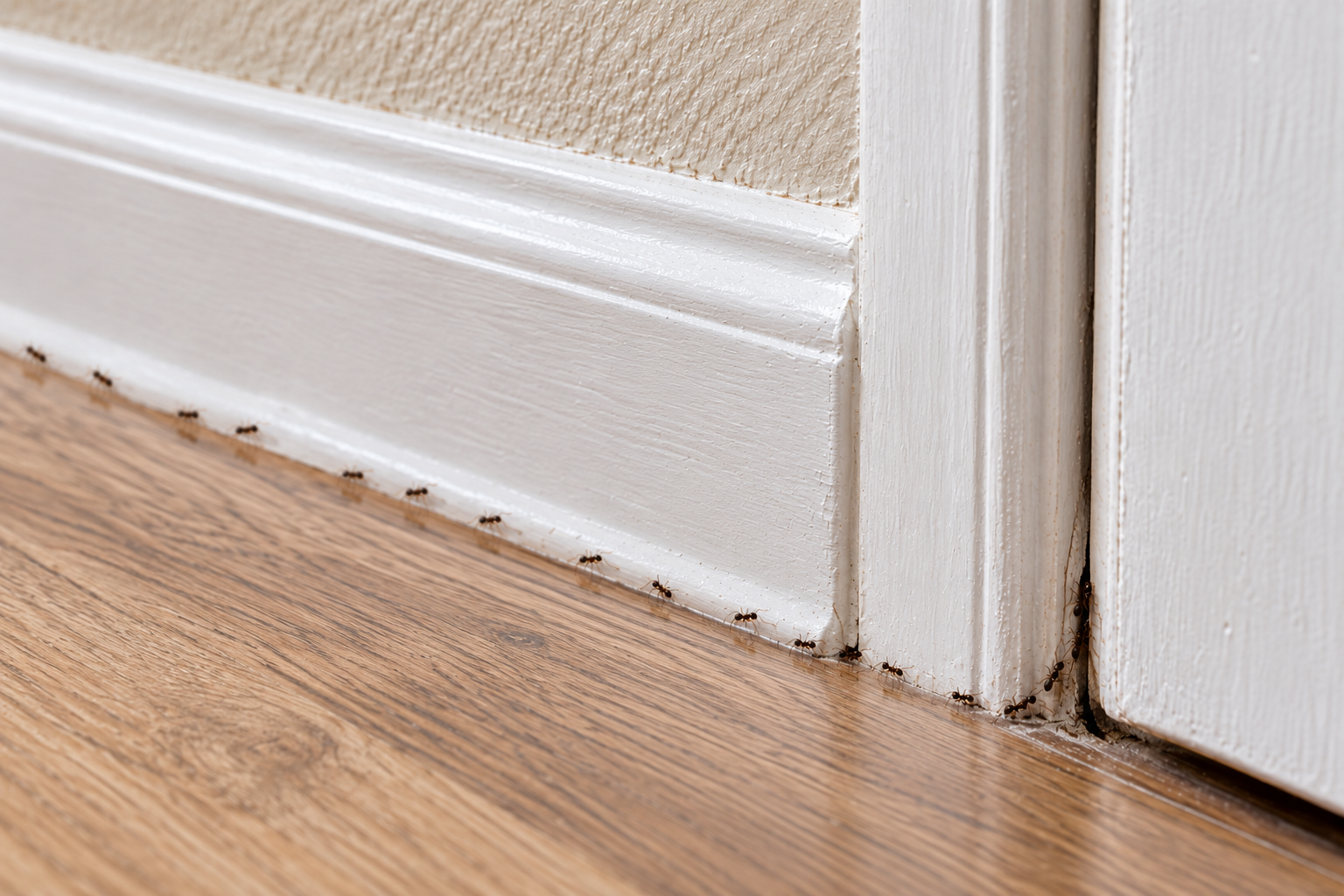
Small ants may enter through tiny openings while searching for food, water, or shelter. Treating only the ants you see may leave the colony untouched.
Carpenter Ants
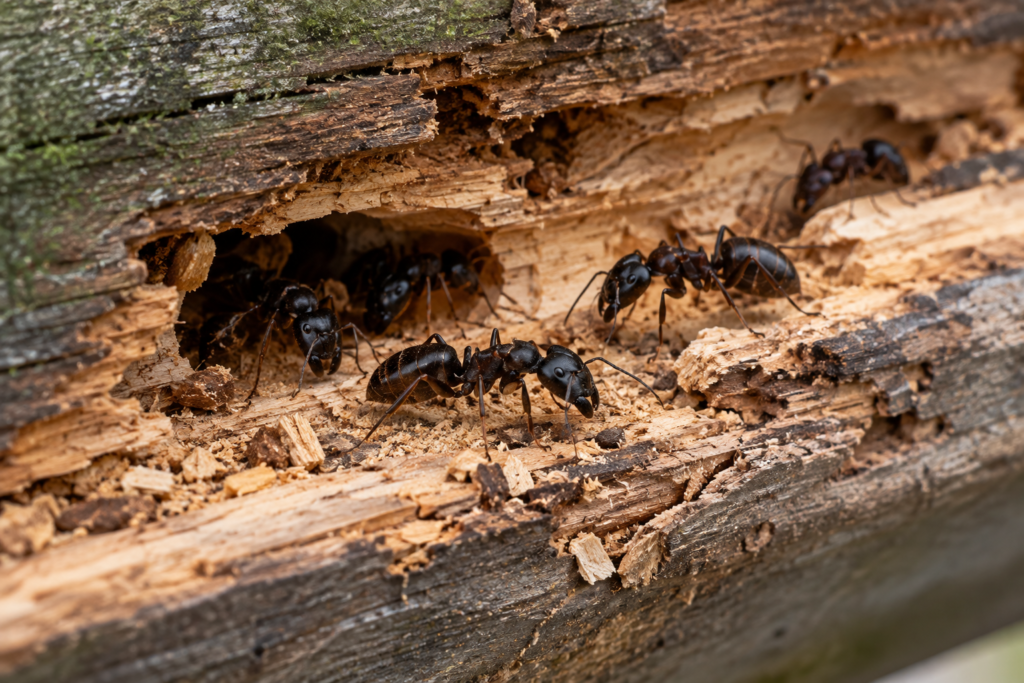
Their activity is often associated with damp, damaged, or deteriorating wood around a structure. Finding carpenter ants indoors may warrant a closer look at nearby wood and moisture conditions.
Fire Ants
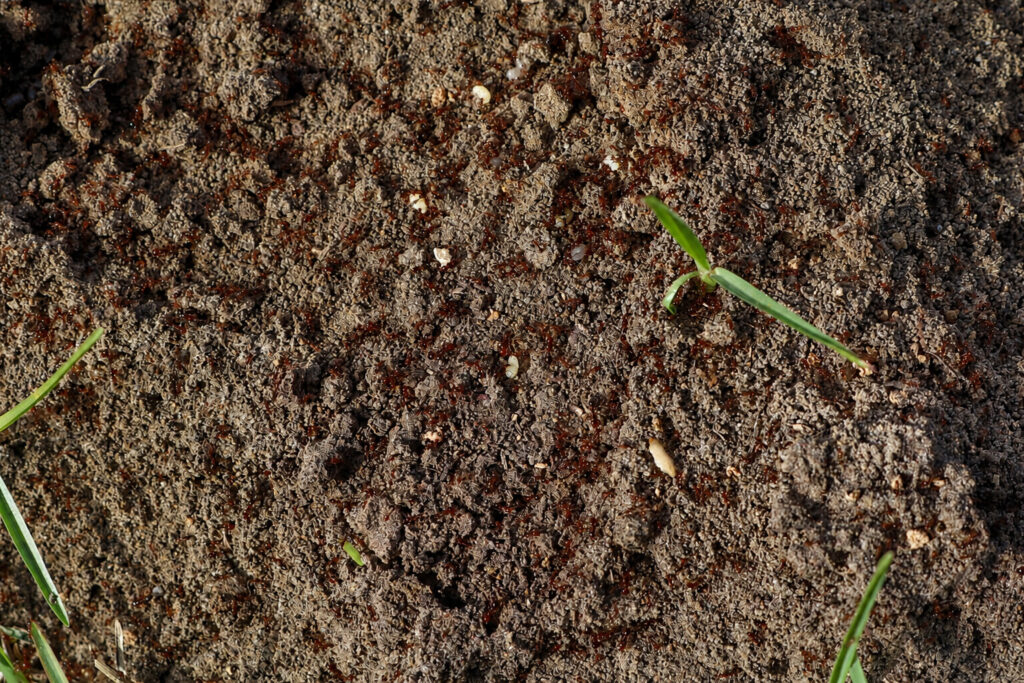
Fire ants build outdoor colonies and aggressively defend their mounds. Their painful stings can make lawns and frequently used outdoor areas difficult to enjoy safely.
How We Approach Ant Control in Clay & Putnam Counties
Successful ant control requires more than treating the visible activity. We look for the conditions and colony behavior helping the problem continue.

1. Inspect & Identify
We examine where ants are appearing, look for trails and possible nesting areas, and identify the type of ant whenever possible.
2. Target the Colony
We select a treatment approach based on the ant species, location of the activity, and conditions around the property.
3. Help Prevent Their Return
We explain contributing conditions and practical steps that may help reduce future ant activity around your home or business.

Inspection Note: Where ants appear can be just as important as the ants themselves. During an inspection, we look at where the activity starts, where the ants are traveling, and where they disappear. Those patterns can help us narrow down possible entry points, nesting areas, moisture conditions, and other factors supporting the colony.
Signs an Ant Colony May Be Nearby
Seeing an occasional ant does not always indicate a serious problem. Repeated or concentrated activity, however, may suggest that a colony is established nearby.
- Ant trails repeatedly appearing in the same area
- Ants emerging from walls, outlets, cabinets, or trim
- Small piles of debris near wood or wall openings
- Winged ants appearing indoors
- Fire ant mounds appearing or increasing throughout the lawn
- Activity returning soon after store-bought spray is applied
Want to identify the ants you’re seeing? Visit our Ant Identification Guide or Fire Ant Identification Guide for photos and signs to look for. For additional information about ants found in Florida, explore the UF/IFAS Ants resources from the University of Florida.
Ant Control Services FAQs
The ants you see may represent only a small portion of the colony. Spraying visible ants may provide temporary relief without reaching the nest, queens, or other colony members responsible for continued activity.
It can with certain ant species. Some repellent products may cause a colony to scatter or split into additional nesting sites. Proper identification helps determine which treatment approach is appropriate.
Ant species can differ in size, color, nesting habits, and the trails they follow. Bug Cops examines the ants and their activity to help identify the type and determine where the colony may be located.
No. Carpenter ants excavate wood to create nesting galleries but do not consume it as food. Termites feed on cellulose found in wood and other materials. Both can indicate conditions that deserve professional attention.
Keep food sealed, clean spills and crumbs, repair moisture problems, and avoid leaving pet food exposed. Trimming vegetation away from the structure and sealing accessible openings may also help reduce ant entry. However, established colonies may still require targeted treatment.
Ready for Ant Control Services in Clay & Putnam Counties?
Whether ants are trailing through the kitchen, emerging from a wall, or building mounds throughout the yard, Bug Cops can help identify the activity and recommend an appropriate treatment approach for your property.